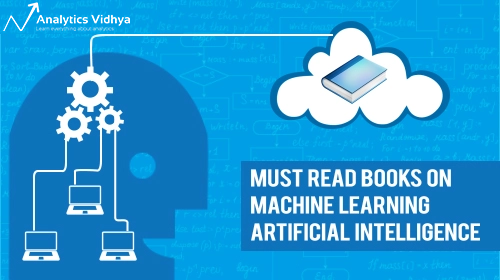
Mastering AI: The Definitive Guide to Machine Learning Books in 2024
My Journey into the World of Artificial Intelligence
Let me take you on a personal journey through the fascinating landscape of artificial intelligence and machine learning books. As someone who has spent years navigating the complex terrain of technological innovation, I‘ve discovered that the right book can be a transformative gateway to understanding this revolutionary field.
The Landscape of Learning: Why Books Matter More Than Ever
In an era dominated by quick online tutorials and bite-sized learning modules, you might wonder: do books still hold relevance in understanding artificial intelligence? The answer is a resounding yes. Books offer something unique that no YouTube tutorial or online course can replicate – a comprehensive, deeply researched narrative that connects technological concepts with real-world applications.
Navigating the AI Book Universe: A Personal Perspective
The Foundational Texts: Building Your Knowledge Base
When I first started my journey into machine learning, I quickly realized that not all books are created equal. Some are theoretical masterpieces, while others are practical guides that speak directly to practitioners. Let me share the books that fundamentally transformed my understanding of AI.
"Hands-On Machine Learning with Scikit-Learn, Keras, and TensorFlow" – A Practical Revelation
Aurélien Géron‘s book isn‘t just another technical manual; it‘s a roadmap for practical machine learning. What sets this book apart is its unique approach to teaching complex concepts through hands-on examples. Géron doesn‘t just explain algorithms; he walks you through their implementation, making complex mathematical concepts feel approachable.
The book‘s strength lies in its ability to bridge theoretical knowledge with practical application. Each chapter feels like a conversation with an experienced mentor who understands the nuances of machine learning implementation.
The Mathematical Foundation: Understanding the Core
"Pattern Recognition and Machine Learning" by Christopher Bishop
If you‘re serious about understanding the mathematical underpinnings of machine learning, Christopher Bishop‘s book is your bible. Unlike many technical books that overwhelm readers with complex equations, Bishop has a remarkable ability to explain intricate mathematical concepts with clarity and precision.
What makes this book exceptional is its comprehensive coverage of probabilistic approaches to machine learning. Bishop doesn‘t just teach algorithms; he helps you understand the philosophical and mathematical reasoning behind them.
Beyond Technical Knowledge: The Ethical Dimension of AI
"Superintelligence" by Nick Bostrom – A Philosophical Exploration
Not all AI books focus solely on technical implementation. Nick Bostrom‘s "Superintelligence" represents a critical exploration of AI‘s potential societal impact. It‘s less a technical manual and more a profound philosophical investigation into the potential futures shaped by artificial intelligence.
Bostrom challenges readers to think beyond code and algorithms, considering the broader implications of technological advancement. His work is a crucial reminder that understanding AI isn‘t just about learning programming languages, but comprehending potential societal transformations.
The Programming Perspective: Practical Implementation
"Python Machine Learning" by Sebastian Raschka
For those who learn best through practical coding, Sebastian Raschka‘s book is an invaluable resource. Raschka doesn‘t just teach machine learning; he demonstrates how to implement complex algorithms using Python, the most popular language in data science.
What sets this book apart is its pragmatic approach. Each chapter feels like a workshop, guiding you through real-world machine learning challenges and solutions.
Emerging Trends: Books Reflecting the Latest Technological Shifts
Generative AI and Large Language Models
The rapid evolution of AI technologies demands continuous learning. Recent books are increasingly focusing on generative models, transformer architectures, and the revolutionary impact of large language models like GPT.
Books that once focused on traditional machine learning algorithms are now incorporating chapters on neural network architectures, reinforcement learning, and AI ethics.
Learning Strategies: More Than Just Reading
Beyond the Pages: Implementing Knowledge
Reading these books is just the beginning. True mastery comes from:
- Implementing algorithms from scratch
- Participating in open-source projects
- Engaging with AI communities
- Continuous experimentation
The Human Element in AI Learning
Remember, behind every algorithm and neural network is human creativity and curiosity. These books are more than technical manuals; they‘re gateways to understanding how technology can solve complex human challenges.
A Personal Invitation
As someone who has spent years in the AI field, I encourage you to approach these books not as dry technical texts, but as exciting narratives of human innovation. Each page represents a potential breakthrough, a new way of solving problems that were once considered impossible.
Conclusion: Your Learning Journey Begins
The world of artificial intelligence is vast, complex, and incredibly exciting. These books are your companions, your mentors, and your guides in this incredible journey.
Choose wisely, read deeply, and most importantly, never stop learning.
Your AI adventure starts now.