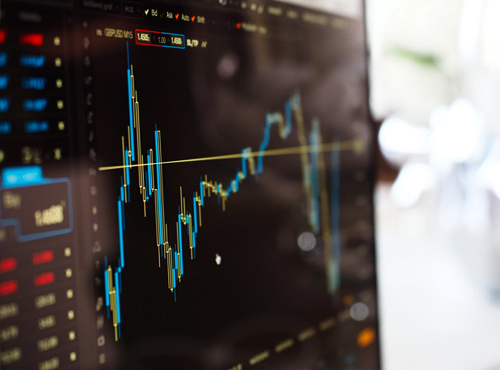
Mastering Algorithmic Trading: A Comprehensive Journey Through Technical Indicators and Machine Learning
The Algorithmic Trading Odyssey: My Personal Exploration
When I first stepped into the world of algorithmic trading, I was overwhelmed by the complexity and potential of quantitative strategies. Like many traders, I started with traditional technical analysis, gradually discovering the transformative power of machine learning and advanced computational techniques.
The Evolution of Quantitative Trading
Trading has dramatically transformed from traditional floor-based exchanges to sophisticated algorithmic systems. The journey began with pioneers like Ed Thorp, who applied mathematical models to financial markets in the 1960s. Today, algorithmic trading represents over 70% of equity market transactions, showcasing the profound technological revolution.
Mathematical Foundations of Trading Strategies
Trading isn‘t just about numbers; it‘s about understanding complex market dynamics through mathematical lenses. Each technical indicator represents a sophisticated mathematical model capturing market psychology and price movement patterns.
Deep Dive into Technical Indicators
Technical indicators are more than simple mathematical calculations – they‘re windows into market behavior. Let me walk you through the most powerful indicators that have shaped my trading approach.
Relative Strength Index (RSI): Beyond Simple Momentum
The RSI isn‘t just a momentum indicator; it‘s a nuanced tool revealing market sentiment. Developed by J. Welles Wilder Jr., this oscillator provides insights into potential trend reversals by measuring price velocity and magnitude.
Mathematical representation:
[RSI = 100 – \frac{100}{1 + \frac{Average \, Gain}{Average \, Loss}}]
This formula encapsulates the complex interplay between price movements, revealing market psychology beyond simple numerical representations.
Moving Average Convergence Divergence (MACD): Trend Dynamics Unveiled
MACD represents a sophisticated approach to understanding trend momentum. By comparing short-term and long-term moving averages, traders can identify potential trend shifts and market momentum.
The MACD line [MACD = 12-period EMA – 26-period EMA] reveals subtle market dynamics that simple moving averages might miss.
Machine Learning: Transforming Trading Strategies
Machine learning has revolutionized algorithmic trading, enabling traders to process vast datasets and identify complex, non-linear relationships that traditional analysis might overlook.
Advanced Model Architectures
-
Random Forest Classifiers
Random forests represent an ensemble learning technique that constructs multiple decision trees during training, providing robust predictive capabilities. Unlike single decision trees prone to overfitting, random forests create a more generalized model by aggregating multiple trees‘ predictions. -
Gradient Boosting Machines
Gradient boosting represents a powerful technique for creating predictive models. By sequentially training weak learners and focusing on previous models‘ errors, gradient boosting creates increasingly accurate predictive frameworks.
Feature Engineering: The Secret Sauce
Effective feature engineering transforms raw market data into meaningful predictive signals. This process involves creating sophisticated features that capture market nuances beyond traditional price and volume metrics.
Example Feature Categories:
- Price momentum indicators
- Volatility measurements
- Sentiment-derived features
- Cross-asset correlational signals
Risk Management: Protecting Your Trading Capital
Successful algorithmic trading isn‘t just about generating signals; it‘s about managing risk with surgical precision. Implementing robust risk management strategies separates professional traders from amateur speculators.
Dynamic Position Sizing Strategies
Position sizing goes beyond simple percentage allocation. Advanced traders develop adaptive position sizing models that dynamically adjust based on:
- Market volatility
- Portfolio correlation
- Individual asset characteristics
Emerging Technologies and Future Trends
The future of algorithmic trading lies at the intersection of artificial intelligence, quantum computing, and advanced data processing techniques. Quantum computing promises to revolutionize complex optimization problems, potentially transforming how we approach trading strategy development.
Practical Implementation Considerations
Implementing algorithmic trading strategies requires a holistic approach:
- Robust backtesting frameworks
- Comprehensive performance metrics
- Continuous model refinement
- Adaptive learning mechanisms
Conclusion: The Ongoing Trading Evolution
Algorithmic trading represents a continuous journey of learning, adaptation, and technological innovation. Success requires a blend of mathematical rigor, technological expertise, and psychological discipline.
As markets become increasingly complex, traders must remain curious, adaptable, and committed to continuous learning. The most successful algorithmic traders view their strategies not as fixed systems but as living, breathing entities that must evolve with changing market dynamics.
Your Next Steps
- Develop a modular trading strategy framework
- Invest in continuous education
- Experiment with advanced modeling techniques
- Maintain a disciplined, systematic approach
Remember, algorithmic trading is both an art and a science. Embrace the complexity, stay curious, and never stop learning.