Mastering Audio Classification: A Deep Dive into Artificial Intelligence and Sound Understanding
The Sonic Revolution: How Machine Learning Transforms Sound Perception
Imagine standing in a bustling city street, your ears capturing a symphony of urban sounds – car horns blaring, children laughing, distant construction work. Now, picture a technology that can not just hear these sounds, but instantly categorize and understand them with remarkable precision. Welcome to the fascinating world of audio classification through deep learning.
The Genesis of Sound Intelligence
Audio classification isn‘t just a technological marvel; it‘s a profound exploration of how machines can comprehend acoustic experiences. As an artificial intelligence researcher who has spent years decoding the intricate language of sound, I‘ve witnessed an extraordinary transformation in how we understand audio signals.
The Computational Symphony of Sound
When we talk about audio classification, we‘re essentially discussing a complex computational process that transforms raw acoustic energy into meaningful categories. This journey begins with understanding sound at its most fundamental level – as vibrations that carry information.
Modern deep learning techniques have revolutionized our ability to decode these vibrations. Unlike traditional signal processing methods that relied on rigid, predefined rules, contemporary neural networks can learn and adapt, discovering intricate patterns that human engineers might never conceive.
The Mathematical Foundations of Sound Representation
Let‘s explore the mathematical magic behind audio classification. At its core, sound can be represented as a time-varying pressure wave. When we convert this wave into a computational representation, we‘re essentially translating physical vibrations into a language machines can understand.
[Mathematical Representation: s(t) = A sin(2\pi f * t + \phi)]Where:
- s(t) represents the sound wave
- A is amplitude
- f is frequency
- t is time
- [\phi] is phase shift
This seemingly simple equation becomes incredibly complex when we consider real-world audio signals with multiple frequencies, harmonics, and contextual variations.
Deep Learning Architectures: Decoding Acoustic Complexity
Convolutional Neural Networks: Visual Thinking for Sound
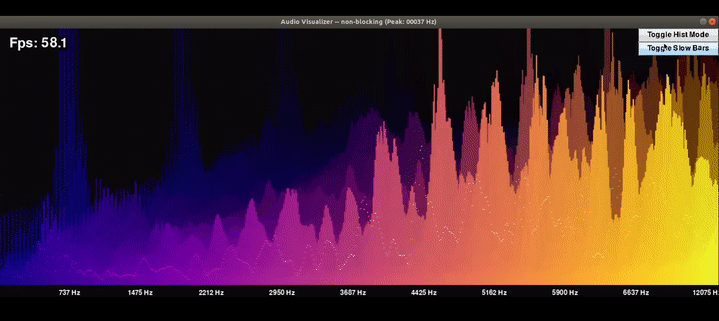
Convolutional Neural Networks (CNNs), originally designed for image processing, have emerged as powerful tools in audio classification. By treating audio spectrograms as visual representations, these networks can extract hierarchical features that capture the essence of different sound categories.
Consider a CNN processing a musical genre classification task. Just as a human listener might recognize jazz by its improvisational characteristics or classical music by its structured orchestration, a CNN learns to identify distinctive spectral and temporal patterns unique to each genre.
Recurrent Neural Networks: Capturing Temporal Dynamics
While CNNs excel at spatial feature extraction, Recurrent Neural Networks (RNNs) and their advanced variants like Long Short-Term Memory (LSTM) networks specialize in understanding sequential dependencies in audio signals.
Imagine analyzing a speech recording. An LSTM network can track subtle changes in tone, rhythm, and phonetic transitions, mimicking how humans comprehend spoken language by maintaining contextual memory.
Real-World Applications: Beyond Technical Abstraction
Audio classification isn‘t confined to academic research. It‘s transforming multiple domains:
-
Healthcare Diagnostics
Researchers are developing models that can detect respiratory conditions by analyzing cough sounds, potentially enabling early disease detection. -
Environmental Monitoring
Advanced audio classification techniques help track biodiversity by identifying and counting animal species through their unique acoustic signatures. -
Automotive Safety
Intelligent systems can detect potential mechanical issues in vehicles by analyzing engine sounds, predicting maintenance needs before critical failures occur.
The Computational Challenge: Feature Extraction Techniques
Extracting meaningful features from audio signals remains a nuanced challenge. Techniques like Mel-frequency Cepstral Coefficients (MFCCs) and spectral analysis provide computational frameworks for transforming raw audio into analyzable representations.
[Python Example of Mel Spectrogram Extraction]def extract_mel_spectrogram(audio_signal, sample_rate=22050):
mel_spectrogram = librosa.feature.melspectrogram(
y=audio_signal,
sr=sample_rate,
n_mels=128,
fmax=8000
)
return librosa.power_to_db(mel_spectrogram)Ethical Considerations and Future Horizons
As we push the boundaries of audio classification, critical ethical questions emerge. How do we ensure privacy? What are the potential misuses of such powerful sound analysis technologies?
The future of audio classification lies not just in technological advancement, but in responsible, human-centric development that respects individual privacy and promotes societal benefit.
Emerging Frontiers: Beyond Current Limitations
Researchers are exploring exciting new directions:
- Few-shot learning techniques
- Self-supervised audio representation
- Multimodal sound understanding
A Personal Reflection
Having dedicated my career to understanding the intersection of sound and artificial intelligence, I‘m continuously amazed by how machines are learning to "hear" and comprehend the world around us.
Each breakthrough feels like solving a complex puzzle, revealing another layer of how acoustic information can be understood, categorized, and leveraged for human progress.
Conclusion: The Sonic Frontier of Artificial Intelligence
Audio classification represents more than a technological achievement. It‘s a testament to human creativity, our ability to teach machines to perceive and understand the rich, complex world of sound.
As we continue pushing these boundaries, we‘re not just developing algorithms – we‘re expanding the very definition of perception and intelligence.