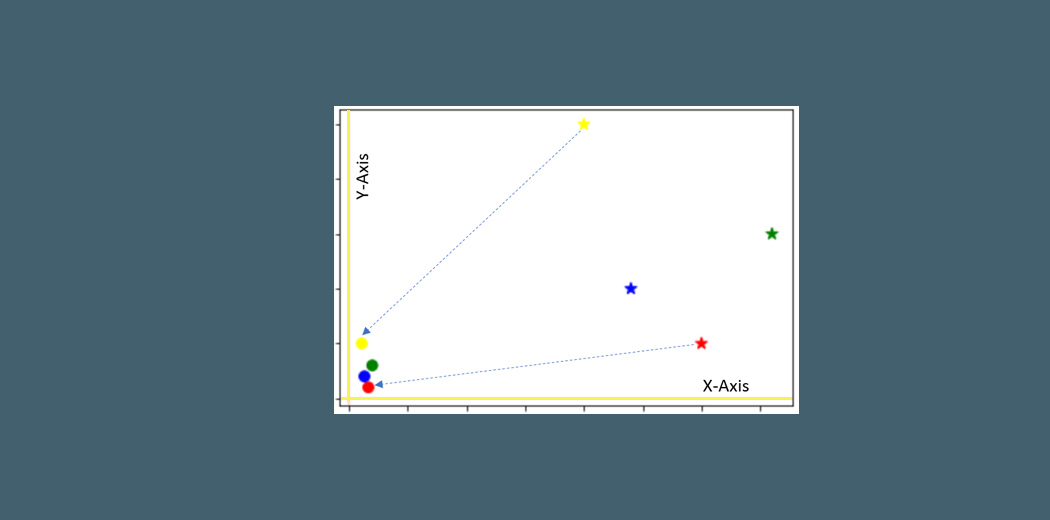
Mastering Feature Transformation: A Data Scientist‘s Comprehensive Journey Through Scaling Techniques
The Hidden Art of Data Preprocessing: A Personal Exploration
Imagine standing before a raw, unrefined dataset – a landscape of numbers, patterns, and potential waiting to be unlocked. As a machine learning expert, I‘ve learned that the magic of transforming data isn‘t just about mathematical operations; it‘s about understanding the soul of information.
The Genesis of Feature Transformation
When I first encountered complex datasets years ago, I realized that raw data is like an uncut diamond. Each feature carries stories, potential, and hidden insights waiting to be revealed. Feature transformation isn‘t merely a technical process; it‘s an art form of data interpretation.
The Philosophical Foundations of Data Transformation
Data transformation represents more than statistical manipulation. It‘s a profound dialogue between mathematical principles and real-world complexity. Each technique we‘ll explore is a unique lens through which we can understand and reshape information.
Logarithmic Transformation: Unveiling Hidden Patterns
The logarithmic transformation emerges as a powerful storyteller in data science. Consider how nature itself uses logarithmic scales – from earthquake measurements to sound intensity. By applying [f(x) = \log(x)], we‘re not just compressing data; we‘re revealing underlying structures that linear representations often obscure.
The Mathematical Poetry of Logarithms
Logarithmic transformations work by compressing large value ranges, creating a more balanced representation. Imagine a dataset tracking company revenues spanning from thousands to billions. A direct comparison becomes challenging, but logarithmic scaling transforms this landscape into a comprehensible narrative.
def logarithmic_reveal(data):
    """
    Transforms data using logarithmic scaling
    Reveals hidden patterns and relationships
    """
    return np.log1p(data)  # Safe logarithmic transformation
Box-Cox Transformation: The Adaptive Alchemist
Box-Cox transformation represents a sophisticated approach to data normalization. Unlike rigid transformation techniques, it dynamically adapts to your dataset‘s unique characteristics.
The transformation formula [T(x) = \frac{x^\lambda – 1}{\lambda}] isn‘t just a mathematical equation; it‘s a flexible framework for understanding data distribution. By finding the optimal lambda parameter, we‘re essentially teaching our data to speak a more consistent language.
Computational Complexity and Performance Implications
Each transformation technique carries computational overhead and performance characteristics. Understanding these nuances separates good data scientists from exceptional ones.
Quantile Transformation: Redistributing Information Intelligently
Quantile transformation represents a sophisticated approach to feature scaling. By mapping original features to uniform or normal distributions, we‘re not just manipulating numbers – we‘re restructuring information flow.
The technique works by:
- Computing cumulative distribution functions
- Intelligently redistributing values
- Preserving relative feature relationships
Robust Scaling: Resilience in Data Preprocessing
In real-world datasets, outliers can dramatically skew analysis. Robust scaling emerges as a resilient technique, using median and interquartile range to create stable feature representations.
[x_{scaled} = \frac{x – Q_1}{Q_3 – Q_1}]This approach doesn‘t just remove outliers; it provides a more nuanced understanding of data variability.
Advanced Transformation Strategies
Yeo-Johnson Transformation: Beyond Conventional Scaling
While Box-Cox transformation works primarily with positive values, Yeo-Johnson extends this concept to handle negative and zero values. It represents a more comprehensive approach to non-linear feature scaling.
Power Transformation: Flexible Distribution Modification
Power transformations allow us to apply different power functions, creating a flexible framework for distribution adjustment. By applying [f(x) = x^{\alpha}], we can:
- Handle non-linear relationships
- Stabilize variance
- Improve linear model assumptions
Practical Implementation Considerations
Choosing the Right Transformation
Selecting an appropriate transformation isn‘t a mechanical process. It requires:
- Deep understanding of your dataset
- Awareness of underlying statistical distributions
- Experimental validation
- Continuous model performance monitoring
Machine Learning Algorithm Interactions
Different machine learning algorithms respond uniquely to feature transformations. Neural networks might appreciate normalized inputs, while decision trees remain relatively invariant.
The Future of Feature Transformation
As machine learning evolves, feature transformation techniques will become increasingly sophisticated. Emerging approaches will likely incorporate:
- Advanced statistical learning
- Dynamic adaptation mechanisms
- Context-aware scaling strategies
Conclusion: A Continuous Learning Journey
Feature transformation transcends technical implementation. It represents a profound approach to understanding data, revealing hidden narratives, and creating more intelligent predictive models.
Remember, every dataset tells a story – our job is to learn its language.