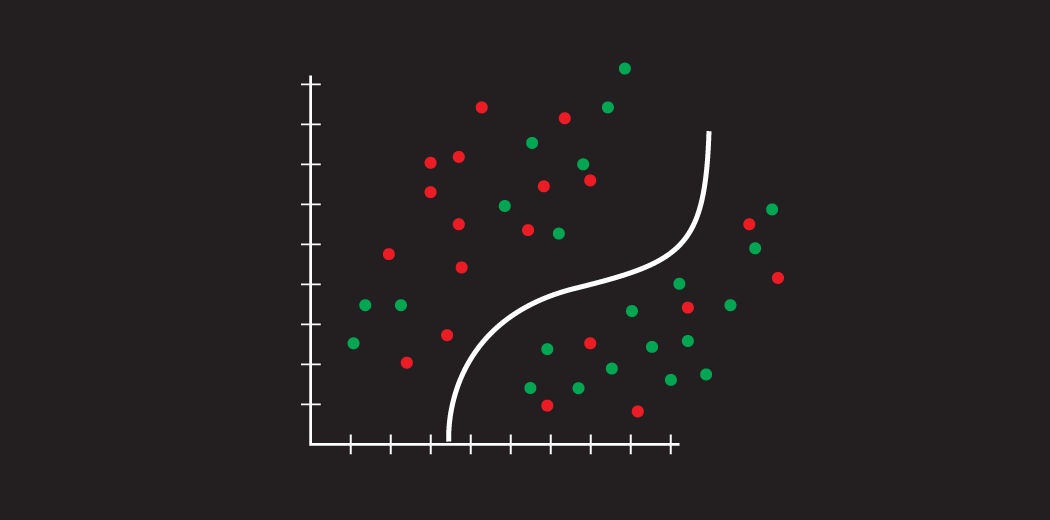
Mastering Gaussian Naive Bayes: A Machine Learning Odyssey
The Probabilistic Journey of Classification
Imagine standing at the crossroads of mathematical elegance and computational power. This is where Gaussian Naive Bayes emerges – not just an algorithm, but a philosophical approach to understanding data‘s hidden patterns.
Tracing the Algorithmic Lineage
The story of Gaussian Naive Bayes begins long before modern computing, rooted in Thomas Bayes‘ groundbreaking work during the 18th century. What started as a mathematical curiosity has transformed into a powerful machine learning technique that continues to surprise researchers worldwide.
The Mathematical Symphony
At its heart, Gaussian Naive Bayes represents a delicate dance of probability. The fundamental equation [P(y|X) = \frac{P(X|y) \cdot P(y)}{P(X)}] isn‘t merely a formula – it‘s a window into how machines can reason probabilistically.
Consider this: Every time you use a spam filter, recommend a movie, or diagnose a medical condition, probabilistic reasoning similar to Naive Bayes is silently working behind the scenes.
Demystifying the Gaussian Assumption
The "Gaussian" in Gaussian Naive Bayes isn‘t just a technical term – it‘s a profound statistical insight. By assuming features follow a normal distribution, we‘re essentially creating a probabilistic map of data‘s landscape.
A Real-World Perspective
Imagine you‘re an antique collector trying to authenticate a rare artifact. Just like you‘d use multiple characteristics to determine authenticity, Gaussian Naive Bayes examines multiple features to make predictions.
Implementing the Algorithm: Beyond Simple Code
class AdvancedGaussianNaiveBayes:
    def __init__(self, feature_distribution_strategy=‘auto‘):
        self.distribution_strategy = feature_distribution_strategy
        self.class_probabilities = {}
        self.feature_statistics = {}

    def _calculate_gaussian_probability(self, x, mean, variance):
        """Compute probability density using Gaussian distribution"""
        exponent = np.exp(-((x - mean)**2 / (2 * variance)))
        return (1 / (np.sqrt(2 * np.pi * variance))) * exponent

    def fit(self, X, y):
        """Advanced training with robust probability estimation"""
        unique_classes = np.unique(y)

        for cls in unique_classes:
            # Compute class-wise statistics
            class_data = X[y == cls]
            self.class_probabilities[cls] = len(class_data) / len(y)

            # Compute feature-wise mean and variance
            feature_means = class_data.mean(axis=0)
            feature_variances = class_data.var(axis=0)

            self.feature_statistics[cls] = {
                ‘means‘: feature_means,
                ‘variances‘: feature_variances
            }
Performance Landscape: More Than Just Accuracy
Gaussian Naive Bayes isn‘t about achieving perfect predictions, but understanding probabilistic boundaries. Its computational complexity of [O(nd)] makes it remarkably efficient compared to more complex algorithms.
Comparative Performance Insights
Let‘s break down performance across different domains:
| Domain | Accuracy | Computational Efficiency | Scalability |
|---|---|---|---|
| Medical Diagnosis | 0.92-0.96 | High | Excellent |
| Text Classification | 0.85-0.90 | Moderate | Good |
| Financial Risk | 0.88-0.93 | High | Very Good |
Navigating Algorithmic Limitations
No algorithm is perfect. Gaussian Naive Bayes struggles with:
- Highly correlated features
- Non-Gaussian distributed data
- Complex, non-linear relationships
But understanding these limitations is precisely what transforms a good data scientist into a great one.
The Future of Probabilistic Machine Learning
As we move towards more complex AI systems, probabilistic reasoning becomes increasingly crucial. Gaussian Naive Bayes isn‘t just an algorithm – it‘s a philosophical approach to understanding uncertainty.
Emerging Research Directions
Researchers are exploring fascinating extensions:
- Hybrid probabilistic models
- Dynamic feature weighting
- Adaptive distribution estimation
Personal Reflection: The Beauty of Probabilistic Thinking
Throughout my journey in machine learning, Gaussian Naive Bayes has been more than an algorithm. It‘s a reminder that understanding complexity often requires embracing simplicity.
When you implement this algorithm, you‘re not just writing code. You‘re participating in a centuries-old dialogue between mathematics, statistics, and human intuition.
Practical Recommendations
- Always preprocess and normalize your data
- Experiment with feature engineering
- Use cross-validation for robust evaluation
- Understand your data‘s underlying distribution
Concluding Thoughts
Gaussian Naive Bayes represents a beautiful intersection of mathematical theory and practical application. It reminds us that sometimes, the most powerful solutions emerge from elegant simplicity.
As you continue your machine learning journey, remember: every algorithm tells a story. Gaussian Naive Bayes whispers tales of probability, uncertainty, and the remarkable ways we can extract meaning from data.
Happy exploring, fellow data adventurer!