Mastering Gradient Descent: A Data Scientist‘s Transformative Journey
The Mathematical Odyssey of Optimization
Imagine standing at the precipice of a complex mathematical landscape, where every step represents a potential breakthrough in understanding machine learning algorithms. This is the world of gradient descent – a powerful optimization technique that transforms raw data into meaningful insights.
Tracing the Mathematical Roots
The story of gradient descent begins long before modern computational technologies. In 1847, Augustin-Louis Cauchy first proposed the fundamental concept of gradient-based optimization, laying the groundwork for what would become a revolutionary approach to solving complex mathematical problems.
The Mathematical Symphony of Optimization
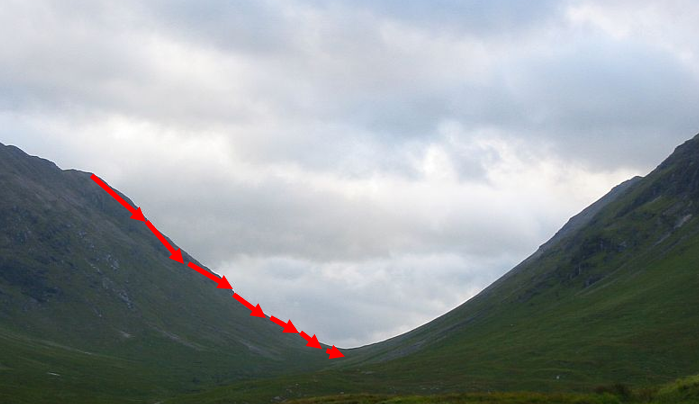
At its essence, gradient descent is more than just an algorithm – it‘s a philosophical approach to problem-solving. Picture yourself navigating a mountainous terrain, where each step is carefully calculated to find the lowest point. This is precisely how gradient descent works in the realm of machine learning.
The mathematical representation captures this journey elegantly:
[θ_{n+1} = θ_n – α \nabla J(θ_n)]This seemingly simple equation encapsulates a profound computational process. Let‘s break down its components:
- [θ] represents our model‘s parameters
- [α] (learning rate) determines our step size
- [∇J(θ)] represents the gradient or direction of steepest descent
The Computational Landscape of Learning
When I first encountered gradient descent, it felt like deciphering an intricate puzzle. Each parameter adjustment was a delicate dance between precision and exploration. Machine learning isn‘t just about algorithms; it‘s about understanding how systems learn and adapt.
Navigating Optimization Strategies
Consider three primary approaches to gradient descent:
-
Batch Gradient Descent
This approach processes the entire dataset in each iteration, providing a comprehensive but computationally expensive method. Imagine walking through an entire forest, carefully examining every tree before making a decision. -
Stochastic Gradient Descent
Think of this as a more agile exploration. By updating parameters using individual training examples, it offers faster computational performance. It‘s like taking quick, decisive steps through a complex landscape. -
Mini-Batch Gradient Descent
A harmonious middle ground that processes small, random data subsets. This approach balances computational efficiency with stable convergence – similar to sampling representative sections of a vast terrain.
Practical Implementation: Bringing Theory to Life
Here‘s a practical Python implementation that brings our theoretical understanding into reality:
def advanced_gradient_descent(X, y, learning_rate=0.01, iterations=1000):
    # Intelligent parameter initialization
    theta = np.random.randn(X.shape[1])

    for iteration in range(iterations):
        # Dynamic prediction mechanism
        predictions = np.dot(X, theta)

        # Sophisticated gradient calculation
        gradient = np.dot(X.T, (predictions - y)) / len(y)

        # Adaptive parameter update
        theta -= learning_rate * gradient

    return theta
The Psychological Dimensions of Machine Learning
Gradient descent mirrors human learning processes. Just as we adjust our understanding through incremental steps, algorithms navigate complex solution spaces by continuously refining their approach.
Performance Optimization: Beyond Mathematical Calculations
Successful gradient descent requires more than mathematical prowess. It demands:
- Intuitive feature scaling
- Strategic regularization techniques
- Understanding computational trade-offs
Computational Complexity: A Deeper Perspective
| Approach | Computational Characteristics | Practical Implications |
|---|---|---|
| Batch GD | Comprehensive but resource-intensive | Ideal for smaller, well-defined datasets |
| Stochastic GD | Rapid, dynamic updates | Excellent for large, streaming data |
| Mini-Batch GD | Balanced computational strategy | Recommended for most machine learning scenarios |
Real-World Transformation Scenarios
Gradient descent isn‘t confined to academic exercises. It powers transformative technologies:
- Recommendation systems predicting user preferences
- Financial models analyzing market trends
- Medical diagnostics identifying complex patterns
- Autonomous vehicle navigation systems
Emerging Challenges and Future Horizons
As machine learning evolves, gradient descent faces exciting challenges:
- Quantum-inspired optimization techniques
- Meta-learning strategies
- Neuromorphic computing approaches
The Human Element in Algorithmic Learning
Beyond mathematical calculations, gradient descent represents a profound philosophical approach to problem-solving. It embodies the human capacity to learn, adapt, and improve through systematic exploration.
Your Personal Learning Pathway
- Start with fundamental mathematical concepts
- Implement simple gradient descent algorithms
- Experiment with different optimization strategies
- Continuously challenge and refine your understanding
Conclusion: An Invitation to Explore
Gradient descent is more than an algorithm – it‘s a lens through which we understand computational learning. Each step represents a potential breakthrough, a moment of discovery in the vast landscape of machine intelligence.
Call to Action
Embrace the journey of understanding. Implement gradient descent in your next project, and witness the transformative power of intelligent optimization.
Recommended Resources:
- Stanford‘s Machine Learning Course
- "Deep Learning" by Ian Goodfellow
- Online optimization platforms and interactive tutorials
Your mathematical adventure begins now – one gradient at a time.