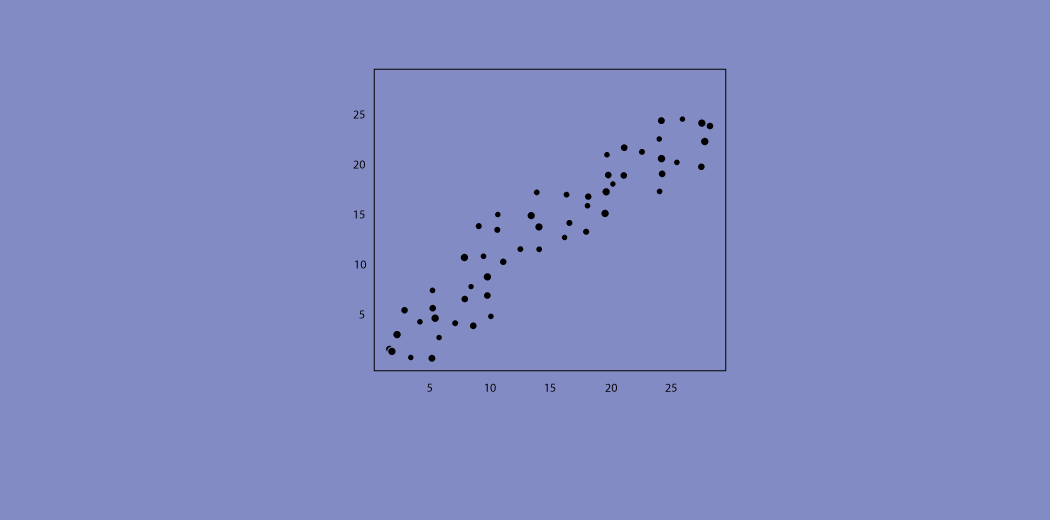
Mastering Linear Regression: A Comprehensive Journey Through Mathematical Modeling and Visualization
The Mathematical Tapestry of Predictive Analysis
Imagine standing at the intersection of mathematics, statistics, and computational intelligence. Linear regression isn‘t just a statistical technique—it‘s a powerful lens that transforms raw data into meaningful insights, revealing hidden patterns and relationships that drive decision-making across industries.
Origins and Mathematical Foundations
The story of linear regression begins with remarkable mathematicians who sought to understand complex relationships between variables. Carl Friedrich Gauss, a mathematical genius of the 19th century, laid the groundwork for least squares regression, a technique that minimizes the sum of squared differences between observed and predicted values.
When you first encounter linear regression, you‘re essentially exploring a mathematical relationship represented by the elegant equation:
[y = \beta_0 + \beta_1x + \epsilon]This seemingly simple formula encapsulates profound computational intelligence. Let‘s break down its components:
- [y]: The dependent variable we aim to predict
- [x]: Independent variables driving our prediction
- [\beta_0]: The y-intercept representing the baseline value
- [\beta_1]: The slope indicating variable relationship
- [\epsilon]: Random error capturing unexplained variance
Computational Implementation in Python
import numpy as np
import pandas as pd
import matplotlib.pyplot as plt
from sklearn.linear_model import LinearRegression
from sklearn.model_selection import train_test_split
from sklearn.metrics import mean_squared_error, r2_score

class LinearRegressionExpert:
    def __init__(self, dataset):
        self.dataset = dataset
        self.model = None

    def prepare_data(self, test_size=0.2):
        X = self.dataset.drop(‘target‘, axis=1)
        y = self.dataset[‘target‘]
        return train_test_split(X, y, test_size=test_size, random_state=42)

    def train_model(self, X_train, y_train):
        self.model = LinearRegression()
        self.model.fit(X_train, y_train)
        return self.model
Advanced Visualization Techniques
Visualization transforms abstract mathematical concepts into tangible insights. Consider creating diagnostic plots that reveal model performance and underlying data characteristics.
Residual Plot Interpretation
Residual plots provide critical insights into model performance. A well-constructed residual plot helps you understand:
- Model fit quality
- Potential non-linear relationships
- Presence of heteroscedasticity
- Outlier identification
def create_residual_plot(model, X_test, y_test):
    predictions = model.predict(X_test)
    residuals = y_test - predictions

    plt.figure(figsize=(12, 6))
    plt.scatter(predictions, residuals, color=‘blue‘, alpha=0.7)
    plt.title(‘Residual Diagnostic Plot‘)
    plt.xlabel(‘Predicted Values‘)
    plt.ylabel(‘Residuals‘)
    plt.axhline(y=0, color=‘red‘, linestyle=‘--‘)
    plt.show()
Performance Metrics and Model Evaluation
Understanding model performance requires more than just visual inspection. Key metrics provide quantitative insights:
def evaluate_model(model, X_test, y_test):
    predictions = model.predict(X_test)
    mse = mean_squared_error(y_test, predictions)
    r2 = r2_score(y_test, predictions)

    print(f"Mean Squared Error: {mse:.4f}")
    print(f"R-squared Score: {r2:.4f}")
Real-World Application Scenarios
Linear regression transcends academic exercises. Consider these practical applications:
Financial Forecasting
Predict stock prices, investment returns, and economic trends by modeling historical financial data.
Healthcare Predictive Modeling
Estimate patient recovery times, predict disease progression, and analyze treatment effectiveness.
Manufacturing Quality Control
Optimize production processes by understanding relationships between manufacturing parameters.
Advanced Regression Techniques
As computational power increases, regression techniques evolve:
-
Regularized Regression
- Lasso (L1 regularization)
- Ridge (L2 regularization)
- Elastic Net (Combined approach)
-
Polynomial Regression
Capture non-linear relationships by introducing polynomial features.
Emerging Trends and Future Perspectives
Machine learning continues transforming linear regression:
- Automated feature selection
- Probabilistic programming approaches
- Interpretable AI techniques
Ethical Considerations in Predictive Modeling
As we develop increasingly sophisticated models, ethical considerations become paramount:
- Bias mitigation
- Transparency in algorithmic decision-making
- Responsible use of predictive technologies
Conclusion: The Continuous Journey of Mathematical Discovery
Linear regression represents more than a statistical technique—it‘s a testament to human curiosity, mathematical elegance, and computational creativity. Each model we construct unveils hidden patterns, driving innovation across disciplines.
By mastering linear regression, you‘re not just learning a technique; you‘re embracing a powerful lens for understanding complex relationships in our data-driven world.