Mastering Logistic Regression in R: A Machine Learning Expert‘s Comprehensive Guide
The Journey into Predictive Modeling‘s Powerful Technique
Imagine standing at the crossroads of statistical analysis and machine learning, where complex mathematical principles transform raw data into meaningful predictions. This is the world of logistic regression – a technique that has quietly revolutionized how we understand and predict binary outcomes across numerous domains.
A Personal Reflection on Mathematical Elegance
My fascination with logistic regression began decades ago, watching how seemingly simple mathematical transformations could unravel complex predictive challenges. What started as an academic curiosity evolved into a profound appreciation for this remarkable statistical method.
The Mathematical Symphony of Logistic Regression
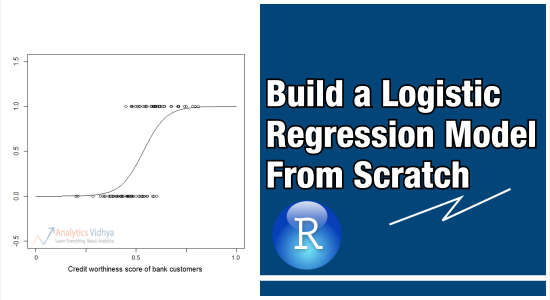
Logistic regression isn‘t just an algorithm; it‘s a mathematical narrative that translates linear relationships into probabilistic insights. At its core, the technique maps input features through a sophisticated sigmoid function, creating a smooth, interpretable probability curve.
Understanding the Logit Function‘s Profound Complexity
The logit function [logit(p) = \ln(\frac{p}{1-p})] represents more than a mathematical formula – it‘s a bridge between linear predictors and probabilistic outcomes. This transformation allows us to model complex relationships that traditional linear regression cannot capture.
Computational Representation in R
# Advanced logit function implementation
logit_transform <- function(probabilities) {
    log(probabilities / (1 - probabilities))
}
Historical Context: From Statistical Roots to Modern Machine Learning
Logistic regression emerged from the brilliant minds of statisticians in the early 20th century. Pierre François Verhulst‘s work on population growth models in 1838 laid foundational principles that would later evolve into modern logistic regression techniques.
Computational Evolution
As computational power increased, logistic regression transformed from a theoretical concept to a practical predictive tool. The advent of powerful statistical computing environments like R accelerated its adoption across diverse fields.
Practical Implementation: Beyond Basic Modeling
Data Preparation: The Critical Foundation
Preparing data for logistic regression requires more than simple cleaning. It demands a nuanced understanding of feature interactions, potential nonlinearities, and underlying statistical distributions.
Advanced Preprocessing Techniques
# Comprehensive data preprocessing workflow
preprocess_data <- function(dataset) {
    # Handle missing values with sophisticated imputation
    dataset <- mice::complete(mice::mice(dataset, m=5))

    # Feature scaling and normalization
    dataset_scaled <- scale(dataset)

    # Encode categorical variables
    dataset_encoded <- model.matrix(~ . - 1, data = dataset)

    return(dataset_encoded)
}
Performance Optimization Strategies
Regularization: Preventing Overfitting‘s Subtle Trap
Regularization techniques like Lasso and Ridge regression help manage model complexity, preventing overfitting while maintaining predictive power.
# Comprehensive regularization approach
regularized_logistic <- function(X, y, lambda = 1.0) {
    glmnet::cv.glmnet(
        X,
        y,
        family = "binomial",
        alpha = .5,  # Elastic net mixing parameter
        lambda = lambda
    )
}
Real-World Application Insights
Healthcare Predictive Modeling
In medical diagnostics, logistic regression helps predict complex outcomes like disease probability. By analyzing multiple input features, clinicians can make more informed decisions.
Financial Risk Assessment
Banks and financial institutions leverage logistic regression to assess credit risk, transforming raw financial data into probabilistic credit approval models.
Advanced Computational Considerations
Handling High-Dimensional Datasets
As datasets grow increasingly complex, traditional logistic regression approaches require sophisticated computational strategies:
- Parallel processing techniques
- Distributed computing frameworks
- Advanced feature selection algorithms
Emerging Research Frontiers
Machine learning continues pushing logistic regression‘s boundaries. Hybrid approaches combining traditional statistical methods with modern neural network architectures represent an exciting research direction.
Ethical Considerations in Predictive Modeling
As predictive models become more sophisticated, understanding potential biases and ensuring fair, transparent algorithmic decision-making becomes crucial.
Practical Wisdom: Beyond Technical Implementation
Debugging and Diagnostic Strategies
Effective logistic regression implementation requires more than mathematical prowess. Developing intuition about model behavior, understanding potential failure modes, and continuously validating assumptions are essential skills.
Conclusion: A Continuous Learning Journey
Logistic regression represents more than a statistical technique – it‘s a powerful lens for understanding complex relationships within data. By combining mathematical rigor, computational sophistication, and domain expertise, we transform raw information into meaningful insights.
Your Next Steps
- Practice implementing models across diverse datasets
- Study advanced regularization techniques
- Explore hybrid modeling approaches
- Continuously challenge your understanding
Remember, mastering logistic regression is a journey of continuous learning and exploration.