Mastering Microsoft Azure Cognitive Services: A Developer‘s Transformative Journey into AI
The Dawn of Intelligent Cloud Services
Imagine standing at the crossroads of technological innovation, where lines of code transform into intelligent systems that understand, learn, and adapt. This is the world of Microsoft Azure Cognitive Services – a realm where artificial intelligence transcends theoretical concepts and becomes a tangible, powerful tool for developers and businesses.
My journey into the intricate landscape of AI began with a simple question: How can complex machine learning capabilities be democratized and made accessible to developers worldwide? Azure Cognitive Services emerged as a compelling answer, bridging the gap between sophisticated AI technologies and practical implementation.
The Evolutionary Path of Cloud-Based AI
The story of Azure Cognitive Services is not just about technology; it‘s about human potential. Microsoft recognized early that artificial intelligence shouldn‘t remain confined to research laboratories or elite technology circles. Instead, it needed to become a democratized tool that empowers developers to solve real-world challenges.
When Microsoft first introduced Cognitive Services, they were essentially creating a bridge between complex machine learning models and practical application development. This wasn‘t just a technological leap – it was a paradigm shift in how we conceptualize artificial intelligence.
Architectural Brilliance: Understanding Azure‘s AI Framework
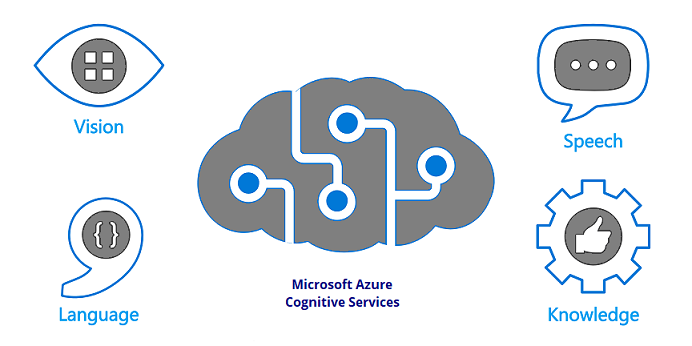
At its core, Azure Cognitive Services represents a meticulously designed ecosystem of pre-trained machine learning models. These aren‘t just static libraries but dynamic, continuously evolving intelligent systems that can be integrated seamlessly into various applications.
The architectural philosophy behind Azure Cognitive Services revolves around three fundamental principles:
- Accessibility: Making advanced AI capabilities available through simple API calls
- Scalability: Supporting applications from small startups to enterprise-level solutions
- Flexibility: Providing adaptable services across multiple domains and industries
The Technical Underpinnings
Diving deeper, Azure Cognitive Services leverage a microservices architecture that allows independent scaling and deployment of individual AI capabilities. This means developers can choose and implement specific services without being constrained by monolithic system designs.
Each service is built upon sophisticated neural network models trained on massive datasets, ensuring high accuracy and performance across various scenarios. The infrastructure supporting these services is designed to handle complex computational tasks with remarkable efficiency.
Exploring the Diverse Service Landscape
Vision Services: Seeing Beyond Human Perception
Computer vision has always fascinated me. Azure‘s Vision Services transform how machines interpret visual information. Imagine an API that can not only recognize objects but understand context, detect emotions, and provide nuanced image analysis.
The Computer Vision API, for instance, goes far beyond simple image classification. It can:
- Describe image contents in natural language
- Detect faces and emotional states
- Extract printed and handwritten text
- Recognize landmarks and celebrities
Language Services: Breaking Communication Barriers
Natural language processing represents another frontier where Azure Cognitive Services shine. The Text Analytics API can dissect human communication, understanding sentiment, extracting key phrases, and detecting language nuances that traditional systems might miss.
Consider a scenario where a global customer support platform needs to understand customer feedback across multiple languages. Azure‘s Language Services can provide real-time translation, sentiment analysis, and contextual understanding – transforming raw text into actionable insights.
Practical Implementation: From Concept to Reality
Let me share a personal experience that illustrates the transformative power of these services. While developing an intelligent customer interaction platform, we integrated Azure‘s Speech Services to create a multilingual voice assistant.
The implementation was surprisingly straightforward. With just a few lines of code, we could:
- Convert speech to text in multiple languages
- Perform real-time translation
- Analyze speaker characteristics
from azure.cognitiveservices.speech import SpeechConfig, SpeechRecognizer

speech_config = SpeechConfig(subscription=‘your_key‘, region=‘your_region‘)
speech_recognizer = SpeechRecognizer(speech_config=speech_config)

result = speech_recognizer.recognize_once()
print(result.text)
This simple snippet encapsulates the magic of Azure Cognitive Services – complex AI capabilities reduced to elegant, accessible code.
Performance and Scalability Considerations
Performance isn‘t just a technical metric; it‘s about delivering real value. Azure Cognitive Services are engineered to provide:
- Low-latency responses
- High-throughput processing
- Consistent accuracy across diverse datasets
The platform‘s ability to dynamically scale resources ensures that whether you‘re a startup or a multinational corporation, you receive optimal performance tailored to your specific needs.
Security and Ethical AI: A Responsible Approach
As an AI expert, I‘m particularly passionate about responsible technology development. Microsoft has embedded robust security and ethical considerations directly into the Cognitive Services architecture.
Features like:
- End-to-end encryption
- Comprehensive access controls
- Transparent model training processes
These demonstrate a commitment to developing AI technologies that respect user privacy and promote ethical usage.
The Future Horizon: Emerging Trends
Looking ahead, Azure Cognitive Services will likely integrate:
- More advanced machine learning models
- Enhanced interpretability
- Increased domain-specific specialization
- Seamless multi-modal AI interactions
The future isn‘t just about more intelligent systems – it‘s about creating technologies that understand and adapt to human needs more intuitively.
Conclusion: Your AI Journey Begins Here
Azure Cognitive Services represent more than a technological platform – they‘re an invitation to reimagine what‘s possible. Whether you‘re a seasoned developer or an aspiring technologist, these services offer a gateway to creating intelligent, responsive applications.
Your journey into AI development starts with curiosity, experimentation, and the willingness to explore. Microsoft has created the tools – now it‘s your turn to craft the future.