Mastering Neural Networks: Your Transformative Journey with PyTorch
The Neural Network Odyssey: A Personal Exploration
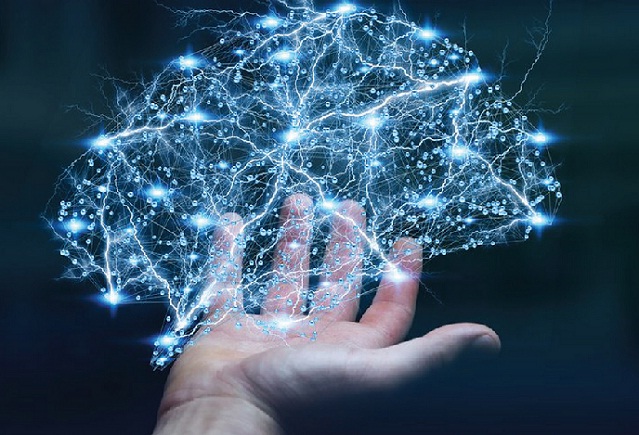
Imagine standing at the crossroads of computational intelligence, where mathematical elegance meets technological innovation. Neural networks represent more than just algorithms; they‘re living, breathing systems of computational learning that mirror the intricate workings of our own biological neural pathways.
The Philosophical Landscape of Artificial Intelligence
When I first encountered neural networks, they seemed like mystical constructs – mathematical abstractions that could seemingly breathe intelligence into machines. The journey from understanding basic computational principles to constructing sophisticated neural architectures is nothing short of extraordinary.
Biological Inspiration: Nature‘s Computational Model
Neural networks draw profound inspiration from biological neural systems. Just as our brain processes information through interconnected neurons, artificial neural networks simulate this complex communication mechanism. Each neuron acts like a computational node, receiving signals, processing information, and transmitting responses.
PyTorch: The Computational Canvas
PyTorch emerges as a powerful framework that transforms abstract neural network concepts into tangible computational models. Its dynamic computational graph and intuitive design make neural network construction feel like sculpting intelligent systems.
The Architectural Symphony of Neural Networks
Consider neural networks as intricate architectural designs. Each layer represents a sophisticated computational stage, where raw input transforms through carefully calibrated mathematical operations. The beauty lies not just in complexity, but in elegant, purposeful design.
class NeuralArchitect(nn.Module):
    def __init__(self, input_dimensions, cognitive_layers):
        super().__init__()
        self.neural_pathway = nn.Sequential(
            nn.Linear(input_dimensions, cognitive_layers[0]),
            nn.ReLU(),
            nn.Dropout(0.3),
            nn.Linear(cognitive_layers[0], cognitive_layers[1]),
            nn.BatchNorm1d(cognitive_layers[1]),
            nn.LeakyReLU()
        )

    def forward(self, computational_signal):
        return self.neural_pathway(computational_signal)
The Mathematical Poetry of Neural Computation
Neural networks represent a delicate dance between mathematical precision and computational creativity. Each weight represents a learned relationship, each activation function a transformative moment of understanding.
Activation Functions: The Neural Network‘s Emotional Intelligence
Activation functions like ReLU, Sigmoid, and Tanh aren‘t mere mathematical transformations – they‘re the emotional responses of our computational system. They determine how information flows, how signals are interpreted, and ultimately how learning occurs.
Training Dynamics: The Learning Ecosystem
Training a neural network mirrors human learning experiences. Through backpropagation, our computational system refines its understanding, adjusting weights and biases to minimize computational errors.
Optimization Strategies: Navigating Computational Landscapes
class LearningJourney:
    def __init__(self, model, learning_rate=0.001):
        self.model = model
        self.optimizer = torch.optim.Adam(
            model.parameters(),
            lr=learning_rate,
            weight_decay=1e-5
        )
        self.loss_function = nn.CrossEntropyLoss()

    def train_epoch(self, data_loader):
        self.model.train()
        total_loss = 0

        for batch_data, batch_labels in data_loader:
            self.optimizer.zero_grad()
            predictions = self.model(batch_data)
            loss = self.loss_function(predictions, batch_labels)

            loss.backward()
            self.optimizer.step()

            total_loss += loss.item()

        return total_loss
Performance Optimization: Beyond Basic Computation
Performance isn‘t just about computational speed – it‘s about creating intelligent, responsive systems that adapt and learn efficiently.
Emerging Technological Frontiers
The future of neural networks lies in:
- Quantum-inspired computational models
- Neuromorphic computing architectures
- Self-adapting learning systems
- Federated learning paradigms
Practical Implementation Wisdom
- Start with simple architectures
- Understand mathematical foundations
- Experiment relentlessly
- Embrace computational curiosity
The Human Touch in Artificial Intelligence
Neural networks represent more than technological achievement – they‘re a testament to human creativity, our ability to model complex systems, and our perpetual quest to understand intelligence itself.
Conclusion: Your Computational Journey
As you embark on your neural network exploration, remember that each line of code, each mathematical transformation, represents a step towards understanding computational intelligence.
The path isn‘t about perfection, but persistent exploration.
Recommended Resources
- PyTorch Official Documentation
- "Deep Learning" by Ian Goodfellow
- Neural Network Research Papers
- Online Machine Learning Communities
Embrace the journey, one neural connection at a time.