Mastering Object Tracking: A Deep Dive into OpenCV‘s Tracking Technologies
The Fascinating World of Computer Vision Tracking
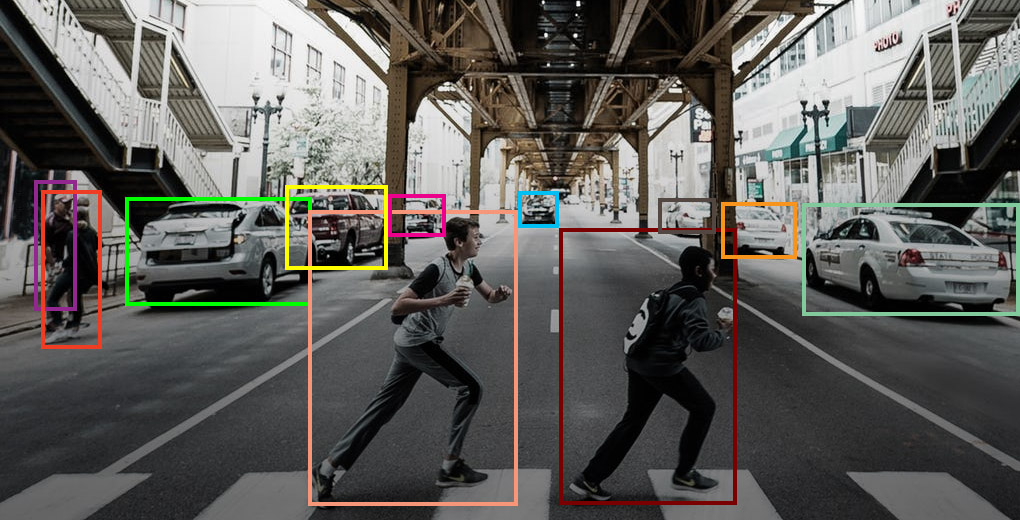
Imagine standing in a bustling city intersection, watching countless movements simultaneously. Your brain effortlessly tracks multiple objects – cars, pedestrians, bicycles – with remarkable precision. This natural ability has inspired generations of computer vision researchers to create machines that can replicate this complex tracking capability.
Object tracking represents more than just technological wizardry; it‘s a profound exploration of how machines can understand and interpret dynamic visual environments. As an artificial intelligence expert who has spent years studying tracking technologies, I‘m excited to unpack the intricate world of OpenCV object tracking.
The Origins of Tracking Technologies
Tracking technologies didn‘t emerge overnight. They represent decades of cumulative research, mathematical innovations, and computational breakthroughs. Early tracking systems were rudimentary, relying on basic motion detection algorithms that could barely distinguish between background noise and moving objects.
The journey from those primitive systems to today‘s sophisticated tracking algorithms mirrors humanity‘s broader technological evolution. Each breakthrough represented not just a technical achievement but a deeper understanding of visual perception.
Mathematical Foundations of Object Tracking
At its core, object tracking is a complex mathematical challenge. Researchers must develop algorithms capable of:
- Identifying object characteristics
- Predicting movement trajectories
- Handling environmental variations
- Maintaining consistent object representation
Consider the mathematical complexity: tracking requires simultaneously solving multiple computational problems. You‘re essentially creating a predictive model that can:
- Extract meaningful features
- Estimate motion parameters
- Compensate for occlusions
- Manage computational resources efficiently
Tracking Algorithm Architectures
Modern tracking algorithms leverage sophisticated mathematical models. These aren‘t simple linear equations but complex probabilistic frameworks that combine:
- Bayesian inference
- Kalman filtering
- Particle swarm optimization
- Machine learning classification techniques
Each tracking approach represents a unique problem-solving strategy. Some algorithms prioritize speed, while others focus on precision. The choice depends on specific application requirements.
OpenCV Tracking Methods: A Comprehensive Exploration
OpenCV provides multiple tracking implementations, each with distinctive characteristics. Let‘s explore these tracking paradigms through a storytelling lens.
CSRT Tracker: The Precision Specialist
Imagine a tracker that moves like a skilled detective, carefully observing object details. The CSRT (Channel and Spatial Reliability Tracker) does exactly that. It meticulously analyzes spatial and color channel information, providing exceptional tracking accuracy.
Technical Insights
CSRT excels in scenarios with:
- Moderate object movement
- Complex background environments
- Significant shape variations
Its computational approach involves creating reliability maps that dynamically adjust tracking parameters. This means the tracker can adapt to changing visual conditions, much like a human observer recalibrating their attention.
KCF Tracker: The Speed Demon
While CSRT represents precision, the Kernelized Correlation Filter (KCF) tracker embodies speed. It‘s the racing car of tracking algorithms – optimized for rapid, efficient object detection.
KCF leverages kernel-based learning techniques, transforming tracking into a correlation problem. By mapping object features into high-dimensional spaces, it can quickly distinguish target objects from background elements.
Machine Learning‘s Role in Advanced Tracking
Machine learning has revolutionized tracking technologies. Traditional algorithms relied on predefined rules, but modern approaches learn and adapt dynamically.
Neural Network Tracking Architectures
Contemporary tracking systems increasingly utilize deep neural networks. These aren‘t just algorithms; they‘re intelligent systems capable of:
- Learning complex feature representations
- Handling non-linear tracking challenges
- Generalizing across diverse tracking scenarios
A neural network-based tracker doesn‘t just follow an object; it understands the object‘s contextual characteristics. It can predict movement, anticipate occlusions, and maintain tracking integrity even in challenging environments.
Practical Implementation Strategies
Implementing effective tracking requires more than theoretical knowledge. It demands a pragmatic approach that balances computational efficiency with tracking accuracy.
Performance Optimization Techniques
Successful tracking implementations consider:
- Computational resource constraints
- Real-time processing requirements
- Environmental variability
- Tracking precision expectations
An expert tracker doesn‘t just follow an object; it creates a comprehensive understanding of the object‘s movement characteristics.
Real-World Tracking Applications
Tracking technologies extend far beyond academic research. They‘re transforming industries:
- Autonomous vehicle navigation
- Medical imaging diagnostics
- Surveillance and security systems
- Augmented reality experiences
- Robotic process automation
Each application represents a unique tracking challenge, requiring specialized algorithmic approaches.
Future Tracking Horizons
As an AI researcher, I‘m continuously amazed by tracking technology‘s potential. Emerging technologies like quantum computing and neuromorphic engineering promise unprecedented tracking capabilities.
Imagine trackers that can:
- Process visual information at quantum speeds
- Learn and adapt instantaneously
- Handle incredibly complex tracking scenarios
We‘re moving towards a future where tracking technologies become indistinguishable from human visual perception.
Conclusion: The Ongoing Tracking Revolution
Object tracking represents more than a technological capability. It‘s a testament to human ingenuity – our ability to create systems that can understand and interpret complex visual environments.
As you explore OpenCV‘s tracking technologies, remember: you‘re not just learning an algorithm. You‘re participating in a profound technological journey that continues to reshape our understanding of visual intelligence.
Happy tracking!