Mastering Overfitting in Convolutional Neural Networks: A Comprehensive Guide
The Hidden Challenge in Machine Learning Landscapes
Imagine you‘re an expert treasure hunter, meticulously mapping unexplored territories. In the world of machine learning, overfitting represents a treacherous terrain where your neural network becomes so specialized that it loses its ability to navigate new landscapes effectively.
Convolutional Neural Networks (CNNs) have revolutionized computer vision, transforming how machines perceive and interpret visual information. However, these powerful models carry an inherent risk: the tendency to memorize training data rather than learning generalizable patterns.
Understanding the Cognitive Complexity of Neural Networks
When a CNN learns, it doesn‘t simply memorize images; it develops intricate mathematical representations of visual features. This process mirrors human learning, where our brains extract essential characteristics from experiences.
[F(x) = \sum_{i=1}^{n} w_i \cdot x_i + b]This fundamental equation represents how neural networks transform input data through weighted connections and bias terms. The challenge emerges when these weights become excessively tuned to training data, creating a model that performs brilliantly on known examples but fails spectacularly on new challenges.
The Mathematical Symphony of Overfitting
Consider overfitting as a delicate balance between model complexity and generalization capacity. Mathematically, we can represent this relationship through variance-bias tradeoff:
[Total Error = Bias^2 + Variance + Irreducible Error]- Bias: Represents model‘s ability to fit training data
- Variance: Indicates model‘s sensitivity to training data fluctuations
- Irreducible Error: Inherent noise in the dataset
Historical Context of Neural Network Learning
The journey of neural networks traces back to early computational models inspired by biological neural systems. Early researchers like Frank Rosenblatt‘s perceptron demonstrated fundamental learning principles that would eventually evolve into modern deep learning architectures.
Detecting Overfitting: A Diagnostic Approach
Detecting overfitting requires a nuanced understanding of model performance metrics. Traditional indicators include:
-
Performance Divergence
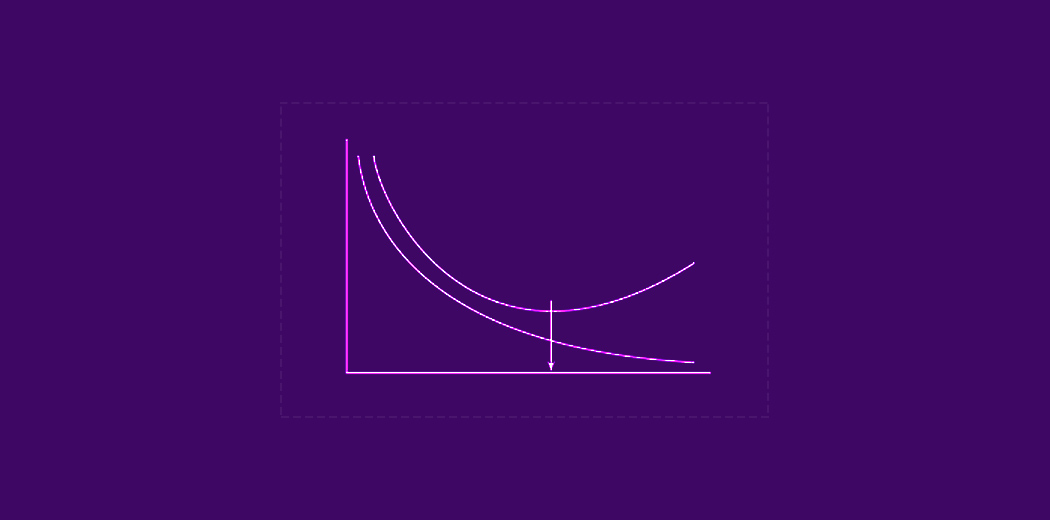
When training accuracy continues improving while validation accuracy plateaus or declines, it signals potential overfitting. -
Model Complexity Analysis
Examining the number of parameters relative to training data volume provides insights into potential overfitting risks.
Advanced Detection Techniques
Modern machine learning practitioners employ sophisticated techniques like cross-validation and learning curves to diagnose overfitting with precision.
def detect_overfitting(model, X_train, X_val, y_train, y_val):
    train_loss = model.evaluate(X_train, y_train)
    val_loss = model.evaluate(X_val, y_val)

    if val_loss > train_loss * 1.5:
        return "Potential Overfitting Detected"
    return "Model Generalization Appears Stable"
Comprehensive Strategies for Overfitting Prevention
1. Regularization: Taming Model Complexity
Regularization techniques introduce mathematical constraints that prevent models from becoming excessively complex. L1 and L2 regularization add penalty terms to the loss function, discouraging extreme weight configurations.
[Loss{Regularized} = Loss{Original} + \lambda \cdot \sum_{i} |w_i|^2]Where [\lambda] represents the regularization strength.
2. Dropout: Introducing Controlled Randomness
Dropout randomly deactivates neural connections during training, forcing the network to develop robust, redundant representations.
model.add(layers.Dropout(0.5)) # Randomly drop 50% of connections3. Data Augmentation: Expanding Learning Horizons
By synthetically expanding training datasets through transformations, we provide neural networks with diverse learning experiences.
data_augmentation = keras.Sequential([
    layers.RandomRotation(0.1),
    layers.RandomZoom(0.2),
    layers.RandomContrast(0.1)
])
Emerging Research Frontiers
Transfer Learning: Knowledge Migration
Transfer learning represents a paradigm shift in handling limited datasets. Pre-trained models developed on massive datasets can be fine-tuned for specific tasks, dramatically reducing overfitting risks.
Bayesian Neural Networks: Probabilistic Learning
Bayesian approaches introduce probabilistic frameworks that inherently manage model uncertainty, providing more nuanced learning mechanisms.
Practical Implementation Strategies
- Start with simpler model architectures
- Implement progressive complexity
- Continuously monitor validation performance
- Utilize ensemble techniques
- Embrace iterative refinement
The Future of Overfitting Mitigation
As computational capabilities expand and machine learning algorithms become more sophisticated, we can anticipate more intelligent, self-regulating neural network architectures.
Quantum computing and neuromorphic engineering promise revolutionary approaches to managing model complexity, potentially rendering traditional overfitting challenges obsolete.
Conclusion: Navigating the Learning Landscape
Overfitting isn‘t a weakness but a fundamental learning challenge. By understanding its mathematical foundations and implementing strategic prevention techniques, we transform potential limitations into opportunities for more robust, intelligent systems.
Your journey in mastering CNNs is an ongoing exploration of computational creativity, where each model represents a unique learning adventure.