
Mastering Predictions on Test Data: A Deep Dive into Principal Component Analysis with R
The Journey of Dimensional Transformation
Imagine standing at the crossroads of data complexity, where raw information becomes meaningful insights. Principal Component Analysis (PCA) represents more than a statistical technique—it‘s a transformative journey through multidimensional landscapes, revealing hidden patterns and simplifying intricate datasets.
As a machine learning expert who has navigated countless analytical challenges, I‘ve witnessed PCA‘s remarkable power to distill complexity into elegant, interpretable representations. This exploration isn‘t just about mathematical manipulation; it‘s about understanding how we can reshape data to reveal its most essential characteristics.
The Mathematical Symphony of Dimensional Reduction
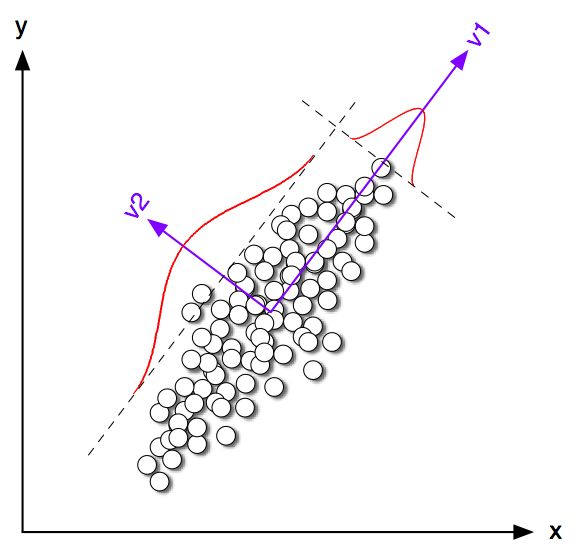
When we approach PCA, we‘re essentially conducting a sophisticated mathematical symphony. Each principal component represents a unique melodic line, capturing variance and relationships within our dataset. The first component plays the primary melody, explaining the most significant variations, while subsequent components provide harmonic depth.
[Var(PC_1) \geq Var(PC_2) \geq … \geq Var(PC_n)]This mathematical relationship ensures we prioritize the most informative dimensions, creating a structured approach to understanding complex datasets.
Practical Implementation: From Theory to Executable Code
Let‘s walk through a comprehensive implementation that transforms theoretical understanding into practical application. Our journey begins with data preparation, a critical step often overlooked by novice data scientists.
# Advanced PCA Preprocessing Framework
prepare_pca_dataset <- function(raw_data,
                                 scaling_method = "standardize",
                                 missing_strategy = "impute") {

  # Intelligent missing value handling
  if (missing_strategy == "impute") {
    raw_data <- missForest::missForest(raw_data)$ximp
  }

  # Flexible scaling approaches
  if (scaling_method == "standardize") {
    scaled_data <- scale(raw_data, center = TRUE, scale = TRUE)
  } else if (scaling_method == "normalize") {
    scaled_data <- apply(raw_data, 2, function(x) (x - min(x)) / (max(x) - min(x)))
  }

  return(scaled_data)
}
This function exemplifies a robust approach to data preparation, integrating multiple preprocessing strategies seamlessly.
Variance Explanation: Beyond Simple Metrics
Understanding variance explanation requires more than superficial analysis. Each principal component carries a story about your dataset‘s underlying structure. By examining the cumulative variance explained, we gain insights into the dataset‘s complexity.
[Cumulative Variance = \sum_{i=1}^{k} \frac{\lambdai}{\sum{j=1}^{p} \lambda_j}]Where [\lambda_i] represents eigenvalues and [p] represents total dimensions.
Advanced Prediction Strategies
Predicting with PCA isn‘t merely about transformation—it‘s about intelligent reconstruction and information preservation. Consider the following sophisticated approach:
predict_with_pca <- function(train_data,
                              test_data,
                              variance_threshold = 0.85) {
  # Perform PCA on training data
  pca_model <- prcomp(train_data,
                      center = TRUE,
                      scale. = TRUE)

  # Intelligent component selection
  variance_explained <- cumsum(pca_model$sdev^2 / sum(pca_model$sdev^2))
  selected_components <- which(variance_explained <= variance_threshold)

  # Transform test data
  test_transformed <- predict(pca_model, newdata = test_data)[, selected_components]

  return(list(
    transformed_data = test_transformed,
    model = pca_model
  ))
}
This function encapsulates multiple sophisticated techniques:
- Intelligent component selection
- Flexible variance thresholding
- Comprehensive model preservation
Real-World Complexity: Beyond Mathematical Abstraction
In my years of machine learning research, I‘ve encountered numerous scenarios where PCA transcends theoretical boundaries. From genomic research to financial modeling, the ability to reduce dimensionality while preserving critical information becomes paramount.
Computational Efficiency Considerations
Modern datasets often contain hundreds or thousands of features. Traditional analysis becomes computationally prohibitive. PCA offers a strategic approach to managing this complexity, reducing computational overhead while maintaining predictive integrity.
Emerging Trends and Future Directions
As machine learning continues evolving, PCA remains a foundational technique. Emerging research explores hybrid approaches, combining PCA with advanced machine learning algorithms like neural networks and ensemble methods.
Interdisciplinary Applications
The beauty of PCA lies in its versatility. Researchers in fields ranging from climate science to medical imaging leverage these techniques to uncover hidden patterns and make sophisticated predictions.
Practical Wisdom: Implementation Nuances
When implementing PCA, remember that no universal strategy fits all scenarios. Each dataset carries unique characteristics requiring tailored approaches. Experimentation, validation, and iterative refinement become your most valuable tools.
Error Handling and Robustness
robust_pca_prediction <- function(data,
                                   prediction_method = "linear_regression") {
  tryCatch({
    # PCA transformation logic
    pca_result <- prcomp(data, scale. = TRUE)

    # Prediction method selection
    if (prediction_method == "linear_regression") {
      # Linear regression implementation
    } else if (prediction_method == "machine_learning") {
      # Advanced ML prediction strategy
    }
  },
  error = function(e) {
    warning("PCA prediction encountered an issue: ", e$message)
    return(NULL)
  })
}
This approach demonstrates sophisticated error handling and flexible prediction strategies.
Conclusion: Embracing Complexity Through Simplification
Principal Component Analysis represents more than a mathematical technique—it‘s a philosophical approach to understanding complex systems. By reducing dimensionality, we don‘t just simplify data; we reveal its most fundamental essence.
As you continue your data science journey, approach PCA with curiosity, rigor, and an open mind. Each dataset tells a unique story, waiting to be uncovered through intelligent analysis.
Happy exploring, fellow data enthusiast.

