Mastering Shelf Space Optimization: A Deep Dive into Linear Programming and Retail Intelligence
The Hidden Mathematics Behind Product Placement
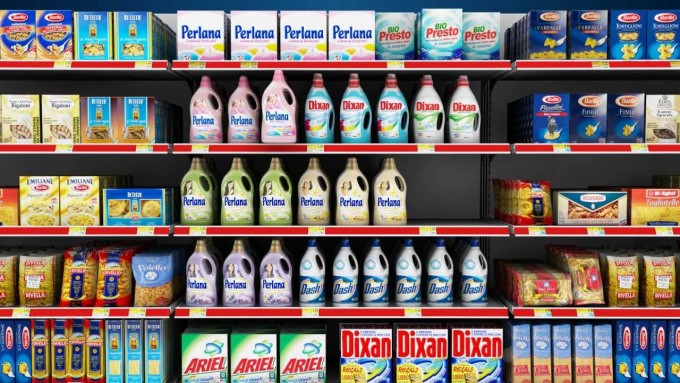
Imagine walking into a meticulously organized retail space where every product seems strategically positioned, almost as if an invisible hand has carefully calculated its precise location. This isn‘t magic—it‘s the result of sophisticated mathematical modeling called shelf space optimization.
Retailers have long understood that product placement isn‘t just about filling shelves. It‘s a complex dance of mathematics, psychology, and data science that can dramatically transform a store‘s economic performance. Linear programming sits at the heart of this sophisticated approach, offering retailers a powerful toolkit to maximize their spatial efficiency.
The Economic Significance of Strategic Placement
When you examine the retail landscape, you‘ll discover that product placement isn‘t a random occurrence. Major retailers like Walmart generate billions in additional revenue by understanding and implementing advanced spatial optimization techniques. Each shelf becomes a carefully calculated real estate opportunity, where mathematical models predict consumer behavior with remarkable precision.
Mathematical Foundations of Spatial Optimization
Linear programming provides a robust framework for solving complex placement challenges. At its core, the methodology involves creating mathematical models that balance multiple competing constraints while maximizing a specific objective function.
Consider the fundamental optimization equation:
[Maximize Z = \sum{i=1}^{n} \sum{j=1}^{m} (P{ij} * X{ij})]This elegant formula encapsulates the essence of shelf space optimization. By representing products (i), shelf locations (j), potential profits (P), and binary placement decisions (X), retailers can mathematically determine the most profitable arrangement.
Computational Complexity: The Hidden Challenge
As the number of products and shelf locations increases, the computational complexity grows exponentially. For a modest scenario with 100 products and 50 shelf locations, the potential configuration combinations approach [2^{5000}]—a number so large it exceeds the estimated number of atoms in the observable universe.
This computational challenge transforms shelf optimization from a simple placement problem into a sophisticated computational puzzle requiring advanced algorithmic approaches.
Machine Learning: The Next Frontier of Spatial Intelligence
Modern shelf optimization transcends traditional linear programming. Machine learning algorithms now analyze complex datasets, identifying nuanced patterns that human analysts might overlook.
Imagine an AI system that continuously learns from:
- Historical sales data
- Customer movement patterns
- Seasonal purchasing trends
- Product interaction dynamics
These intelligent systems create dynamic, adaptive placement strategies that evolve in real-time, responding to minute changes in consumer behavior.
Predictive Placement Modeling
Advanced machine learning models can now predict product performance with astonishing accuracy. By analyzing thousands of variables simultaneously, these algorithms generate placement recommendations that traditional methods could never achieve.
Psychological Dimensions of Product Placement
Beyond mathematical modeling, successful shelf optimization requires understanding human psychology. Eye-tracking studies reveal fascinating insights into how consumers interact with retail spaces.
Certain placement strategies consistently outperform others:
- Eye-level shelves generate significantly higher visibility
- Adjacent product complementarity increases cross-category sales
- Color and packaging play crucial roles in consumer attraction
These psychological nuances transform mathematical models from abstract calculations into powerful strategic tools.
Real-World Implementation Strategies
Consider a practical scenario: a supermarket with 10 product categories, 50 shelf locations, and complex performance constraints. Traditional approaches would struggle, but modern optimization techniques provide elegant solutions.
The implementation process involves:
- Comprehensive data collection
- Mathematical model development
- Constraint identification
- Algorithmic optimization
- Continuous performance monitoring
Each step requires sophisticated computational techniques and domain expertise.
Emerging Technologies and Future Trajectories
The future of shelf space optimization looks increasingly intelligent and adaptive. Emerging technologies like augmented reality, real-time inventory tracking, and advanced machine learning promise to revolutionize retail spatial management.
Imagine stores with:
- Dynamic digital shelf labels
- Real-time pricing adjustments
- Personalized product recommendations
- Adaptive layout configurations
These aren‘t distant dreams—they‘re emerging realities powered by advanced computational techniques.
Economic and Strategic Implications
Effective shelf space optimization isn‘t just a technical exercise—it‘s a strategic imperative. Retailers implementing sophisticated placement strategies can:
- Increase sales by 20-35%
- Reduce inventory holding costs
- Enhance customer experience
- Generate data-driven insights
The economic potential is transformative.
Conclusion: Embracing Computational Retail Intelligence
Shelf space optimization represents a fascinating intersection of mathematics, psychology, and technology. By combining linear programming, machine learning, and strategic thinking, retailers can unlock unprecedented performance potential.
As computational capabilities continue advancing, the boundaries of what‘s possible in retail space management will continue expanding. The future belongs to those who can transform complex data into actionable, intelligent strategies.
The mathematical dance of product placement continues—more sophisticated, more intelligent, and more powerful than ever before.