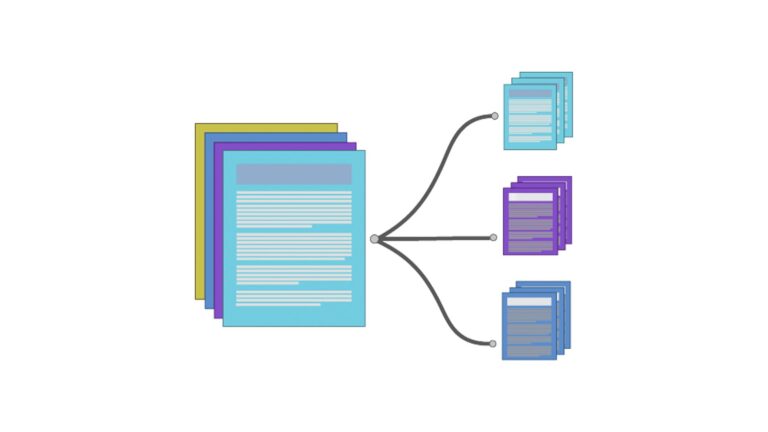
Mastering Stopword Removal in Python: A Comprehensive Journey Through Natural Language Processing
The Linguistic Puzzle: Understanding Stopwords in the Digital Age
Imagine you‘re an antique collector, meticulously sorting through a collection of rare manuscripts. Each document is filled with words, but not all words carry equal significance. Some are mere connectors, while others hold the essence of the narrative. In the realm of Natural Language Processing (NLP), we encounter a similar challenge with stopwords.
The Origins of Stopword Removal: A Historical Perspective
The concept of stopword removal isn‘t a recent technological marvel but a sophisticated linguistic technique that has evolved over decades. Its roots can be traced back to early information retrieval systems in the 1960s, where researchers recognized that certain words contributed minimal semantic value to text analysis.
Early computational linguists discovered that words like "the", "and", "is" appeared ubiquitously across documents, creating noise in text processing algorithms. These words, while crucial for human communication, became computational obstacles in machine understanding.
Mathematical Foundations of Stopword Removal
At its core, stopword removal is an elegant mathematical transformation. Consider a text document as a high-dimensional vector space where each unique word represents a dimension. Stopwords create sparse, low-information regions in this vector space.
[V_{text} = {w_1, w_2, …, w_n} ]Where [w_i] represents individual words, and stopwords form a subset that minimally impacts the overall semantic representation.
Computational Complexity Analysis
The time complexity of stopword removal typically follows an O(n) linear progression, where n represents the number of tokens in a text. However, the actual performance depends on the specific implementation and data structure used for stopword matching.
def remove_stopwords(text, stopword_set):
    """
    Efficient stopword removal with O(n) complexity

    Args:
        text (list): Tokenized text
        stopword_set (set): Predefined stopwords

    Returns:
        list: Filtered text without stopwords
    """
    return [token for token in text if token.lower() not in stopword_set]
Advanced Stopword Removal Techniques
Contextual Stopword Identification
Traditional stopword removal follows a binary approach: remove or retain. However, modern NLP techniques recognize that stopword significance can be context-dependent.
Consider the sentence: "The quick brown fox jumps over the lazy dog."
In traditional methods, "the" would be removed. But in certain semantic analyses, article placement might carry subtle grammatical nuances.
Machine Learning-Driven Stopword Selection
Contemporary research explores machine learning models that dynamically determine stopword relevance. These models consider:
- Document context
- Semantic relationships
- Domain-specific linguistic patterns
Multilingual Stopword Challenges
Stopword removal becomes exponentially complex when dealing with multiple languages. Each language possesses unique grammatical structures and connector words.
[Complexity_{multilingual} = f(linguistic_variation, grammatical_rules)]Implementation Strategy for Multilingual Stopwords
class MultilingualStopwordRemover:
    def __init__(self, languages=[‘en‘, ‘fr‘, ‘de‘]):
        self.stopword_collections = {
            ‘en‘: set(nltk.corpus.stopwords.words(‘english‘)),
            ‘fr‘: set(nltk.corpus.stopwords.words(‘french‘)),
            ‘de‘: set(nltk.corpus.stopwords.words(‘german‘))
        }

    def remove_stopwords(self, text, language=‘en‘):
        # Advanced multilingual stopword removal logic
        pass
Performance Optimization Strategies
Memory-Efficient Implementations
When processing large text corpora, memory management becomes critical. Utilize generator-based approaches and lazy evaluation techniques to minimize memory overhead.
def memory_efficient_stopword_removal(text_generator, stopwords):
    for document in text_generator:
        yield [word for word in document if word not in stopwords]
Emerging Research Directions
Neural Network Interactions
State-of-the-art transformer models like BERT and GPT are reshaping our understanding of stopword significance. These models learn contextual word embeddings that dynamically weigh word importance.
Quantum Natural Language Processing
Emerging quantum computing paradigms might revolutionize stopword processing, offering probabilistic approaches to semantic analysis that transcend classical computational limitations.
Practical Considerations and Ethical Implications
While stopword removal seems technically straightforward, it carries profound linguistic and ethical considerations. Over-aggressive stopword removal can inadvertently strip text of nuanced cultural and contextual information.
Recommendations for Responsible Implementation
- Always validate stopword lists against domain-specific requirements
- Maintain transparency in preprocessing techniques
- Consider cultural and linguistic diversity
Conclusion: The Evolving Landscape of Text Preprocessing
Stopword removal represents more than a mere preprocessing technique—it‘s a sophisticated dance between computational efficiency and linguistic understanding.
As artificial intelligence continues to advance, our approaches to text processing will become increasingly nuanced, adaptive, and intelligent.
Invitation to Exploration
I challenge you to view stopword removal not as a mechanical process, but as an art form—a delicate balance between computational precision and linguistic creativity.
Embrace the complexity, experiment relentlessly, and continue pushing the boundaries of what‘s possible in natural language processing.
Happy coding, fellow language explorer! 🚀📘