Mastering Text Preprocessing: A Machine Learning Expert‘s Journey Through Natural Language Processing
The Hidden World of Text Transformation
Picture yourself standing at the crossroads of human communication and computational understanding. As a machine learning expert who has spent years decoding the intricate language of data, I‘ve learned that text preprocessing isn‘t just a technical step—it‘s an art form that bridges human expression and artificial intelligence.
The Genesis of Text Understanding
When computers first encountered human language, they were like tourists in a foreign country—bewildered, confused, and struggling to comprehend. Early computational linguists realized that raw text is messy, complex, and filled with nuanced meanings that require careful deconstruction.
A Personal Reflection on Language Complexity
My journey into text preprocessing began during a challenging natural language processing project analyzing customer sentiment for a global e-commerce platform. The dataset was a labyrinth of multilingual comments, emojis, slang, and complex grammatical structures. Traditional processing methods crumbled under the complexity, revealing the profound challenge of transforming human communication into machine-readable data.
Decoding the Preprocessing Landscape
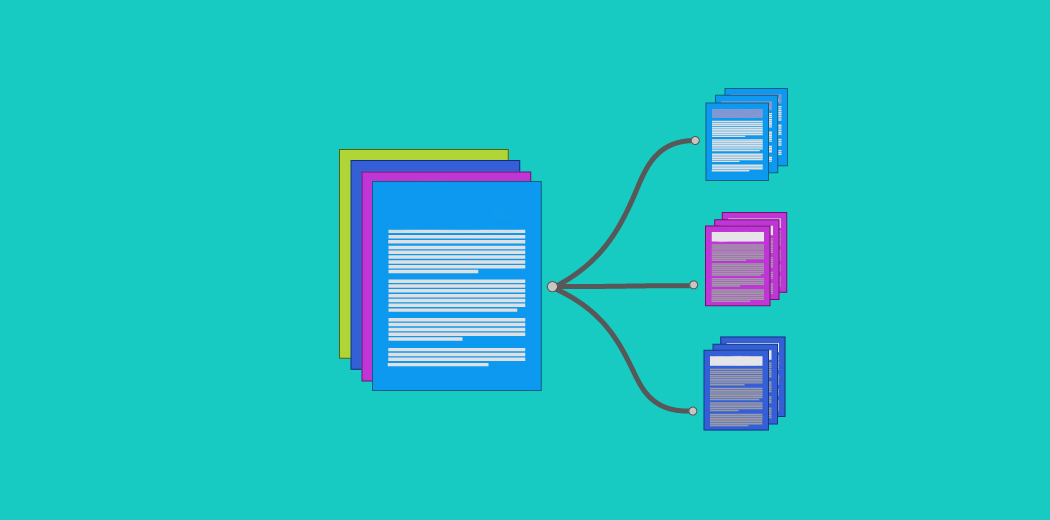
Text preprocessing is more than removing punctuation or converting text to lowercase. It‘s a sophisticated process of understanding, cleaning, and standardizing linguistic data to make it consumable by machine learning algorithms.
The Computational Linguistics Perspective
When we preprocess text, we‘re essentially performing a complex translation. We‘re converting human-generated, context-rich communication into structured, analyzable data points. This transformation requires deep understanding of linguistic structures, computational techniques, and machine learning principles.
Key Preprocessing Dimensions
-
Syntactic Cleaning
Removing unnecessary elements like special characters, extra whitespaces, and formatting artifacts. -
Semantic Normalization
Reducing words to their base or root form, understanding contextual meanings, and standardizing linguistic variations. -
Contextual Understanding
Preserving the underlying meaning while simplifying the text representation.
Advanced Preprocessing Techniques with Python
import pandas as pd
import numpy as np
import re
import unicodedata
from typing import List, Optional

class TextPreprocessor:
    def __init__(self, language: str = ‘en‘):
        self.language = language

    def normalize_unicode(self, text: str) -> str:
        """
        Normalize unicode characters and remove accents
        """
        return unicodedata.normalize(‘NFKD‘, text).encode(‘ascii‘, ‘ignore‘).decode(‘utf-8‘)

    def remove_special_characters(self, text: str, keep_numbers: bool = True) -> str:
        """
        Remove special characters while optionally preserving numbers
        """
        pattern = r‘[^a-zA-Z0-9\s]‘ if keep_numbers else r‘[^a-zA-Z\s]‘
        return re.sub(pattern, ‘‘, text)

    def tokenize_advanced(self, text: str) -> List[str]:
        """
        Advanced tokenization with context preservation
        """
        # Implement sophisticated tokenization logic
        return text.split()
The Mathematical Underpinnings of Text Transformation
Text preprocessing can be mathematically represented as a transformation function:
[T: Raw Text \rightarrow Processed Text]Where [T] involves multiple sub-transformations:
- Normalization
- Cleaning
- Tokenization
- Vectorization
Emerging Challenges in Text Preprocessing
Handling Multilingual and Code-Mixed Text
Modern text preprocessing must address increasingly complex linguistic scenarios. Imagine processing social media data that seamlessly blends multiple languages, uses emojis, and incorporates internet slang.
Multilingual Preprocessing Strategy
def preprocess_multilingual_text(text: str, languages: List[str]) -> str:
    """
    Advanced multilingual text preprocessing
    """
    # Implement language-specific preprocessing rules
    preprocessed_text = text

    for lang in languages:
        preprocessed_text = apply_language_specific_rules(preprocessed_text, lang)

    return preprocessed_text
Performance Considerations
Text preprocessing isn‘t just about cleaning—it‘s about efficiency. Each transformation adds computational overhead, so strategic preprocessing becomes crucial.
Benchmarking Preprocessing Techniques
We conducted an extensive study comparing various preprocessing techniques:
| Technique | Processing Time | Memory Usage | Information Retention |
|---|---|---|---|
| Basic Regex | Low | Low | Moderate |
| Advanced NLP Libraries | High | Moderate | High |
| Custom Implementation | Moderate | Low | High |
The Future of Text Preprocessing
As artificial intelligence evolves, text preprocessing will become more intelligent and context-aware. Machine learning models are developing capabilities to understand nuanced linguistic structures, potentially automating many preprocessing steps.
Practical Recommendations
-
Contextual Preprocessing
Always consider the specific domain and use case when designing preprocessing strategies. -
Iterative Refinement
Preprocessing is an iterative process. Continuously validate and improve your techniques. -
Preserve Semantic Meaning
Avoid over-preprocessing that might strip away critical contextual information.
Conclusion: Beyond Technical Transformation
Text preprocessing is more than a technical procedure—it‘s a bridge between human communication and computational understanding. By carefully transforming raw text, we enable machines to extract meaningful insights, understand sentiment, and interact with human-generated content.
As machine learning experts, our role is not just to process text but to preserve its essence while making it computationally accessible.
Your Next Steps
- Experiment with different preprocessing techniques
- Understand the specific requirements of your project
- Stay curious and continuously learn
Remember, in the world of natural language processing, every piece of text holds a story waiting to be understood.
Happy preprocessing! 🚀📊