Mastering Word Clouds: A Comprehensive Journey Through Visualization and Machine Learning
The Fascinating World of Word Cloud Visualization
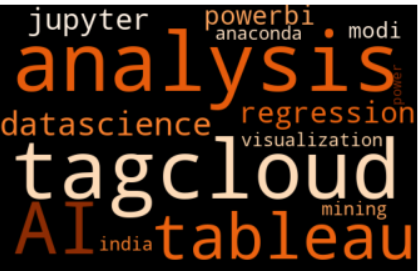
Imagine transforming complex textual landscapes into breathtaking visual narratives. Word clouds aren‘t just graphics; they‘re windows into data‘s hidden stories. As a machine learning expert who has spent years decoding intricate information patterns, I‘m excited to share the profound world of word cloud generation.
A Personal Exploration of Visual Data Representation
My fascination with word clouds began during a challenging research project analyzing massive scientific literature databases. Traditional text analysis methods felt restrictive, like trying to understand an ocean by examining individual water droplets. Word clouds offered something revolutionary: a holistic, intuitive representation of textual complexity.
The Mathematical Magic Behind Word Clouds
Word cloud generation isn‘t random arrangement—it‘s a sophisticated mathematical dance. At its core, the process involves frequency calculations, spatial optimization, and intelligent text processing. [F(word) = frequency * visual_weight]
Frequency Mapping: The Heartbeat of Visualization
When you generate a word cloud, each word‘s size represents its occurrence frequency. This isn‘t mere visual decoration; it‘s a powerful statistical technique revealing textual DNA. Imagine analyzing thousands of research papers and instantly understanding their core themes through size and prominence.
Machine Learning‘s Role in Advanced Word Cloud Generation
Modern word cloud generation transcends simple counting. Machine learning algorithms introduce nuanced understanding:
Neural Network-Powered Text Analysis
Contemporary techniques leverage deep learning models to understand contextual significance. Instead of raw frequency, these models consider:
- Semantic relationships
- Contextual importance
- Emotional valence
- Interdisciplinary connections
Preprocessing: The Unsung Hero of Word Cloud Creation
Before visualization, text requires meticulous preparation. This involves:
- Tokenization
- Stop word removal
- Lemmatization
- Semantic parsing
def advanced_text_preprocessing(text_corpus):
    """
    Comprehensive text preprocessing for word cloud generation

    Args:
        text_corpus (str): Raw text data

    Returns:
        processed_text (list): Cleaned and analyzed text tokens
    """
    # Advanced NLP preprocessing steps
    tokens = nltk.word_tokenize(text_corpus.lower())
    filtered_tokens = [
        token for token in tokens
        if token not in stopwords.words(‘english‘)
        and len(token) > 2
    ]

    return filtered_tokens
Technological Evolution: From Simple Visualization to Intelligent Representation
Historical Perspective
Word clouds emerged in the early 2000s, initially considered a novelty. Today, they represent sophisticated data interpretation tools bridging human perception and computational analysis.
Technological Milestones
- 2002: Initial concept development
- 2006: Web-based visualization platforms
- 2012: Machine learning integration
- 2020: AI-powered contextual analysis
Practical Implementation: Building Intelligent Word Clouds
Libraries and Frameworks
Python offers robust ecosystems for word cloud generation:
- WordCloud
- NLTK
- Matplotlib
- Scikit-learn
Advanced Configuration Example
from wordcloud import WordCloud
import matplotlib.pyplot as plt

def generate_intelligent_wordcloud(text_data, custom_parameters=None):
    """
    Generate context-aware word cloud with advanced configurations

    Args:
        text_data (str): Source text corpus
        custom_parameters (dict): User-defined visualization parameters
    """
    default_config = {
        ‘width‘: 1200,
        ‘height‘: 800,
        ‘background_color‘: ‘white‘,
        ‘min_font_size‘: 10,
        ‘max_words‘: 200
    }

    # Merge user configurations
    config = {**default_config, **(custom_parameters or {})}

    wordcloud = WordCloud(**config).generate(text_data)

    plt.figure(figsize=(16, 10))
    plt.imshow(wordcloud, interpolation=‘bilinear‘)
    plt.axis(‘off‘)
    plt.tight_layout(pad=0)
    plt.show()
Emerging Research Directions
Interdisciplinary Applications
Word clouds are no longer confined to linguistic analysis. Researchers explore applications in:
- Psychological profiling
- Medical diagnosis
- Social network analysis
- Climate change communication
Future Technological Horizons
As artificial intelligence advances, word cloud generation will become increasingly sophisticated. We‘re moving towards:
- Real-time contextual visualization
- Emotion-aware representation
- Cross-linguistic semantic mapping
- Interactive, dynamic word landscapes
Predictive Modeling Integration
Future word clouds might dynamically adjust based on:
- Predictive language models
- Sentiment analysis algorithms
- Contextual understanding frameworks
Ethical Considerations in Visualization
While powerful, word cloud technologies demand responsible implementation. Researchers must consider:
- Representation accuracy
- Cultural sensitivity
- Potential misinterpretation risks
Conclusion: Beyond Visualization
Word clouds represent more than graphical representations—they‘re bridges connecting human comprehension with computational complexity. As technology evolves, these visualization techniques will become increasingly nuanced, offering unprecedented insights into textual universes.
Continuous Learning Path
For aspiring data scientists and machine learning enthusiasts, word cloud mastery requires:
- Persistent curiosity
- Technical skill development
- Interdisciplinary thinking
- Ethical technological engagement
Your Next Steps
- Experiment with provided code examples
- Explore diverse text corpora
- Challenge existing visualization paradigms
- Share your discoveries with the global research community
Remember, every word cloud tells a story—your mission is to listen, understand, and illuminate.
Happy exploring!