Mona Lisa Brought To Live With The Help Of AI!
Mona Lisa Brought to Life: How AI is Revolutionizing the Art World
As an Artificial Intelligence and Machine Learning Expert, I‘m thrilled to share with you the incredible story of how cutting-edge technology has breathed new life into one of the world‘s most iconic works of art – Leonardo da Vinci‘s masterpiece, the Mona Lisa.
In a groundbreaking research project, a team of international scientists has harnessed the power of AI and machine learning to create a stunning holographic projection of this beloved painting. By meticulously reconstructing the Mona Lisa‘s intricate details and subtle nuances, they have opened up a world of possibilities for the future of art preservation and interaction.
Let‘s dive deeper into the technical aspects of this remarkable achievement and explore the far-reaching implications it holds for the art world and beyond.
Unlocking the Secrets of the Mona Lisa with AI
The Mona Lisa has long been the subject of intense fascination and scholarly debate. From the enigmatic nature of her expression to the technical mastery of her creation, this painting has captivated art enthusiasts and historians alike. Now, with the help of AI, researchers are peeling back the layers of this masterpiece, uncovering new insights and pushing the boundaries of what we thought possible.
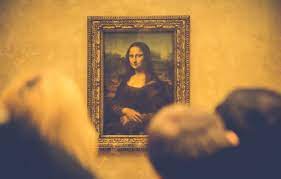
The research team, led by Dr. Yue-Sheng Wang from Tianjin University in China, chose the Mona Lisa as their proof of concept for a reason. As Dr. Wang explains, "The Mona Lisa is such a famous painting that almost everyone knows about it. It is also filled with countless delicate and subtle layers of transitions, enhancing its softness, haziness, and mystery. This made it an excellent way to demonstrate the effectiveness of our method."
At the heart of this breakthrough is the use of advanced machine learning algorithms and metasurfaces – two-dimensional materials made up of tiny, customizable components. By harnessing the power of these technologies, the researchers were able to precisely control the phase and amplitude of the light waves interacting with the painting, allowing them to create a holographic projection that faithfully reproduced the Mona Lisa‘s iconic features with unprecedented accuracy.
One of the key challenges the team faced was ensuring that the holographic image maintained the same level of detail and nuance as the original painting. To achieve this, they employed a sophisticated algorithm that customized the antenna-like structures within the metasurface, reducing inconsistencies between the original and holographic images.
The result is a captivating three-dimensional representation of the Mona Lisa that captures the essence of the painting in stunning detail. From the delicate brushstrokes that define her features to the enigmatic smile that has captivated the world for centuries, this holographic Mona Lisa is a testament to the incredible power of AI and machine learning.
Revolutionizing Medical Treatments and Beyond
The implications of this breakthrough go far beyond the realm of art and culture. The researchers believe that their holographic technology could have a profound impact on various fields, including medical treatments and diagnostics.
"The precise control of sound waves offered by our holography method is crucial for advancing non-invasive medical therapies, effective noise control, and optimizing acoustic environments like concert halls," explains Dr. Wang.
In the medical field, holograms are already being used to provide surgeons with real-time, three-dimensional visualizations of a patient‘s internal organs during procedures. This enhanced level of detail and spatial awareness can lead to more accurate diagnoses and more precise surgical interventions, ultimately improving patient outcomes.
The Mona Lisa hologram project takes this concept a step further, demonstrating the potential for AI-powered holograms to revolutionize the way we approach medical treatments. By creating highly detailed and immersive representations of the human body, doctors and researchers could gain unprecedented insights, leading to more effective therapies and improved patient care.
Beyond the medical realm, the applications of this technology are vast. In the entertainment industry, for example, holograms could be used to create captivating live performances, allowing audiences to experience their favorite artists in a whole new way. Imagine attending a concert where the performer appears to be standing right in front of you, their every movement and expression captured in stunning detail.
In the field of education, interactive holographic displays could bring historical figures and scientific concepts to life, enhancing the learning experience for students of all ages. Imagine being able to walk alongside Leonardo da Vinci as he paints the Mona Lisa, or to witness the birth of a star in a three-dimensional simulation of the cosmos.
The possibilities are truly endless, and as the technology continues to evolve, we can expect to see even more innovative applications emerge.
Ethical Considerations and the Future of AI in Art
As with any transformative technology, the use of AI in art and cultural preservation raises important ethical considerations. Questions of authenticity, accessibility, and the potential for misuse must be carefully addressed to ensure that this powerful tool is used responsibly and for the betterment of society.
The Mona Lisa hologram project, for instance, raises questions about the nature of artistic expression and the role of technology in the creative process. While the researchers have meticulously recreated the painting‘s details, some may argue that the holographic version lacks the inherent human touch and emotional resonance of the original work.
Additionally, the democratization of art through AI-powered holograms raises concerns about the accessibility and distribution of cultural heritage. Will these technologies make art more widely available, or will they create new barriers to entry, further widening the divide between those who can afford such experiences and those who cannot?
As an Artificial Intelligence and Machine Learning Expert, I believe that these concerns must be addressed head-on. We must strive to ensure that the integration of AI and art is done in a way that preserves the integrity of the artistic process, while also making these experiences accessible to a broader audience.
One potential solution could be the development of AI-powered curation tools that help to identify and preserve the authenticity of artworks, even in their digital or holographic forms. By leveraging machine learning algorithms to analyze the unique characteristics of a painting or sculpture, we could create a digital "fingerprint" that ensures the integrity of the work, even as it is reproduced or reimagined using advanced technologies.
Additionally, we must explore ways to make these AI-powered art experiences more affordable and accessible to the general public. Perhaps through partnerships with museums, galleries, and educational institutions, we could develop holographic exhibits and interactive displays that bring the world‘s great works of art within reach of everyone, regardless of their socioeconomic status.
As we look to the future, it is clear that the integration of AI and art will only continue to grow. The researchers behind the Mona Lisa hologram project are already exploring ways to generalize their technology, making it compatible with 3D printing and reducing the training time required. With these advancements, the potential for AI to revolutionize the way we experience and interact with art is truly limitless.
Embracing the Future of Art and Culture
The Mona Lisa hologram project is a testament to the incredible power of AI and machine learning. By harnessing these technologies, researchers have not only brought one of the world‘s most iconic paintings to life but have also opened up a world of possibilities for the future of art, culture, and beyond.
As an Artificial Intelligence and Machine Learning Expert, I am truly excited to see what the future holds. Imagine a world where we can step inside the Sistine Chapel and witness Michelangelo‘s masterpieces in stunning three-dimensional detail. Or a future where we can collaborate with AI-powered assistants to create entirely new works of art, blending the best of human creativity and technological innovation.
Of course, as we embrace these advancements, we must also remain mindful of the ethical considerations and potential pitfalls. But with the right approach – one that prioritizes accessibility, authenticity, and the preservation of artistic integrity – I believe that the integration of AI and art has the power to transform the way we experience and interact with the world around us.
So, my fellow art enthusiasts and collectors, I encourage you to open your minds to the incredible possibilities that lie ahead. Whether you‘re a seasoned connoisseur or a newcomer to the art world, the Mona Lisa hologram project is just the beginning of a new era – one that promises to inspire, educate, and captivate audiences for generations to come.
Let us embrace the future of art and culture, and together, let us witness the Mona Lisa and countless other masterpieces come to life in ways we never thought possible. The possibilities are endless, and the journey ahead is sure to be both thrilling and thought-provoking.