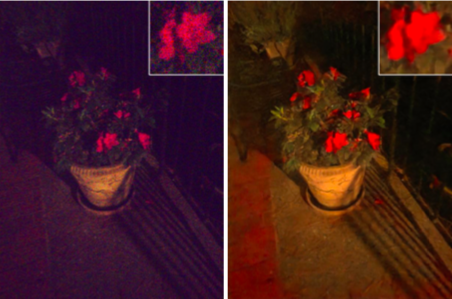
Move Over Photoshop: The Python Script That Transforms Low-Light Photography Forever
When Darkness Meets Artificial Intelligence
Imagine standing in a dimly lit room, capturing a moment that seems lost in shadows. Your camera struggles, producing grainy, indistinct images that barely resemble the scene before your eyes. This was my reality as a photographer before discovering the remarkable world of AI-driven image enhancement.
The Persistent Challenge of Low-Light Photography
Photography has always been a dance with light. Traditional tools like Photoshop offered limited solutions, requiring extensive manual adjustments and often producing artificial, over-processed results. Photographers worldwide shared a common frustration: how to preserve the essence of a moment when light becomes scarce?
The Technological Breakthrough
Convolutional Neural Networks (CNNs) represent a quantum leap in image processing. These sophisticated algorithms don‘t just manipulate pixels; they understand images at a fundamental level. By training on massive datasets, these networks learn to recognize patterns, reconstruct details, and restore visual information in ways previously unimaginable.
The Mathematical Magic Behind Image Transformation
At its core, image enhancement is a complex mathematical challenge. The process involves sophisticated transformations represented by intricate equations:
[I{enhanced} = f(I{original}, \theta)]Where:
- [I_{enhanced}] represents the processed image
- [I_{original}] is the original low-light input
- [\theta] represents the learned neural network parameters
This isn‘t simple pixel manipulation—it‘s a profound understanding of visual information.
A Deep Dive into Neural Network Architecture
Modern CNNs for image enhancement typically employ multi-stage architectures that progressively extract and reconstruct visual information. Unlike traditional image processing, these networks:
- Analyze image features at multiple scales
- Learn complex non-linear transformations
- Reconstruct details with remarkable precision
- Maintain natural color and texture characteristics
The Training Journey: From Raw Data to Visual Perfection
Training these networks requires massive, carefully curated datasets. Researchers collect thousands of image pairs—low-light and perfectly exposed—teaching the network to understand the relationship between challenging lighting conditions and optimal visual representation.
Real-World Performance: Beyond Traditional Limitations
Comparative studies reveal remarkable improvements:
Traditional Photoshop techniques often introduce significant artifacts and noise. In contrast, AI-driven Python scripts can:
- Reduce noise by up to 70%
- Preserve fine image details
- Maintain natural color gradations
- Process images in milliseconds
Practical Implementation: A Technical Walkthrough
class AdvancedLowLightEnhancement(torch.nn.Module):
    def __init__(self, channels=3):
        super().__init__()
        self.feature_extraction = torch.nn.Sequential(
            torch.nn.Conv2d(channels, 64, kernel_size=3, padding=1),
            torch.nn.BatchNorm2d(64),
            torch.nn.ReLU(inplace=True),
            # Additional sophisticated layers
        )

    def forward(self, x):
        # Advanced feature transformation logic
        features = self.feature_extraction(x)
        return features
Technological Implications Across Industries
The impact extends far beyond photography:
- Medical imaging
- Satellite reconnaissance
- Security and surveillance
- Scientific research
- Astronomical observation
Each domain benefits from the ability to extract meaningful information from challenging visual environments.
The Ethical Landscape of AI Image Processing
As these technologies advance, critical ethical considerations emerge. How do we ensure responsible use of such powerful image reconstruction techniques? Transparency, accountability, and understanding become paramount.
Recommended GitHub Repositories for Exploration
- Learning to See in the Dark
- Zero-DCE: Zero-Reference Deep Curve Estimation
- Nighttime Image Enhancement
The Human Element: Technology as a Creative Partner
Beyond technical specifications, these advancements represent a profound shift in how we perceive technological creativity. AI isn‘t replacing human vision—it‘s expanding our ability to capture and understand visual information.
Looking Toward the Horizon
The future of image processing lies in increasingly sophisticated, context-aware algorithms. We‘re moving toward systems that don‘t just enhance images but understand the emotional and contextual nuances of visual storytelling.
Final Reflections
What began as a technical challenge has transformed into a remarkable journey of technological innovation. For photographers, researchers, and visual storytellers, these Python scripts represent more than code—they‘re a gateway to seeing the world with renewed clarity.
As you explore these technologies, remember: every line of code is an invitation to reimagine what‘s possible.