Navigating the Data Warehouse Landscape: A Comprehensive Exploration for Modern Innovators
The Genesis of Data Warehousing: A Technological Odyssey
Imagine standing at the crossroads of information management, where raw data transforms into strategic gold. This is the world of data warehousing – a realm where technology meets business intelligence with extraordinary precision.
Data warehousing isn‘t just a technological solution; it‘s a narrative of how organizations decode complex information landscapes. From humble beginnings in corporate basements to sophisticated cloud-based ecosystems, this journey represents humanity‘s relentless pursuit of understanding.
The Evolutionary Path of Data Management
When businesses first confronted massive data volumes, traditional databases buckled under complexity. Early data professionals resembled digital archaeologists, excavating insights from fragmented information repositories. They needed a more intelligent approach – and thus, data warehousing emerged.
Technological Metamorphosis
The transformation wasn‘t overnight. Each technological leap represented a profound reimagining of data‘s potential. Relational databases gave way to multidimensional analytical platforms, creating unprecedented opportunities for strategic decision-making.
Understanding Modern Data Warehouse Architecture
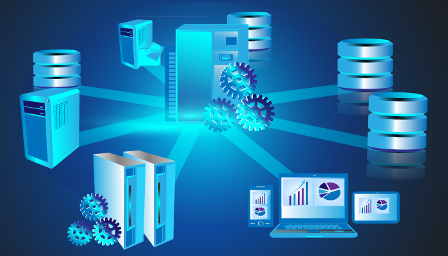
Modern data warehouse architecture resembles a sophisticated neural network, capable of processing, storing, and analyzing information with remarkable efficiency. Unlike traditional systems, contemporary platforms integrate multiple data sources seamlessly, creating a unified intelligence hub.
Architectural Components: Beyond Simple Storage
Imagine a data warehouse as a living, breathing organism. Its components work in harmonious synchronization:
- Data Ingestion Layer: The sensory system capturing information from diverse sources
- Processing Framework: The brain interpreting and transforming raw data
- Storage Architecture: The memory preserving historical and current insights
- Analytical Engine: The cognitive mechanism generating strategic recommendations
Cloud-Native Revolution: Redefining Possibilities
Cloud technologies have fundamentally reimagined data warehouse capabilities. Platforms like Snowflake, Amazon Redshift, and Google BigQuery represent more than technological solutions – they‘re gateways to unprecedented analytical potential.
Scalability: The New Competitive Advantage
Consider scalability as organizational flexibility. Modern data warehouses can expand or contract instantaneously, adapting to business dynamics with mathematical precision. [Scalability = \frac{Resource Allocation}{Computational Demand}]
Industry-Specific Transformations
Financial Services: Risk Management Reimagined
In financial ecosystems, data warehouses function as sophisticated risk management platforms. They don‘t merely store transactions; they predict potential market fluctuations, analyze complex economic patterns, and provide strategic insights.
Healthcare: Predictive Intelligence
Healthcare data warehouses represent life-saving technological marvels. By integrating patient records, research data, and clinical insights, these platforms enable predictive diagnostics and personalized treatment strategies.
Technological Challenges and Innovative Solutions
No technological journey is without obstacles. Data warehouse implementation presents complex challenges:
Data Quality Management
Ensuring data integrity requires more than technological prowess – it demands a holistic approach combining advanced algorithms, human expertise, and rigorous validation frameworks.
Performance Optimization Strategies
Performance isn‘t just about speed; it‘s about intelligent resource allocation. Advanced data warehouses utilize machine learning algorithms to continuously optimize query execution, storage mechanisms, and computational resources.
The Human Element: Beyond Technological Infrastructure
While discussing complex technological systems, we must remember that data warehouses are ultimately human-centric solutions. They exist to solve real-world problems, transform business strategies, and unlock human potential.
Ethical Considerations in Data Management
As data becomes increasingly powerful, ethical considerations become paramount. Responsible data warehousing means protecting individual privacy, ensuring transparent data usage, and maintaining strict governance standards.
Future Trajectory: Emerging Technological Frontiers
The next decade will witness extraordinary developments in data warehouse technologies:
- Artificial Intelligence Integration
- Quantum Computing Potential
- Edge Computing Capabilities
- Sustainable Technology Frameworks
Predictive Technological Landscape
Emerging data warehouse technologies will likely blur boundaries between storage, processing, and intelligence. We‘re moving towards self-healing, adaptive systems that learn and evolve autonomously.
Strategic Recommendations for Organizations
For businesses seeking to leverage data warehouse technologies:
- Invest in continuous learning
- Prioritize flexibility over rigid infrastructures
- Develop a culture of data-driven decision-making
- Embrace technological experimentation
Conclusion: The Ongoing Digital Transformation
Data warehousing represents more than a technological solution – it‘s a testament to human innovation. As we continue pushing technological boundaries, these platforms will become increasingly sophisticated, intelligent, and transformative.
Our journey through data landscapes is just beginning. Each breakthrough brings us closer to understanding the profound potential of information.
About the Expert
With decades of experience navigating technological frontiers, I‘ve witnessed the remarkable evolution of data management systems. This exploration represents not just technological insights, but a passionate commitment to understanding how information can drive human progress.
Stay curious. Stay innovative.