Neural Networks Unveiled: A Comprehensive Journey from Mathematical Foundations to Python Implementation
The Unexpected Path to Understanding Neural Networks
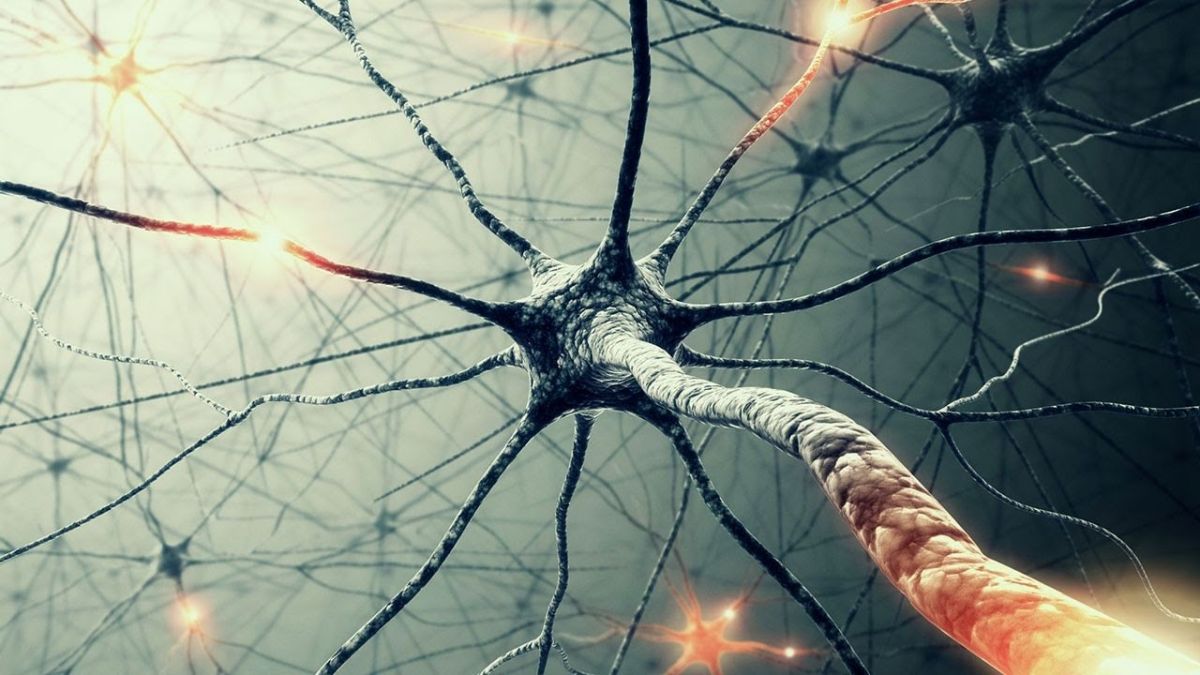
Imagine standing at the crossroads of mathematics, computer science, and human cognition. This is where neural networks reside – a fascinating realm where lines of code mimic the intricate workings of our brain. My journey into understanding neural networks wasn‘t a straight path; it was a winding road filled with curiosity, challenges, and countless "aha" moments.
A Brief Historical Perspective
Neural networks didn‘t emerge overnight. They evolved through decades of research, inspired by our understanding of biological neural systems. The first computational models emerged in the 1940s, with researchers like Warren McCulloch and Walter Pitts creating simplified mathematical models of biological neurons.
The Mathematical Symphony of Neural Networks
At their essence, neural networks are sophisticated mathematical transformations. They‘re not magical black boxes, but carefully constructed systems that learn patterns through intricate mathematical operations.
Consider the fundamental neuron equation:
[f(x) = \sigma(w_1x_1 + w_2x_2 + … + w_nx_n + b)]This seemingly simple equation encapsulates the power of neural networks. Let‘s break it down together.
Architecting Neural Networks: A Practical Approach
When designing neural networks, think of it like constructing a complex musical instrument. Each component plays a crucial role in creating harmonious output.
Layer Composition and Design
class NeuralNetworkArchitect:
    def __init__(self, input_dimensions, hidden_layer_configurations):
        self.network_topology = self._design_network_layers(
            input_dimensions,
            hidden_layer_configurations
        )

    def _design_network_layers(self, input_size, layer_config):
        # Intelligent layer configuration logic
        layers = []
        previous_size = input_size

        for layer_neurons in layer_config:
            layer = DenseLayer(previous_size, layer_neurons)
            layers.append(layer)
            previous_size = layer_neurons

        return layers
Activation Functions: The Non-Linear Transformers
Activation functions are the heartbeat of neural networks. They introduce non-linearity, allowing networks to learn complex representations.
Advanced Activation Function Implementation
class ActivationFunctions:
    @staticmethod
    def swish(x):
        return x * sigmoid(x)

    @staticmethod
    def mish(x):
        return x * tanh(softplus(x))
Gradient Descent: Navigating the Error Landscape
Think of gradient descent as a mountaineer finding the lowest point in a complex terrain. It‘s an optimization algorithm that helps neural networks minimize prediction errors.
Stochastic Gradient Descent with Momentum
class GradientDescentOptimizer:
    def __init__(self, learning_rate=0.01, momentum=0.9):
        self.learning_rate = learning_rate
        self.momentum = momentum
        self.velocity = None

    def update_parameters(self, parameters, gradients):
        if self.velocity is None:
            self.velocity = [np.zeros_like(param) for param in parameters]

        updated_parameters = []
        for param, grad, vel in zip(parameters, gradients, self.velocity):
            vel = self.momentum * vel - self.learning_rate * grad
            updated_param = param + vel

            updated_parameters.append(updated_param)

        return updated_parameters
Performance Optimization Techniques
Neural networks are computational symphonies. Optimizing their performance requires strategic approaches:
- Efficient weight initialization
- Adaptive learning rates
- Regularization strategies
- Batch normalization
- Dropout mechanisms
Real-World Neural Network Challenges
Implementing neural networks isn‘t just about writing code. It‘s about understanding complex interactions between mathematical models and computational constraints.
Memory and Computational Complexity
Neural networks consume significant computational resources. Modern implementations leverage GPU acceleration and distributed computing frameworks to manage this complexity.
The Philosophical Dimension
Beyond mathematics and code, neural networks represent a profound attempt to simulate learning and intelligence. They challenge our understanding of cognition, raising fundamental questions about machine intelligence.
Future Perspectives
As computational power increases and algorithms become more sophisticated, neural networks will continue evolving. Emerging paradigms like neuromorphic computing and quantum neural networks promise exciting developments.
Conclusion: Your Neural Network Journey
Remember, mastering neural networks is a journey, not a destination. Each line of code, each mathematical equation is a step towards understanding intelligence‘s intricate dance.
Embrace the complexity, stay curious, and never stop learning.
Recommended Resources
- Deep Learning by Ian Goodfellow
- Neural Networks and Deep Learning – Michael Nielsen
- TensorFlow and PyTorch Documentation