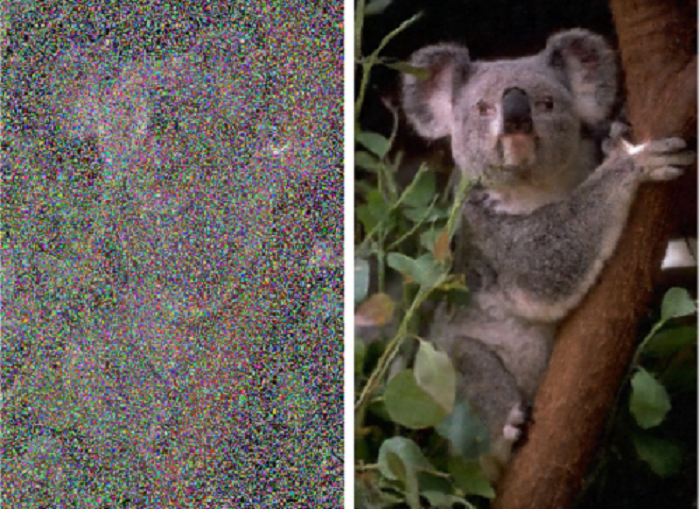
NVIDIA‘s Noise2Noise: Reimagining Visual Restoration Through Machine Learning
When Pixels Tell a Story: My Journey into Image Reconstruction
Picture this: You‘re standing on a windswept mountain ridge, camera in hand, capturing a breathtaking landscape. The moment feels perfect—until you review the image later and realize it‘s riddled with noise, grain, and unexpected artifacts. This frustration has haunted photographers, scientists, and visual storytellers for decades.
Enter NVIDIA‘s Noise2Noise technique—a revolutionary approach that transforms how we understand and restore visual information. This isn‘t just another technical advancement; it‘s a paradigm shift in machine learning and computational photography.
The Visual Noise Challenge
Every image tells a story, but sometimes that story gets obscured by technological limitations. Traditional image restoration methods required pristine reference images—a constraint that often felt like trying to rebuild a complex puzzle without seeing the original picture.
NVIDIA‘s researchers recognized this fundamental challenge and approached it with a radical perspective: What if we could teach machines to understand and reconstruct images using only noisy data?
The Mathematical Symphony of Image Restoration
At its core, Noise2Noise represents a sophisticated mathematical dance between probability, neural networks, and visual perception. Imagine a complex algorithm that doesn‘t just see pixels, but understands the underlying structural language of images.
The technique leverages advanced convolutional neural networks (CNNs) that learn through a process more nuanced than traditional image processing. Instead of relying on clean reference images, these networks develop an intrinsic understanding of image structures by analyzing multiple noisy representations.
Probabilistic Reconstruction: Beyond Simple Filtering
Traditional noise reduction techniques often used linear filters or statistical averaging. Noise2Noise transcends these approaches by implementing probabilistic reconstruction models that can:
- Predict underlying image structures
- Understand noise characteristics
- Generate high-fidelity reconstructions
- Adapt to diverse noise environments
The mathematical formulation involves complex probability distributions, represented by [P(clean image | noisy observations)], which allows the neural network to make intelligent restoration decisions.
Real-World Transformation: More Than Just Pretty Pictures
Noise2Noise isn‘t confined to photography enthusiasts. Its implications stretch across multiple critical domains:
Medical Imaging: Saving Lives Through Clarity
In medical diagnostics, image quality can mean the difference between early detection and missed opportunities. Radiologists often struggle with low-quality MRI or CT scans where subtle details get lost in noise.
Noise2Noise offers a breakthrough: By reconstructing medical images with unprecedented precision, it enables healthcare professionals to see what was previously obscured. Imagine detecting a microscopic tumor or understanding complex neurological structures with enhanced clarity.
Scientific Exploration: Unveiling Hidden Worlds
From astronomical observations to microscopic biological research, scientists constantly battle against visual noise. Noise2Noise provides a powerful tool for researchers to extract meaningful information from challenging visual data.
Satellite imagery, electron microscopy, and deep-sea exploration all benefit from this transformative technology. It‘s like giving researchers a pair of high-definition glasses that can see through environmental limitations.
The Computational Architecture Behind the Magic
Understanding Noise2Noise requires diving into its neural network architecture. Unlike traditional approaches, this technique uses a unique training methodology that learns directly from noisy datasets.
The neural network doesn‘t just filter images—it comprehends them. By analyzing multiple noisy observations, it develops an intrinsic understanding of image structures, noise patterns, and potential reconstructions.
Training Dynamics: Learning from Imperfection
Most machine learning models require pristine, carefully curated datasets. Noise2Noise flips this paradigm by demonstrating that meaningful learning can occur within seemingly chaotic, noisy environments.
The training process involves:
- Collecting diverse noisy image collections
- Implementing sophisticated loss functions
- Iterative refinement of reconstruction capabilities
- Continuous adaptation to complex visual scenarios
Performance and Computational Efficiency
One of Noise2Noise‘s most remarkable aspects is its computational efficiency. While traditional image restoration might require extensive processing, this technique can reconstruct images in milliseconds.
Powered by NVIDIA‘s advanced GPU architectures, the algorithm represents a quantum leap in real-time image processing. It‘s not just about improving images—it‘s about doing so with unprecedented speed and efficiency.
Ethical Considerations and Future Horizons
As with any powerful technology, Noise2Noise raises important ethical questions. How do we ensure responsible use of such advanced image reconstruction techniques? What are the potential implications for visual authenticity?
These questions underscore the importance of responsible technological development. While the technique offers immense potential, it also demands careful, thoughtful implementation.
Looking Forward: The Next Frontier
The future of image processing isn‘t just about removing noise—it‘s about understanding visual information at a fundamental level. Noise2Noise represents an exciting step toward more intelligent, adaptive computational systems.
Researchers are already exploring expanded applications, from augmented reality to advanced scientific visualization. The journey has just begun.
A Personal Reflection
As someone who has witnessed technological evolution, Noise2Noise feels like more than just an algorithm. It‘s a testament to human creativity, our relentless pursuit of understanding, and our ability to transform limitations into opportunities.
Whether you‘re a photographer, scientist, medical professional, or simply someone who appreciates visual storytelling, this technology offers a glimpse into a more transparent, clear-sighted future.
The pixels are speaking—and now, we‘re finally learning to listen.