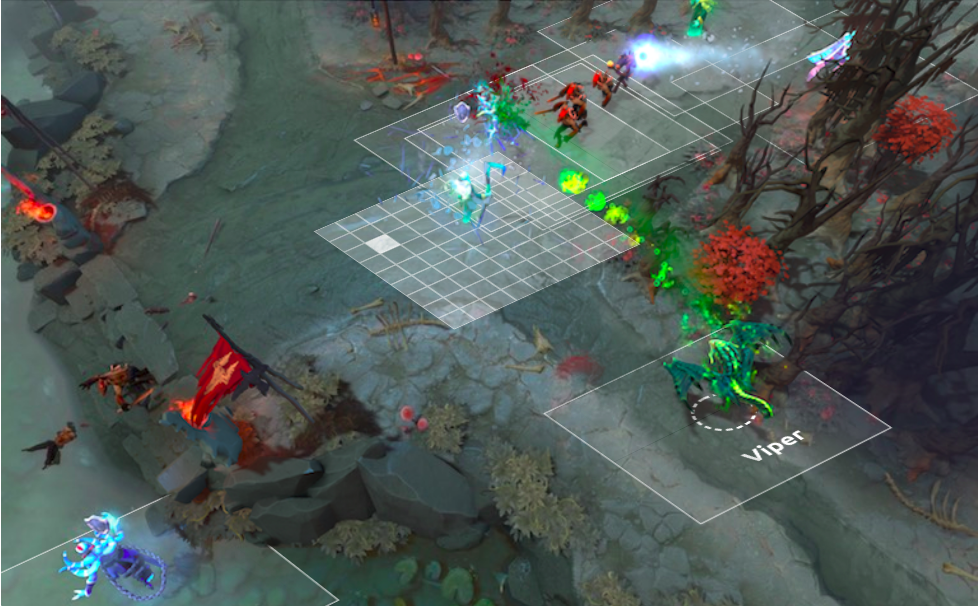
OpenAI Five: The Remarkable Journey of AI Conquering Dota 2‘s Strategic Realm
When Algorithms Learn to Play: A New Era of Machine Intelligence
Imagine a world where machines don‘t just calculate, but strategize. Where artificial intelligence doesn‘t merely follow predefined rules, but creates its own complex decision-making frameworks. This isn‘t science fiction—this is the remarkable story of OpenAI Five, a groundbreaking artificial intelligence system that transformed how we understand machine learning and strategic gameplay.
The Genesis of a Technological Marvel
The journey of OpenAI Five begins at the intersection of computational complexity and human-like strategic thinking. Dota 2, a multiplayer online battle arena game renowned for its intricate gameplay, became the ultimate testing ground for artificial intelligence‘s potential.
Understanding the Complexity
Dota 2 isn‘t just a game—it‘s a microcosm of strategic decision-making. With over 100 unique hero characters, countless item combinations, and dynamic team interactions, the game represents a computational challenge that makes chess look like child‘s play.
Neural Networks: The Brain Behind the Machine
OpenAI‘s approach was revolutionary. Instead of creating a single monolithic algorithm, they developed five interconnected neural networks, each designed to handle different aspects of gameplay. This team-based approach mimics human collaborative intelligence, where individual strengths combine to create something greater than the sum of its parts.
The Architecture of Intelligence
Each neural network in OpenAI Five contains a sophisticated Long Short-Term Memory (LSTM) layer with 1,024 units. This allows the system to process and remember complex game states, adapting strategies in real-time with remarkable precision.
Training: A Herculean Computational Effort
The training process for OpenAI Five is nothing short of extraordinary. Imagine playing 180 years worth of games every single day—this is the computational equivalent of what these neural networks accomplish.
The Power of Self-Play
Traditional machine learning often relies on external datasets, but OpenAI Five takes a radically different approach. By continuously playing against itself, the system learns, adapts, and refines its strategies with each iteration. It‘s like watching a team of prodigious students who learn exclusively by challenging and improving themselves.
Real-Time Decision Making: Beyond Calculation
What sets OpenAI Five apart is its ability to make split-second decisions in a game running at 30 frames per second. Each game generates approximately 80,000 decision points, requiring instantaneous strategic assessment that would overwhelm traditional computational models.
Breaking the Computational Barrier
The system doesn‘t just calculate probabilities—it understands context, anticipates opponent moves, and creates dynamic strategies that evolve in milliseconds. This represents a quantum leap in artificial intelligence‘s capability to handle complex, unpredictable environments.
Confronting Human Champions
When OpenAI Five first competed against professional Dota 2 players, the world watched with a mixture of excitement and skepticism. Could an artificial system truly understand the nuanced strategies that human players develop through years of experience?
The Watershed Moment
In exhibition matches, OpenAI Five didn‘t just compete—it demonstrated a level of strategic thinking that challenged fundamental assumptions about machine intelligence. Professional players found themselves outmaneuvered by an AI that seemed to possess an almost intuitive understanding of the game.
Computational Infrastructure: The Hidden Backbone
Behind every breakthrough lies immense computational power. OpenAI Five‘s training required:
- 256 high-performance GPUs
- 128,000 CPU cores
- Massive parallel processing capabilities
This isn‘t just computing—it‘s a symphony of technological resources working in perfect harmony.
Limitations and Ethical Considerations
Despite its remarkable achievements, OpenAI Five isn‘t infallible. The system initially operated under specific restrictions and hasn‘t achieved completely unrestricted victory in all scenarios. This humility is crucial in understanding the current state of artificial intelligence.
The Human-Machine Dialogue
Each limitation becomes an opportunity for learning, representing the ongoing dialogue between human creativity and machine intelligence. We‘re not just developing technology—we‘re exploring the very nature of intelligence itself.
Beyond Gaming: Broader Implications
OpenAI Five‘s significance extends far beyond Dota 2. The techniques developed here have potential applications in:
- Strategic decision-making systems
- Complex resource management
- Collaborative problem-solving frameworks
- Adaptive learning methodologies
The Future of Artificial Intelligence
As we stand on the cusp of a new technological era, systems like OpenAI Five represent more than mere computational achievements. They are windows into a future where machines don‘t just process information—they understand, adapt, and create.
Conclusion: A New Chapter in Human-Machine Collaboration
OpenAI Five isn‘t about machines replacing humans. It‘s about expanding our understanding of intelligence, creativity, and strategic thinking. As we continue to push the boundaries of what‘s possible, one thing becomes clear: the most exciting innovations happen when human imagination meets computational potential.
The game has only just begun.