Peloton vs NordicTrack: The Ultimate At-Home Fitness Face-Off
Are you ready to get your sweat on without ever leaving the house? Over the past decade, at-home fitness equipment and virtual training has exploded in popularity. And leading the pack are two heavyweight brands: Peloton and NordicTrack.
But with both companies offering high-tech machines and interactive training apps, how do you decide which is right for you and your fitness goals? Never fear, I‘m here to break it all down in this ultimate Peloton vs NordicTrack comparison. Let‘s get ready to rumble!
Tale of the Tape: Peloton‘s and NordicTrack‘s Winning Formulas
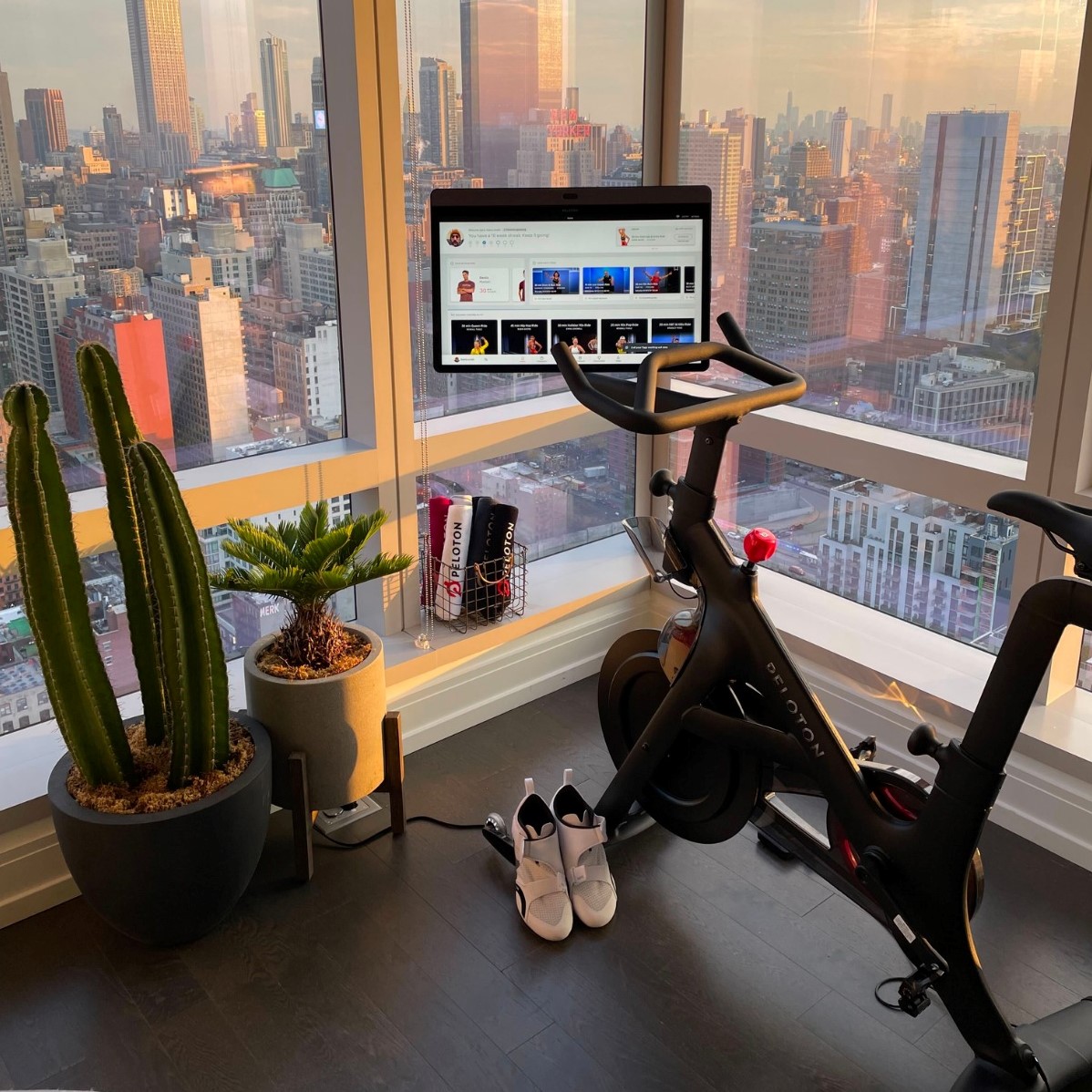
First, some quick background on our contenders. Peloton burst onto the scene in 2012 as a tech-driven fitness brand dedicated to bringing the energy and motivation of group cycling classes into people‘s living rooms. Their sleek stationary bikes with attached touchscreens became an instant hit.
Flash forward to today, and Peloton has expanded to also offer treadmills and a digital app with thousands of classes covering everything from strength training to yoga to meditation. But their core philosophy remains the same: building an engaged fitness community through live classes, leaderboards, and virtual high fives.
NordicTrack, meanwhile, is an O.G. in the home fitness game. Founded way back in 1975, they‘ve been manufacturing treadmills, bikes, ellipticals, and strength equipment for both home and commercial gyms for decades.
In recent years, NordicTrack has followed Peloton‘s lead by launching their own interactive training platform called iFit. It offers studio classes and scenic virtual rides/runs led by world-class trainers who can digitally adjust your machine‘s incline, decline, and resistance in real-time.
So in one corner we have the young, scrappy Peloton with a laser focus on community and engagement. And in the other, the veteran NordicTrack with a massive product catalog and high-tech app of their own. Let‘s see how they stack up:
Choosing Between Peloton and NordicTrack: 7 Key Factors
There‘s a lot to consider before clicking "add to cart" on a big fitness equipment purchase. Here are 7 key areas to compare between Peloton and NordicTrack:
1. Product Range
Peloton keeps things simple with just a handful of cardio machines (two bike models and a treadmill) plus some accessories like weights, yoga mats, and heart rate monitors. The vast majority of their content is equipment-free – things like strength training, yoga, and outdoor running/walking.
NordicTrack has a much broader product catalog with multiple treadmills, bikes, ellipticals, rowers, and strength machines at different price points and feature sets. If you‘re looking to fully outfit a home gym, NordicTrack likely has everything on your list. Whereas with Peloton, the focus is more on their class content vs the hardware itself.
2. Extra Features
One cool perk with Peloton is how their app connects with your Apple Watch, Fitbit, and most smartwatches. It allows you to track your heart rate, log workouts, compete on a leaderboard, and access classes away from your Peloton Bike or Tread.
NordicTrack‘s iFit platform doesn‘t have the same wearables integration, but it one-ups Peloton with personalized features like trainer-led workouts that automatically adjust your equipment, Google Maps integration for virtually racing through real-world routes, and text messaging with trainers.
3. Warranty
Peloton‘s standard warranty includes 5 years for the bike/tread frames, and 12 months for the touchscreen, components, and labor. You can also add on an extended warranty for up to 27 more months of coverage.
NordicTrack‘s warranty varies by product, but most come with a 10-year frame warranty, 2 years for parts, and 1 year of labor. They also offer extended warranty upgrades for up to 10 years of coverage on certain components.
4. Installation
Peloton makes delivery and installation super simple. Their team will bring your shiny new bike or treadmill right to your door, set it up, and make sure it‘s connected and ready to ride. The whole process usually takes under an hour.
With NordicTrack, you have the option of free threshold delivery (left at your doorstep), paid in-home delivery and setup, or professional assembly for an added fee. That gives you some added flexibility if you‘re handy and want to save a few bucks on installation.
5. Target Audience
Peloton attracts people who crave the accountability and energy of group fitness classes but need the convenience of working out whenever and wherever they want. Their platform is very community-driven with competitive leaderboards, virtual achievements/badges, and consistent instructors you feel like you know personally.
NordicTrack has a more broad target that includes serious run/bike/row training for dedicated athletes, interactive classes for the group fitness crowd, and traditional equipment for general fitness enthusiasts. Their iFit platform is as much about exploring virtual trails as it is studio classes.
6. Accessibility
If you want the full Peloton experience, you have to purchase their equipment directly from the Peloton website or their handful of retail showrooms. The only exception is their app which you can use with any spin bike or treadmill (but you won‘t get metrics syncing or instructor callouts).
NordicTrack has much broader distribution through their own website plus big retailers like Amazon, Dick‘s Sporting Goods, and Walmart. Many gyms also stock NordicTrack equipment. So it‘s easier to see/try before you buy.
7. Price
There‘s no getting around it – Peloton is expensive. Their original Bike starts at $1,495 and Bike+ is $2,495, with financing options available. The Peloton Tread is $2,495. On top of that, you need to pay $39/month for the Peloton All-Access Membership to access classes on the bike/tread.
NordicTrack has a much wider range of products and prices, starting under $1,000 for basic treadmills and bikes and going up to around $3,000 for commercial-grade machines. The iFit membership runs $39/month for individuals or $396/year for families.
For comparison, here‘s how the price breaks down for Peloton vs NordicTrack‘s most popular bike and treadmill:
Peloton Bike: $1,495
NordicTrack S15i Studio Cycle: $1,599
Peloton Tread: $2,495
NordicTrack Commercial 1750: $1,799
So while Peloton is generally pricier, NordicTrack‘s higher-end products are in the same ballpark. It really depends on your budget and which features matter most to you.
Peloton Tread vs NordicTrack Commercial 2950 Treadmill
Okay, time for some head-to-head battles of Peloton and NordicTrack‘s top-selling products, starting with treadmills. In one corner we have the mighty Peloton Tread and in the other is NordicTrack‘s Commercial 2950. Let‘s run through the key specs:
Peloton Tread
Price: $2,495
Dimensions: 68" L x 33" W x 62" H
Running surface: 59" L x 20" W
Motor: 3 HP
Speed: 0-12.5 mph
Incline: 0-12.5%
Touchscreen: 23.8" HD
NordicTrack Commercial 2950
Price: $2,999
Dimensions: 79.5" L x 39.2" W x 66.6" H
Running surface: 22" x 60"
Motor: 4.25 CHP DurX Commercial Plus
Speed: 0-12 mph
Incline: -3-15%
Touchscreen: 22" HD
The Tread and 2950 are actually pretty evenly matched on core features like running surface, speed, incline range, and screen size. The 2950 gets the edge for overall power with a slightly stronger 4.25 CHP motor vs the Tread‘s 3 HP motor. It also offers decline training down to -3% which is great for mimicking hills.
In terms of tech, both treadmills have HD touchscreens that display live/on-demand classes, leaderboards, and all your real-time metrics. The Tread‘s screen is fixed while the 2950‘s screen pivots and has 360-degree rotation which is nice if you want to incorporate cross-training.
One unique Tread feature is a "free mode" that disengages the motor so you can push the belt manually for a more challenging run. The 2950 fights back with ActivePulse technology that automatically adjusts your speed/incline to keep you in your target heart rate zone.
Ultimately, both are incredible machines that can level-up your running. The Tread has the edge for pure running while the 2950 offers a bit more versatility with decline, screen rotation, and cross-training capabilities. You really can‘t go wrong with either but the 2950 does offer more bang for your buck.
Peloton Bike+ vs NordicTrack S15i Studio Cycle
Next let‘s jump on Peloton‘s and NordicTrack‘s most advanced indoor cycles for a little side-by-side comparison. The Bike+ is Peloton‘s newest model with upgraded features over the original Peloton Bike. Meanwhile, the S15i is NordicTrack‘s direct competitor for connected cycling. Start your pedals!
Peloton Bike+
Price: $2,495
Dimensions: 59" L x 59" H x 23" W
Footprint: 4‘ x 2‘
Resistance: 100 levels, magnetic
Display: 23.8" HD touchscreen, 360-degree rotation
Connectivity: WiFi, Bluetooth
NordicTrack S15i Studio Cycle
Price: $1,599
Dimensions: 55.75" L x 56.9" H x 22" W
Footprint: 3‘8" x 1‘10"
Resistance: 22 levels, SMR flywheel
Display: 14" HD touchscreen, 360-degree rotation
Connectivity: WiFi, Bluetooth
The Bike+ is Peloton‘s cream of the crop with a 23.8" rotating HD touchscreen (vs 21.5" fixed on the original Bike), auto-resistance that adjusts to match the instructor, Apple GymKit integration for syncing with your Apple Watch, and cleats/cycling shoes included.
NordicTrack‘s S15i doesn‘t quite have the same flash but makes up for it in function. You get a 14" rotating HD touchscreen, SMR flywheel with 22 resistance levels, and 10% incline/10% decline capabilities to really crank up the burn.
While the S15i‘s screen is smaller, it‘s conveniently placed for viewing whether you‘re sitting upright or down in the racing position. Other cool features are the two 2" digitally amplified speakers, autobreeze workout fan, and included 3 lb dumbbells for upper body workouts.
Price-wise, the S15i comes in $900 less than the Bike+ which is significant savings. Although with Peloton you are paying a premium for their content, community, and overall ecosystem which is tough to beat.
Ultimately, both bikes offer a studio-grade ride from home with crisp visuals, motivating instructors, and real-time metrics tracking. The Bike+ is the king of premium while the S15i is incredible value for interactive training under $2k. Depends how much you‘re looking to spend but you‘ll crush your cardio goals with either!
Peloton vs NordicTrack: The Final Verdict
Phew, that was one fast-paced face-off! We covered a lot of ground comparing Peloton and NordicTrack‘s top products, pricing, features, content, and overall brand philosophies. I know I‘m tired and I was just writing this – I can only imagine how you feel absorbing it all.
At the end of the day, I truly believe both Peloton and NordicTrack are phenomenal fitness brands. You really can‘t go wrong investing in their equipment and training ecosystems if your goal is to get fit from home.
Peloton‘s biggest strengths are their fanatical community, very polished hardware/software, and laser focus on cycling and running. If those are your jam and budget isn‘t an issue, Peloton is an amazing choice.
NordicTrack shines for their insanely broad product range, investment in innovation (decline! rotating screens!), and high quality at reasonable prices. If you want a more holistic home gym with high-tech equipment for cardio + strength training, NordicTrack has you covered.
My suggestion: Go to a Peloton showroom and test ride the Bike/Bike+. But also hit up a sporting goods store that carries NordicTrack and hop on their machines too. Think about which features and content really excite you. Read reviews from real customers. Then pull the trigger on whichever feels right and aligns with your goals.
The most important thing is that you‘re investing in your health and fitness. And with either of these brands, I know you‘ll be well on your way to crushing your goals! Feel free to ask me any other questions and I‘ll be happy to help. Now if you‘ll excuse me, I have a date with a treadmill after writing this…