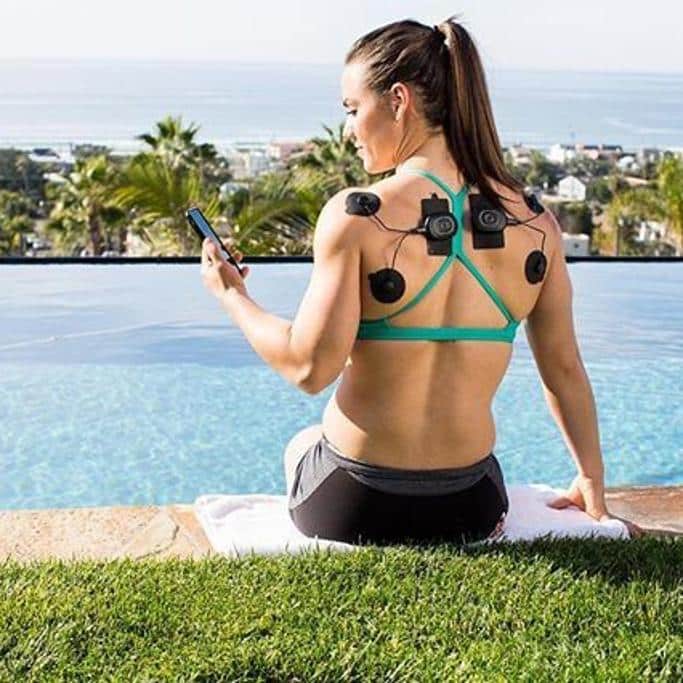
PowerDot 2.0 Review: A Powerful Tool for Muscle Recovery and Pain Relief
Hey there fitness friend! If you‘re anything like me, you‘re always on the lookout for the latest and greatest tools to help you feel your best, recover faster, and smash your PRs. And let me tell you, I‘ve found a device that has totally changed the game when it comes to workout recovery and pain relief: the PowerDot 2.0 smart muscle stimulator.
In this comprehensive PowerDot review, I‘m going to dive deep into what this powerful little device can do, share my personal experience using it, and give you all the details you need to decide if it‘s right for you. Trust me, your sore muscles will thank you!
But first, let‘s start with the basics…
What is PowerDot and How Does It Work?
PowerDot is a smart muscle stimulation device that uses electrical impulses to stimulate your muscles and speed up recovery. It‘s like having a personal physical therapist in your pocket!
The way it works is simple: you stick the PowerDot electrode pads on the muscle area you want to target (think quads, hamstrings, biceps, abs, etc.), connect the device to your phone via Bluetooth, and use the PowerDot app to control the intensity and program. The electrical impulses cause your muscles to contract and relax, which has a ton of cool benefits like:
- Flushing out lactic acid and toxins that make you sore
- Bringing fresh, oxygenated blood to your muscles to speed up healing
- Releasing endorphins to reduce pain and promote relaxation
- "Waking up" your muscles before a workout so you can activate them better during
- Rehabbing injuries by stimulating the muscles around the affected area
Basically, it‘s like giving your muscles a deep tissue massage and a cup of coffee at the same time.
Why I Love PowerDot for Workout Recovery
I‘ve been an athlete all my life, from running track in high school to competing in Crossfit now, so I‘ve tried pretty much every recovery method out there. Foam rolling, compression boots, massage guns, cryotherapy…you name it, I‘ve probably done it.
But when I first heard about PowerDot, I was intrigued. I liked that it was backed by science (more on that in a sec) and that I could use it anytime, anywhere. No more scheduling massage appointments or waiting in line for the foam roller at the gym.
I‘ve been using PowerDot consistently for the past 3 months, and I‘m blown away by the results. Here are some of the key benefits I‘ve noticed:
-
Faster recovery between workouts: I used to be sore for days after heavy leg days or long runs. But with PowerDot, I‘m able to bounce back much faster. I use the Active Recovery program for 20-30 minutes after tough workouts and I wake up feeling refreshed and ready to go the next day.
-
Less pain and stiffness: As someone who has dealt with chronic low back pain and tight shoulders, PowerDot has been a lifesaver. The pain relief programs help release tension, increase blood flow, and just make me feel better overall. I even use it for headaches!
-
Improved performance: Not only does PowerDot help me recover faster, but it also helps me perform better during my workouts. The Potentiation programs helps activate my muscles before training so I can generate more power and really feel the mind-muscle connection.
-
More convenient than other recovery methods: With PowerDot, I can get a recovery session in while I‘m watching TV, working on my laptop, or even on a road trip. It‘s so easy to use and I don‘t have to go anywhere. Plus, the battery life is insane – I get multiple uses out of a single charge.
But hey, don‘t just take it from me. Tons of pro athletes and fitness influencers swear by PowerDot too. Like Crossfit Games athlete Brent Fikowski, who says "PowerDot has been a game changer for me in terms of recovery and injury prevention. It‘s an absolute essential in my training."
PowerDot vs. Other Recovery Methods
Now, I know what you might be thinking: how does PowerDot compare to other recovery methods like massage, foam rolling, or compression? Great question.
While I still think those methods can be beneficial, PowerDot has some unique advantages:
-
More targeted: With PowerDot, you can target specific muscle groups and customize the intensity to your needs. Foam rolling is more general and can be painful on really sore muscles. Massage is great, but it can be hard to get into those hard-to-reach spots on your own.
-
More affordable: A single PowerDot device costs $199 for the Uno (1 channel) or $349 for the Duo (2 channels). That might seem like a lot upfront, but when you compare it to the cost of regular massages or a gym membership just to use the foam rollers, it can actually save you money in the long run. Plus, you can use HSA/FSA funds on it.
-
More evidence-based: EMS has been used in physical therapy and sports performance settings for decades. There are tons of studies showing that it can reduce pain, speed up recovery, and improve muscle strength and endurance. While massage and foam rolling have some evidence too, PowerDot is backed by more clinical research.
-
More convenient: This is a huge one for me. With PowerDot, I can do my recovery on my own schedule without having to go anywhere or rely on someone else. I can even use it while I‘m doing other things, like working or running errands. It‘s a massive time-saver.
Of course, I‘m not saying PowerDot should completely replace your other recovery tools. Massage, foam rolling, stretching, and compression all have their place. But if you want something that‘s effective, affordable, and fits easily into your lifestyle, PowerDot is tough to beat.
The Science Behind PowerDot
Okay, I know I‘ve been geeking out about PowerDot, but let‘s talk about the actual science for a sec. PowerDot uses two types of electrical stimulation: neuromuscular electrical stimulation (NMES) and transcutaneous electrical nerve stimulation (TENS).
NMES works by sending electrical impulses to your motor nerves, which causes your muscles to contract. This is the type of stimulation used in the performance, warm-up, and recovery programs. By causing repeated muscle contractions, NMES can help:
- Increase blood flow and oxygenation to the muscles
- Clear out metabolic waste like lactic acid
- Reduce muscle soreness and inflammation
- Improve muscle strength and endurance
- Enhance neuromuscular efficiency (how well your brain communicates with your muscles)
TENS, on the other hand, targets your sensory nerves to block pain signals from reaching your brain. It basically floods your nervous system with "feel-good" vibes to reduce pain and promote relaxation.
Multiple studies have shown that both NMES and TENS can be effective for reducing muscle soreness, speeding up recovery, and even improving athletic performance. For example:
-
A 2019 meta-analysis of 16 studies found that NMES was effective at reducing delayed-onset muscle soreness (DOMS) and improving muscle strength recovery after exercise.
-
A 2020 study on Brazilian jiu-jitsu athletes found that using NMES for 20 minutes after training sessions led to significantly lower levels of muscle damage and fatigue.
-
A 2018 study found that using TENS for 30 minutes before and after exercise reduced pain and improved function in people with knee osteoarthritis.
Now, I‘m not saying PowerDot is a miracle cure or anything. But there‘s definitely some legit science backing up the benefits.
How to Use PowerDot: My Routine
Wanna know how I personally use PowerDot to feel and perform my best? Here‘s a little peek inside my recovery routine:
-
Immediately after workouts: This is when I hit the Active Recovery or Extended Recovery programs for 20-60 minutes, depending on how intense the session was. I focus on the muscle groups I just worked, like quads and glutes after leg day.
-
On rest days: I still like to get some light movement and muscle stimulation on my off days to promote circulation and reduce stiffness. I‘ll often do a Massage or Light Recovery program while I‘m watching a movie or catching up on work.
-
Before big events: If I have a competition or tough workout coming up, I use the Potentiation or Performance programs about 6-12 hours beforehand to prime my muscles and get them firing optimally.
-
When I‘m feeling sore or run down: Anytime I‘m feeling extra sore or fatigued, I‘ll throw in an extra PowerDot session or two. The Pain Relief and Massage programs are my go-to‘s for managing DOMS or nagging aches.
-
For injury rehab: I‘ve used PowerDot to rehab a few minor injuries, like a tweaked ankle and a pulled hamstring. I‘ll do the TENS programs on the affected area a few times a day to control pain and the NMES programs to gently strengthen the surrounding muscles.
I like to do most of my PowerDot sessions at home while I‘m relaxing, but I also love that I can take it with me anywhere. I‘ve used it in hotel rooms, at the office, even on long car rides (just not while driving, obviously). It‘s seriously so convenient.
Bottom Line: Is PowerDot Worth It?
By now, you can probably tell I‘m a huge PowerDot fan. But I know it‘s a significant investment, so let‘s break down who I think it‘s best for:
PowerDot is an amazing choice if:
- You‘re an athlete, fitness enthusiast, or just someone who‘s really active and wants to improve your recovery and performance
- You struggle with muscle soreness, stiffness, or pain that gets in the way of your workouts or daily life
- You‘re short on time and want a quick, convenient way to take care of your body
- You‘re rehabbing an injury and want a tool to complement your physical therapy
Now, PowerDot might not be the best fit if:
- You‘re not very active or don‘t work out regularly – you‘ll get the most benefit using it consistently in conjunction with exercise
- You‘re looking for a complete substitute for other recovery methods – PowerDot works best as part of a well-rounded routine alongside good nutrition, sleep, massage, etc.
- You have certain health conditions like a pacemaker, heart problems, pregnancy, or active cancer (always check with your doc first!)
- The price is just not in your budget right now – I totally get it, it‘s an investment! Maybe start with the Uno or watch for sales
Personally, I think PowerDot is 100% worth it for anyone who is serious about feeling and performing their best. It‘s honestly changed my recovery game and I can‘t imagine not having it as part of my routine now.
And PowerDot is so confident you‘ll love it, they offer a 30-day money-back guarantee. So you can try it out risk-free and see the results for yourself!
Common Questions About PowerDot
Before we wrap up, I want to address some of the most common questions I get about PowerDot:
How often should I use it?
There‘s no one-size-fits-all answer, but in general, the more often you can use it, the better! I aim for at least 5 sessions per week, but some programs like Active Recovery can be used daily. The PowerDot app will guide you on the best frequency and intensity for each program.
Can I use it while I‘m working out?
You can, but it‘s not really necessary or recommended. PowerDot is most effective when you can fully relax and let the electrical impulses do their thing without competing muscle contractions. Stick to using it before or after workouts, or on rest days.
How long do the batteries and electrode pads last?
The PowerDot 2.0 battery lasts 20+ hours on a single charge, which translates to about 20-40 sessions depending on the length. The electrode pads are good for about 25-30 uses before they need to be replaced. PowerDot sells replacement pads for $18 per set.
Can I travel with it?
Absolutely! The PowerDot Uno weighs less than a pound and the Duo is just over a pound, so they‘re super easy to pack in a carry-on or checked bag. Just make sure to disconnect the pod from the electrode pads when going through airport security.
Is it safe?
PowerDot is FDA-cleared and has built-in safety features like automatic shut-off and intensity control. It‘s tolerated well by most people, but if you have any pre-existing health conditions, it‘s always best to consult with your healthcare provider first. And obviously, don‘t use it on any open wounds or broken skin.
Try PowerDot for Yourself!
Phew, that was a lot of info! If you‘ve made it this far, kudos to you. You‘re clearly committed to taking your recovery and performance to the next level.
So what are you waiting for? If you‘re ready to experience the game-changing benefits of PowerDot for yourself, head over to their website and use code SOPHIE10 for a sweet 10% discount on your order. Your muscles will thank you, I promise.
I hope this PowerDot review has been helpful and informative. As always, if you have any questions or want to share your own experience with PowerDot, drop a comment below. I‘d love to hear from you!
Until next time, stay strong and keep crushing those goals.
Love,
Sophie