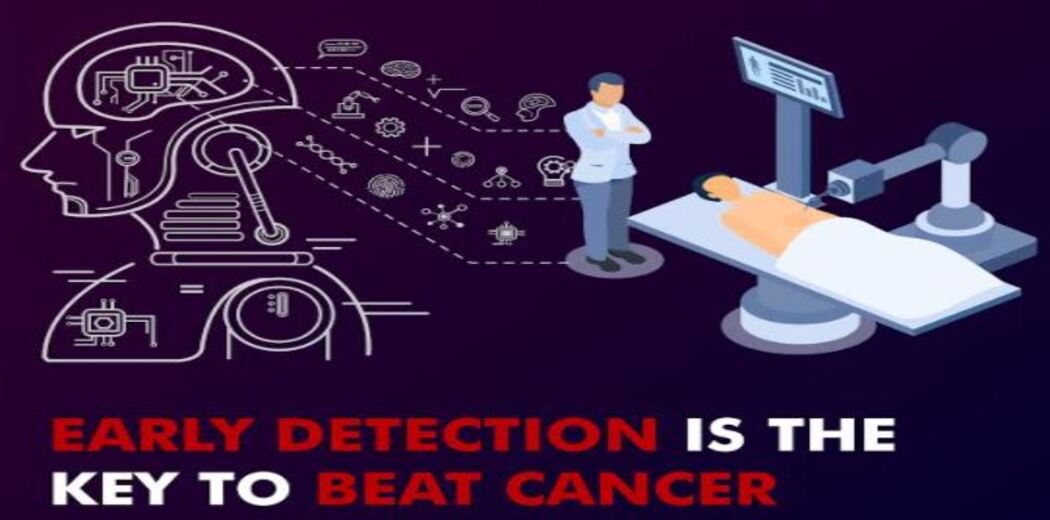
Predictive Analytics in Personalized Cancer Diagnosis: A Technological Revolution in Oncological Care
The Human Story Behind Technological Transformation
Imagine a world where cancer diagnosis isn‘t a terrifying waiting game, but a precise, personalized journey of understanding and hope. This isn‘t a distant dream—it‘s the emerging reality of predictive analytics in modern oncology.
Cancer has long been humanity‘s formidable adversary, a complex disease that has challenged medical professionals for generations. Traditional diagnostic methods often felt like navigating through a dense fog, with limited visibility and uncertain outcomes. But today, we stand at the precipice of a technological revolution that promises to illuminate this darkness with unprecedented clarity.
The Technological Metamorphosis of Cancer Diagnostics
The journey of cancer diagnostics mirrors humanity‘s relentless pursuit of understanding. From rudimentary microscopic examinations to today‘s sophisticated computational models, we‘ve witnessed an extraordinary transformation. Machine learning and artificial intelligence are not just tools—they‘re powerful allies in our ongoing battle against one of the most complex health challenges.
Understanding the Computational Landscape of Cancer Prediction
Modern predictive analytics represents a quantum leap in medical technology. By integrating multiple data sources—genomic sequences, medical imaging, clinical histories, and molecular profiles—we can now construct intricate predictive models that offer insights previously unimaginable.
The Mathematical Symphony of Machine Learning
At the heart of these predictive systems lie complex mathematical algorithms. Imagine neural networks as intricate maps, where each connection represents a potential insight into disease progression. Convolutional Neural Networks (CNNs) can now analyze medical images with a precision that rivals—and often surpasses—human expertise.
[P(Cancer) = \frac{1}{1 + e^{-(\beta_ + \beta_1x_1 + … + \beta_nx_n)}}]This logistic regression formula represents how machine learning models calculate cancer probability, integrating multiple variables with remarkable sophistication.
Real-World Impact: Beyond Mathematical Abstractions
Dr. Elena Rodriguez, a pioneering oncological researcher, shares a transformative patient story. "We diagnosed Maria‘s early-stage ovarian cancer six months before traditional methods would have detected it," she explains. "Our predictive model identified subtle molecular markers that conventional screening missed."
Such stories aren‘t exceptions—they‘re becoming the new standard of care.
Technological Architecture of Predictive Systems
Predictive analytics in oncology isn‘t a monolithic technology but a sophisticated ecosystem of interconnected computational approaches:
-
Genomic Sequencing Analysis
Whole genome sequencing now allows us to map genetic mutations with unprecedented detail. By analyzing thousands of genetic markers simultaneously, researchers can identify cancer predispositions with remarkable accuracy. -
Multi-Modal Data Integration
Modern systems don‘t just look at isolated data points. They create comprehensive patient profiles by integrating genetic information, medical imaging, lifestyle factors, and molecular diagnostics. -
Dynamic Risk Assessment
Machine learning models continuously learn and adapt. Each new dataset refines predictive capabilities, creating increasingly sophisticated risk assessment tools.
Ethical Considerations in the Age of AI Diagnostics
With great technological power comes significant ethical responsibility. How do we ensure these advanced systems remain transparent, unbiased, and fundamentally human-centric?
Addressing Algorithmic Bias
Researchers are developing rigorous frameworks to minimize potential discriminatory patterns in predictive models. This involves:
- Diverse, representative training datasets
- Regular algorithmic audits
- Interdisciplinary oversight committees
Global Health Implications
Predictive analytics isn‘t just a technological marvel—it‘s a potential equalizer in global healthcare. In regions with limited medical infrastructure, these computational tools could provide sophisticated diagnostic capabilities previously unimaginable.
Economic and Healthcare Transformation
The economic implications are profound. By enabling earlier detection and more targeted interventions, predictive analytics could:
- Reduce overall treatment costs
- Minimize unnecessary medical procedures
- Improve patient outcomes
- Shift healthcare from reactive to proactive models
The Human Element: Beyond Pure Technology
While computational power drives these innovations, the human spirit remains central. Each algorithm, each predictive model, represents countless hours of dedicated research, compassion, and an unwavering commitment to alleviating human suffering.
Looking Toward the Horizon
As we peer into the future, the convergence of artificial intelligence, medical research, and human empathy promises extraordinary possibilities. We‘re not just developing technologies—we‘re reimagining the very landscape of human health.
Conclusion: A New Chapter in Medical Science
Predictive analytics in cancer diagnosis represents more than technological innovation. It‘s a testament to human ingenuity, our collective capacity to transform challenges into opportunities, and our fundamental belief in the power of knowledge to heal.
The journey continues, one algorithm, one patient, one hope at a time.