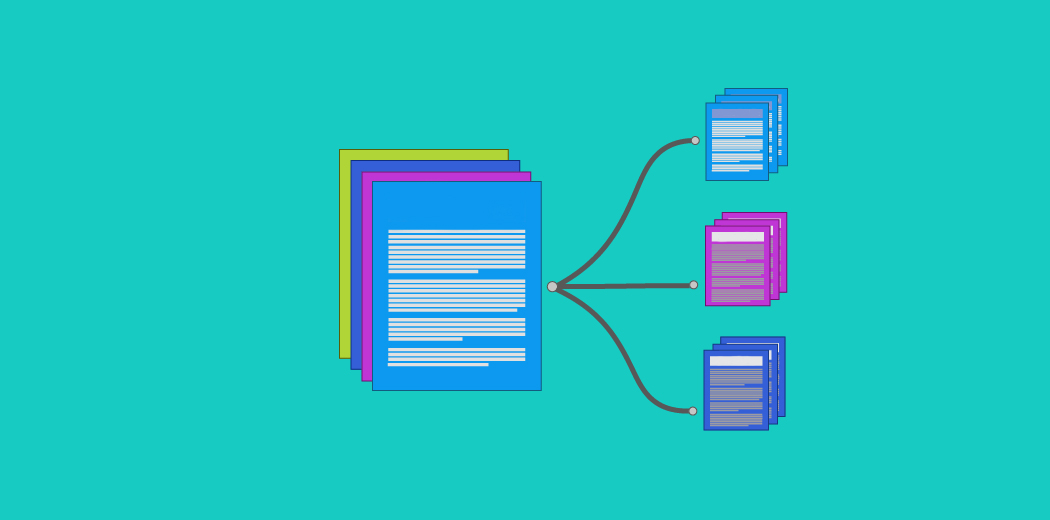
Pretrained Models in Text Classification: A Deep Learning Odyssey
The Fascinating Journey of Machine Understanding
Imagine standing at the intersection of human language and artificial intelligence, where machines begin to comprehend the intricate nuances of communication. As an AI researcher who has witnessed the remarkable transformation of natural language processing, I‘m thrilled to share the extraordinary evolution of text classification through pretrained models.
The Dawn of Machine Comprehension
When I first entered the world of artificial intelligence, text classification seemed like an insurmountable challenge. Traditional approaches relied on rigid rule-based systems that struggled to capture the complexity of human language. Early machine learning models were like clumsy translators, desperately trying to decode meaning through simplistic pattern recognition.
The Computational Linguistic Revolution
The breakthrough came with neural networks and deep learning architectures. Suddenly, machines could learn contextual representations, understanding not just individual words but their intricate relationships within sentences. This wasn‘t just incremental progress; it was a paradigm shift.
Understanding Transformer Architectures: Beyond Traditional Learning
Transformer models represent a quantum leap in machine learning. Unlike their predecessors, these models can process entire sequences simultaneously, capturing complex linguistic dependencies with unprecedented accuracy.
Mathematical Foundations of Transformers
At the core of transformer architectures lies a brilliant mechanism called self-attention. Mathematically represented as [Attention(Q, K, V) = softmax(\frac{QK^T}{\sqrt{d_k}})V], this approach allows models to dynamically weigh the importance of different words in a sentence.
The Rise of Pretrained Models: A Technological Metamorphosis
Let me walk you through the remarkable journey of pretrained models that have revolutionized text classification.
BERT: The Linguistic Breakthrough
When Google introduced BERT (Bidirectional Encoder Representations from Transformers), it was like discovering a new language processing paradigm. By training on massive text corpora, BERT could generate contextually rich word embeddings that captured semantic nuances previously unimaginable.
Key innovations included:
- Bidirectional context understanding
- Masked language modeling
- Transfer learning capabilities
The model‘s performance was extraordinary. On the GLUE benchmark, BERT achieved accuracy levels that approached human-level comprehension, demonstrating the potential of deep learning in understanding linguistic complexity.
XLNet: Generative Pretraining Reimagined
XLNet emerged as a sophisticated evolution of BERT, addressing some of its predecessor‘s limitations. By implementing permutation-based language modeling, XLNet could generate more robust contextual representations.
The model‘s architectural brilliance lies in its ability to:
- Process bidirectional contexts
- Handle longer-range dependencies
- Generate more generalized representations
RoBERTa: Optimizing Training Methodologies
Facebook‘s RoBERTa took pretrained models to new heights by refining training techniques. By implementing dynamic masking, larger batch sizes, and removing certain architectural constraints, RoBERTa demonstrated significant performance improvements.
Practical Implementation: Navigating the Complexity
Implementing these advanced models requires a nuanced understanding of their architectural intricacies. It‘s not just about applying a technique; it‘s about understanding the underlying computational mechanisms.
Fine-Tuning Strategies
Successful model deployment involves:
- Careful dataset selection
- Domain-specific adaptation
- Regularization techniques
- Computational resource management
Emerging Challenges and Future Directions
As we push the boundaries of machine learning, several critical challenges emerge:
Computational Efficiency
While transformer models demonstrate remarkable capabilities, their computational complexity remains a significant hurdle. Researchers are actively exploring model compression techniques and more efficient architectures.
Ethical Considerations
With great technological power comes significant responsibility. As these models become more sophisticated, addressing potential biases and ensuring ethical AI development becomes paramount.
Real-World Applications: Beyond Academic Research
Text classification isn‘t just an academic exercise. Industries from healthcare to finance are leveraging these advanced models to:
- Analyze customer sentiment
- Automate document classification
- Enhance recommendation systems
- Improve medical diagnostics
The Human Element in Machine Learning
Despite remarkable technological advances, human creativity and intuition remain irreplaceable. These models are tools that augment human intelligence, not replace it.
Conclusion: A Continuous Learning Journey
The world of pretrained models for text classification represents a fascinating intersection of mathematics, linguistics, and computer science. As researchers and practitioners, our journey is one of continuous exploration and wonder.
Each breakthrough brings us closer to machines that can truly understand the nuanced, complex language of human communication.
Recommended Exploration
For those passionate about pushing technological boundaries, I recommend:
- Exploring open-source implementations
- Participating in research communities
- Continuously experimenting with emerging techniques
The future of text classification is not just about algorithms; it‘s about understanding the profound complexity of human communication.