Python Functions: The Elegant Art of Code Composition
Unveiling the Soul of Programming: A Journey Through Python Functions
Imagine programming as crafting a complex machine, where each component plays a precise, interconnected role. In this intricate world, functions are the master artisans – versatile, powerful, and transformative. As someone who has spent decades exploring the nuanced landscapes of software engineering, I‘m excited to guide you through the profound realm of Python functions.
The Genesis of Functions: More Than Just Code Blocks
Functions aren‘t merely technical constructs; they‘re philosophical statements about how we organize thought and solve problems. Rooted in mathematical lambda calculus, functions represent humanity‘s fundamental desire to break complex challenges into manageable, repeatable processes.
When the first computer scientists conceived functions, they weren‘t just writing code – they were designing a language of problem-solving. Python, with its elegant syntax, has elevated this concept into an art form.
The Mathematical DNA of Functions
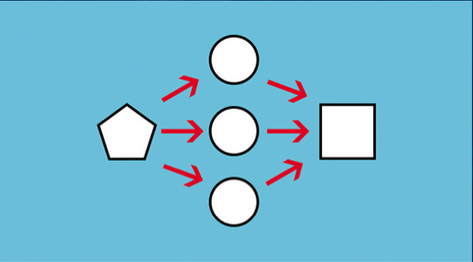
At their core, functions are mathematical transformations. They take input, apply a specific logic, and produce output – much like mathematical functions [f(x) = x^2]. This mathematical heritage explains why functions are so powerful across programming paradigms.
Decoding Python Function Architecture
Consider a function not as a static block of code, but as a living, breathing entity with its own lifecycle and characteristics. Each function carries:
- Identity: A unique name defining its purpose
- Parameters: Input channels for data
- Body: The transformation logic
- Return Mechanism: Output generation strategy
def transform_data(raw_input, processing_rule):
    """
    Demonstrates function as an intelligent transformation agent

    Args:
        raw_input: Unprocessed data
        processing_rule: Transformation logic

    Returns:
        Processed, refined data
    """
    processed_data = processing_rule(raw_input)
    return processed_data
The Evolutionary Landscape of Function Design
From Procedural to Functional Programming
Python‘s function design reflects a broader evolution in programming philosophy. Early programming was procedural – a linear sequence of instructions. Modern Python embraces functional programming principles, treating functions as first-class citizens that can be:
- Assigned to variables
- Passed as arguments
- Returned from other functions
- Composed and transformed dynamically
This flexibility transforms functions from mere code executors to intelligent, adaptable entities.
Advanced Function Techniques: Beyond Basic Execution
Decorators: Functions Watching Functions
Decorators represent a meta-programming technique where functions can modify or enhance other functions‘ behavior. They‘re like intelligent supervisors that can intercept, analyze, and transform function execution.
def performance_tracker(func):
    def wrapper(*args, **kwargs):
        import time
        start_time = time.time()
        result = func(*args, **kwargs)
        end_time = time.time()
        print(f"Function {func.__name__} executed in {end_time - start_time} seconds")
        return result
    return wrapper

@performance_tracker
def complex_calculation(n):
    return sum(range(n))
Generator Functions: Lazy Evaluation Masters
Generator functions represent a breakthrough in memory-efficient data processing. Instead of computing entire sequences upfront, they generate values on-demand.
def infinite_fibonacci():
    """
    Demonstrates infinite sequence generation
    without consuming massive memory
    """
    a, b = 0, 1
    while True:
        yield a
        a, b = b, a + b
Machine Learning and Function Design
In artificial intelligence and machine learning, functions transcend traditional programming boundaries. They become:
- Feature transformation engines
- Model architecture components
- Optimization algorithm building blocks
Neural network layers? Complex, composable functions. Gradient descent? A sophisticated function optimization process.
Performance Considerations: The Unseen Function Dynamics
Functions aren‘t free. Each function call involves:
- Stack allocation
- Parameter passing
- Return value management
Experienced developers understand these nuanced performance implications, choosing between function modularity and raw execution speed.
The Human Element: Functions as Communication
Beyond technical implementation, functions represent human problem-solving strategies. A well-designed function communicates intent, breaks complexity, and creates readable, maintainable code.
Future Horizons: Function Evolution
As programming languages advance, functions will become:
- More type-aware
- Increasingly composable
- Better integrated with parallel and distributed computing models
Python continues leading this evolution, making functions more powerful and expressive.
Conclusion: Functions as Intelligent Code Organisms
Functions aren‘t just code – they‘re living algorithms that capture human problem-solving creativity. They transform abstract thoughts into executable logic, bridging human imagination and computational precision.
In your programming journey, view functions not as mere tools, but as intelligent companions helping you navigate complex computational landscapes.
Happy coding, fellow explorer! 🚀🐍