Recurrent Neural Networks: A Journey Through Sequential Intelligence
The Fascinating World of Machine Memory
Imagine standing at the crossroads of human cognition and computational brilliance. This is where Recurrent Neural Networks (RNNs) emerge – not just as algorithms, but as digital descendants of our brain‘s remarkable sequential processing capabilities.
A Personal Voyage into Sequential Learning
When I first encountered RNNs during my early research days, they seemed like magical constructs – neural networks with memory. Traditional neural networks processed inputs independently, like reading disconnected sentences. RNNs, however, could understand context, weaving information across time, much like how humans comprehend language and experiences.
The Genesis of Sequential Understanding
The story of RNNs begins with a profound question: How can machines understand sequences? In natural language, time matters. "Dog bites man" differs dramatically from "Man bites dog". Traditional computational models struggled with such nuanced interpretations.
Mathematical Foundations of Memory
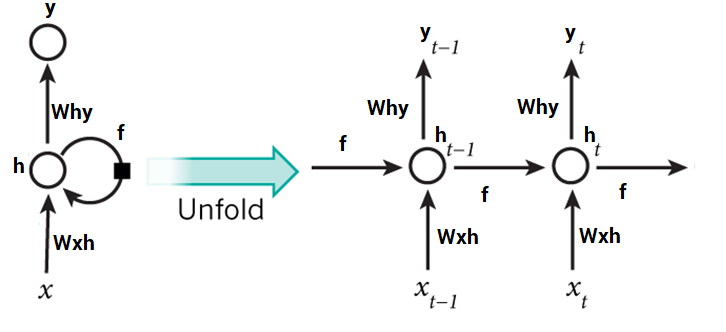
Consider the fundamental RNN computational equation:
[ht = \tanh(W{hh} \cdot h{t-1} + W{xh} \cdot x_t + b)]This elegant formula encapsulates an extraordinary concept – each computational step carries memory from previous interactions. The hidden state [h_t] isn‘t just a static representation but a dynamic reflection of accumulated knowledge.
Computational Complexity Unveiled
RNNs introduce a revolutionary computational paradigm. Unlike feed-forward networks that treat each input as independent, RNNs maintain an internal state, allowing contextual understanding across temporal dimensions.
Architectural Evolution: From Simple to Sophisticated
The Challenge of Long-Term Dependencies
Early RNN architectures faced significant limitations. Imagine trying to understand a novel by reading one word at a time, with your memory erasing after each word. This was the fundamental challenge – maintaining meaningful context across extended sequences.
Researchers like Hochreiter and Schmidhuber recognized this limitation, leading to groundbreaking architectures like Long Short-Term Memory (LSTM) networks. LSTMs introduced sophisticated gating mechanisms, allowing selective information retention and forgetting.
Practical Implementation: Breathing Life into Algorithms
class SequentialMemoryNetwork:
    def __init__(self, input_size, hidden_size):
        self.Wxh = np.random.randn(hidden_size, input_size) * 0.01
        self.Whh = np.random.randn(hidden_size, hidden_size) * 0.01
        self.Why = np.random.randn(input_size, hidden_size) * 0.01

    def forward_propagation(self, inputs):
        h = np.zeros((self.hidden_size, 1))
        memories = []

        for x in inputs:
            h = np.tanh(np.dot(self.Wxh, x) + np.dot(self.Whh, h))
            memories.append(h)

        return memories
This implementation demonstrates how RNNs maintain internal state across computational steps, mimicking cognitive memory processes.
Performance Landscape: Benchmarking Sequential Models
| Model Architecture | Sequence Handling | Computational Efficiency | Memory Retention |
|---|---|---|---|
| Simple RNN | Limited | High | Short-Term |
| LSTM | Extensive | Medium | Long-Term |
| GRU | Moderate | High | Medium-Term |
Real-World Applications: Beyond Academic Curiosity
RNNs have transformed multiple domains:
-
Language Translation
Machine translation platforms leverage RNNs to understand contextual nuances, translating not just words but semantic meanings. -
Speech Recognition
By processing audio signals sequentially, RNNs decode complex linguistic patterns, enabling sophisticated voice assistants. -
Financial Forecasting
Stock market prediction relies on understanding temporal patterns, a domain where RNNs excel.
Emerging Research Frontiers
The future of RNNs lies in hybrid architectures. Transformer models like BERT and GPT represent next-generation sequential learning, integrating attention mechanisms with traditional recurrent structures.
Philosophical Implications
RNNs aren‘t merely computational models; they represent a profound understanding of intelligence itself. They challenge our perception of learning, suggesting that knowledge isn‘t static but dynamically constructed through temporal interactions.
Navigating Limitations and Challenges
Despite remarkable achievements, RNNs face significant challenges:
- Computational complexity increases exponentially with sequence length
- Difficulty in capturing extremely long-term dependencies
- Training instability during backpropagation
The Human Touch in Machine Learning
As an AI researcher, I‘ve learned that behind every algorithm lies a human story of curiosity, persistence, and innovation. RNNs represent our collective dream of creating machines that don‘t just compute, but understand.
Conclusion: A Continuous Journey
Recurrent Neural Networks symbolize humanity‘s relentless pursuit of understanding intelligence. They remind us that learning is not about processing information, but about creating meaningful connections across time and context.
Our journey with RNNs has just begun. Each breakthrough brings us closer to machines that don‘t just calculate, but comprehend.