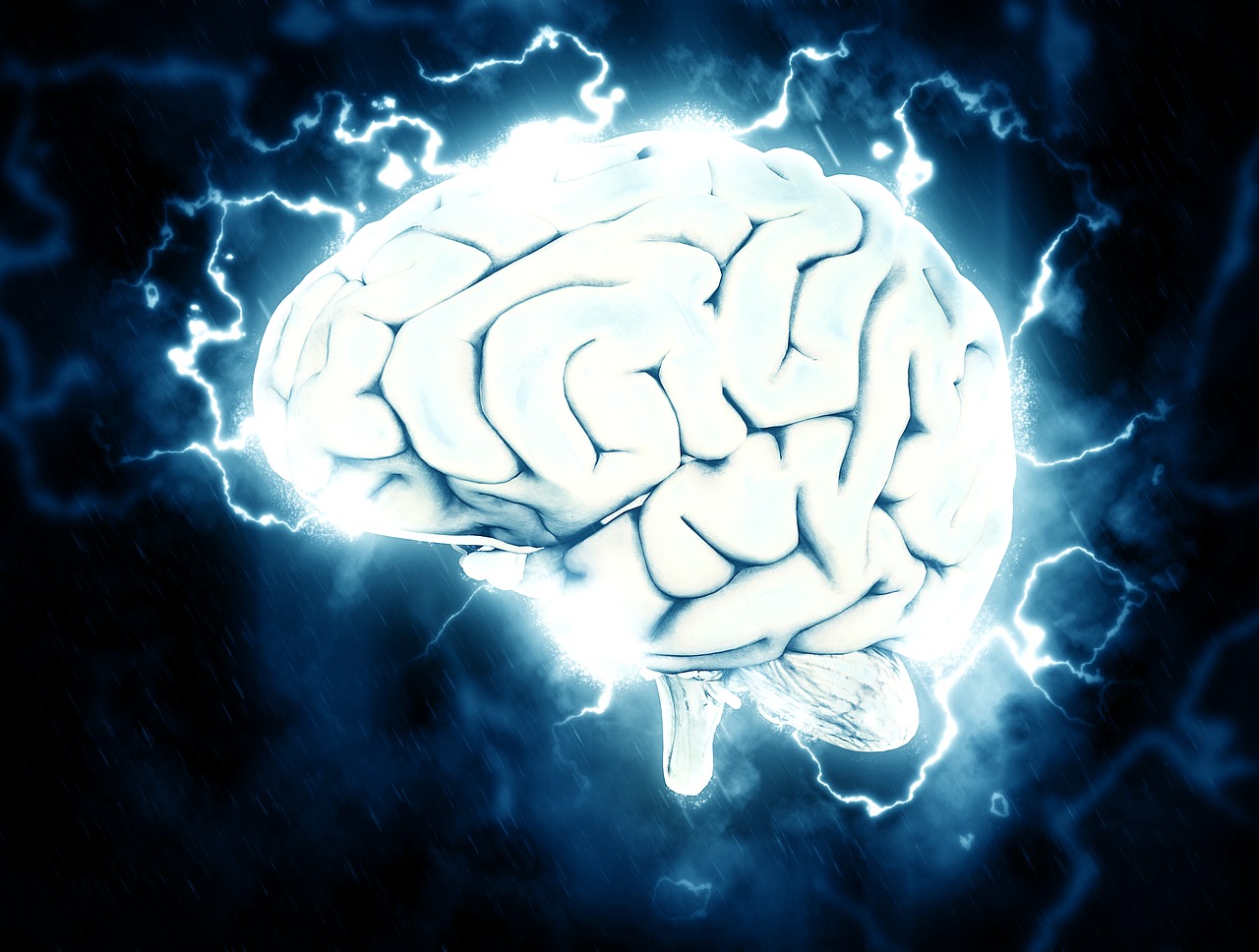
Revolutionizing Brain Tumor Detection: An AI-Powered Journey of Hope and Precision
The Human Story Behind Medical Technology
Imagine sitting in a sterile medical room, waiting anxiously for your brain scan results. The silence feels heavy, filled with unspoken fears and uncertainties. This is where artificial intelligence becomes more than just technology—it becomes a beacon of hope.
For decades, medical professionals have wrestled with the complex challenge of detecting brain tumors accurately and swiftly. Traditional diagnostic methods relied heavily on human interpretation, which, while skilled, could sometimes miss critical details. Today, machine learning is transforming this landscape, offering unprecedented precision and early detection capabilities.
A Technological Evolution
The journey of brain tumor detection mirrors humanity‘s relentless pursuit of understanding our most complex organ. From rudimentary X-rays to advanced magnetic resonance imaging (MRI), each technological leap has brought us closer to unraveling the mysteries hidden within our neural networks.
The Mathematical Magic of Machine Learning
At the heart of modern brain tumor detection lies a fascinating interplay of mathematics, computer science, and medical expertise. Convolutional neural networks (CNNs) represent a quantum leap in image analysis, capable of recognizing intricate patterns invisible to the human eye.
Consider the mathematical elegance of these algorithms. Where traditional analysis might see a blur of pixels, machine learning models construct sophisticated probability maps. Each pixel becomes a data point, each image a complex mathematical landscape waiting to be explored.
[P(Tumor) = \frac{1}{1 + e^{-(\beta_0 + \beta_1x_1 + … + \beta_nx_n)}}]This formula represents the probabilistic approach to tumor detection, where multiple input features are weighted and transformed to predict the likelihood of a tumor‘s presence.
Beyond Numbers: The Human Element
While these mathematical models are powerful, they‘re not replacing human expertise—they‘re augmenting it. Think of AI as a highly sophisticated assistant, working alongside radiologists to provide nuanced, data-driven insights.
Technological Architectures: Building Intelligent Systems
Convolutional Neural Networks: The Digital Detectives
Imagine a digital detective meticulously examining every microscopic detail of a brain scan. Convolutional neural networks function precisely this way, with layers of computational nodes acting like investigative teams.
Each layer extracts progressively more complex features:
- Initial layers detect basic edges and textures
- Intermediate layers recognize more complex structures
- Final layers make high-level diagnostic predictions
The U-Net architecture, specifically designed for medical image segmentation, represents a remarkable breakthrough. Its symmetrical encoder-decoder structure allows precise tumor boundary identification, transforming ambiguous medical images into clear, actionable insights.
Real-World Impact: Stories of Early Detection
Dr. Elena Rodriguez, a leading neurological researcher, shares a compelling narrative. "In one case, our AI model detected a small, developing tumor three months before traditional methods would have identified it. For the patient, those months meant everything."
Such stories underscore the profound human impact of technological innovation. It‘s not just about algorithms and data—it‘s about saving lives.
Challenges and Ethical Considerations
No technological advancement comes without challenges. Machine learning models require extensive, diverse training datasets to ensure accurate, unbiased detection across different population groups.
Privacy concerns also demand rigorous ethical frameworks. How do we balance technological innovation with individual patient rights? These questions drive ongoing research and development.
The Interdisciplinary Nature of Innovation
Brain tumor detection exemplifies the power of collaborative research. Neurologists, computer scientists, mathematicians, and ethicists must work together, breaking down traditional disciplinary boundaries.
Future Horizons: What Lies Ahead?
Emerging technologies promise even more exciting developments:
- Quantum computing could exponentially increase processing capabilities
- Federated learning might enable global collaborative research
- Advanced generative models could simulate complex tumor progression scenarios
Practical Implementation: A Technical Deep Dive
For researchers and practitioners eager to implement advanced detection models, here‘s a comprehensive approach:
def advanced_tumor_detection_model(input_shape=(256, 256, 3)):
    base_model = ResNet50(weights=‘imagenet‘, include_top=False, input_shape=input_shape)

    # Freeze base model layers
    for layer in base_model.layers:
        layer.trainable = False

    # Custom classification head
    x = base_model.output
    x = GlobalAveragePooling2D()(x)
    x = Dense(512, activation=‘relu‘)(x)
    x = Dropout(0.5)(x)
    output = Dense(2, activation=‘softmax‘)(x)

    model = Model(inputs=base_model.input, outputs=output)
    model.compile(optimizer=‘adam‘,
                  loss=‘categorical_crossentropy‘,
                  metrics=[‘accuracy‘])
    return model
Conclusion: A Symphony of Technology and Compassion
Brain tumor detection represents more than a technological challenge—it‘s a testament to human ingenuity, compassion, and our collective desire to understand and heal.
As artificial intelligence continues evolving, we stand at the precipice of a medical revolution. Each algorithm, each model brings us closer to a future where no tumor goes undetected, where early intervention becomes the norm.
The journey continues, powered by curiosity, empathy, and the remarkable potential of human-machine collaboration.