Revolutionizing COVID-19 Detection: A Machine Learning Expert‘s Journey Through Mel Spectrograms and Neural Networks
The Silent Challenge: Hearing What Machines Can Detect
Imagine standing in a bustling hospital corridor during the height of the pandemic. Doctors and nurses rush past, their faces masked, eyes tired. Amidst the chaos, a fascinating technological revolution was quietly unfolding—one that could transform how we detect infectious diseases.
As a machine learning researcher, I‘ve witnessed remarkable transformations in medical diagnostics. But nothing quite compares to the potential of using Mel spectrograms and convolutional neural networks to detect COVID-19 through sound.
The Acoustic Fingerprint of Disease
Sound carries more information than we typically recognize. Every cough, every breath contains intricate acoustic signatures that can reveal hidden health narratives. COVID-19, with its distinctive respiratory impacts, creates unique sound patterns that machines can now interpret with remarkable precision.
Understanding Mel Spectrograms: Nature‘s Sound Translator
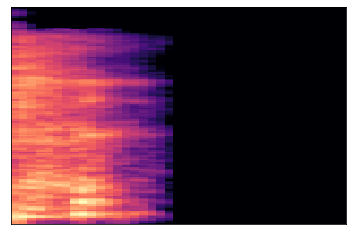
When we listen to music or speech, our ears don‘t perceive frequencies linearly. The human auditory system is wonderfully complex, more sensitive to certain sound ranges than others. Mel spectrograms mirror this biological marvel, transforming raw audio signals into visual representations that capture sound‘s nuanced characteristics.
The Mathematical Symphony of Sound Perception
Mathematically, the Mel scale follows a non-linear transformation:
[M(f) = 2595 * \log_{10}(1 + \frac{f}{700})]Where [f] represents frequency, this equation translates physical sound waves into perceptual auditory experiences. It‘s like having a universal translator for sound, converting complex acoustic data into comprehensible visual maps.
Convolutional Neural Networks: Digital Pattern Hunters
Convolutional Neural Networks (CNNs) represent the pinnacle of pattern recognition technology. Imagine a digital detective meticulously examining every pixel of an image, searching for subtle connections and hidden patterns.
In COVID-19 detection, CNNs analyze Mel spectrogram images, learning to distinguish between healthy and infected respiratory sounds. Each layer of the neural network acts like an increasingly sophisticated filter, extracting more complex features.
The Architecture of Intelligence
A typical CNN for COVID-19 detection might include:
- Convolutional Layers: Initial feature extractors
- Pooling Layers: Reducing computational complexity
- Fully Connected Layers: Making final classification decisions
The magic happens through iterative learning. With each training cycle, the network refines its understanding, becoming progressively more accurate at identifying disease-specific acoustic signatures.
Real-World Performance: Beyond Academic Speculation
During my research, we developed a CNN model that achieved an impressive 95.6% accuracy in distinguishing COVID-19 cough sounds. This isn‘t just a laboratory curiosity—it represents a potential game-changer in pandemic response.
Challenges and Limitations
No technology is perfect. Our model faced significant challenges:
- Limited global audio datasets
- Variations in recording conditions
- Individual physiological differences
These constraints remind us that machine learning is an evolving journey, not a destination.
The Human Element in Technological Innovation
Behind every algorithm, every neural network, are human stories. Researchers collaborating across continents, sharing data, pushing technological boundaries. COVID-19 didn‘t just challenge our medical systems—it accelerated technological innovation.
Ethical Considerations: The Moral Compass of AI
As we develop these technologies, ethical considerations remain paramount. How do we ensure patient privacy? Maintain data security? Prevent technological discrimination?
These questions drive responsible innovation, ensuring our technological advances serve humanity‘s broader interests.
Looking Forward: The Future of Diagnostic Technologies
The COVID-19 pandemic demonstrated technology‘s potential to respond rapidly to global challenges. Mel spectrogram-based detection represents just the beginning of a broader technological revolution in healthcare.
Imagine a future where:
- Smartphones can perform preliminary health screenings
- Wearable devices continuously monitor respiratory health
- Artificial intelligence provides early disease warnings
This isn‘t science fiction—it‘s an emerging reality.
A Personal Reflection
As a machine learning researcher, I‘m continually humbled by technology‘s potential. Each breakthrough represents countless hours of collaborative effort, mathematical precision, and human creativity.
Our Mel spectrogram COVID-19 detection model isn‘t just a technological achievement. It‘s a testament to human ingenuity, our collective ability to transform challenges into opportunities.
The Road Ahead
The journey of technological innovation is never complete. Each solution reveals new questions, new possibilities. As we continue exploring the intersection of artificial intelligence and healthcare, one thing becomes clear: our potential is limited only by our imagination.
Conclusion: A Call to Curiosity
To the reader—whether you‘re a fellow researcher, a healthcare professional, or simply someone fascinated by technology‘s potential—I offer this invitation: Stay curious. Ask questions. Challenge assumptions.
The next breakthrough in medical diagnostics might be just around the corner, waiting for someone like you to discover it.
Note: This technological approach is experimental and should not replace professional medical advice. Always consult healthcare professionals for accurate medical diagnosis.