Revolutionizing Retail: A Comprehensive Journey Through PySpark and Databricks Analytics
The Retail Data Revolution: A Personal Perspective
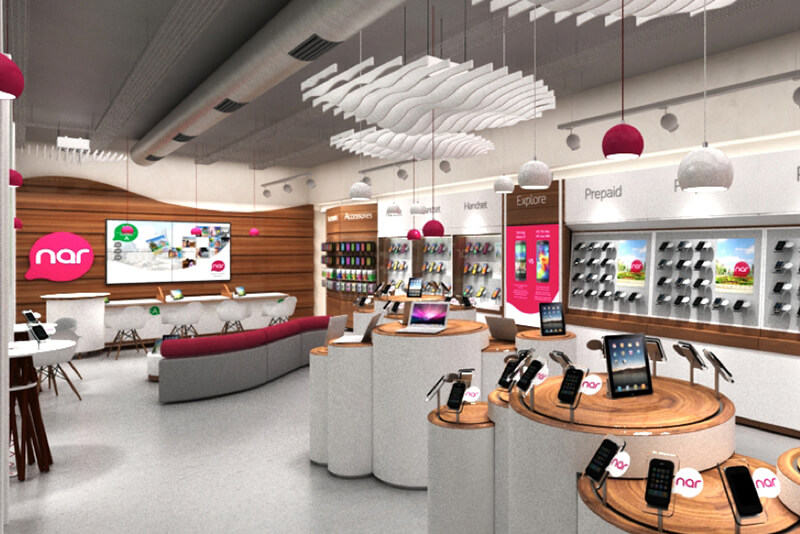
Imagine walking into a retail store where every product, every shelf, and every customer interaction tells a story. Not just any story, but a data-driven narrative that transforms how businesses understand and serve their customers. This isn‘t a futuristic dream—it‘s the present reality of retail analytics, powered by groundbreaking technologies like PySpark and Databricks.
My Journey into Retail Data Transformation
As a seasoned data scientist, I‘ve witnessed firsthand how technological innovations can reshape entire industries. The retail sector, once dominated by intuition and traditional market research, is now undergoing a profound metamorphosis driven by advanced data processing techniques.
Understanding the Data Landscape in Modern Retail
Retail environments generate an astronomical amount of data every second. From point-of-sale transactions to online browsing patterns, customer interactions create a complex ecosystem of information that traditional analytical methods struggle to comprehend.
The Complexity of Retail Data Ecosystems
Consider a typical retail scenario: A customer browses an online store, adds items to their cart, abandons the purchase, and later returns through a different channel. Each of these interactions generates multiple data points—location, time, product preferences, browsing duration, and more.
Traditional data processing methods would treat these as isolated events. PySpark and Databricks, however, transform these fragmented interactions into a holistic customer journey narrative.
PySpark: The Distributed Computing Powerhouse
PySpark represents more than just a technological tool—it‘s a paradigm shift in data processing. By leveraging distributed computing principles, PySpark enables retailers to process massive datasets with unprecedented efficiency and depth.
Architectural Brilliance of Distributed Computing
Imagine breaking down a complex puzzle into smaller, manageable pieces that can be solved simultaneously by multiple workers. This is precisely how PySpark‘s distributed computing model operates. Instead of sequentially processing data, it divides computational tasks across multiple nodes, dramatically reducing processing time.
def advanced_customer_segmentation(customers_df):
    segmented_customers = (
        customers_df
        .groupBy("demographic_cluster", "purchase_frequency")
        .agg(
            F.mean("total_spend").alias("avg_customer_value"),
            F.count("customer_id").alias("segment_population")
        )
        .filter(F.col("segment_population") > 100)
        .orderBy(F.col("avg_customer_value").desc())
    )
    return segmented_customers
This code snippet demonstrates how complex customer segmentation can be performed efficiently, transforming raw data into actionable insights.
Databricks: The Unified Analytics Platform
While PySpark provides the computational foundation, Databricks elevates data processing to an art form. It‘s not merely a tool but a comprehensive ecosystem designed to streamline complex analytical workflows.
Collaborative Intelligence in Action
Databricks breaks down traditional silos between data scientists, engineers, and business analysts. Its collaborative notebook environments allow teams to work seamlessly, sharing insights and iterating on analytical models in real-time.
Advanced Analytical Techniques in Retail
Predictive Demand Forecasting
Modern retailers don‘t just react to market trends—they anticipate them. By implementing sophisticated machine learning models within PySpark, businesses can develop incredibly accurate demand prediction systems.
def create_demand_forecasting_model(historical_sales):
    feature_engineered_data = (
        historical_sales
        .withColumn("seasonal_factor", calculate_seasonality())
        .withColumn("trend_component", extract_trend_features())
        .withColumn("predicted_demand",
            F.col("historical_sales") *
            F.col("seasonal_factor") *
            F.col("trend_component")
        )
    )
    return feature_engineered_data
This approach goes beyond simple linear projections, incorporating complex factors like seasonality and underlying market trends.
Performance Optimization Strategies
The Art of Efficient Data Processing
Efficient data processing isn‘t just about speed—it‘s about extracting maximum value with minimal computational overhead. PySpark offers multiple optimization techniques:
- Intelligent Caching: Persist frequently accessed datasets in memory
- Dynamic Query Optimization: Adjust execution plans in real-time
- Adaptive Resource Allocation: Intelligently distribute computational tasks
Machine Learning Integration
Transforming Data into Predictive Intelligence
The true power of PySpark and Databricks emerges when machine learning models are seamlessly integrated into the data processing pipeline. Retailers can now develop:
- Personalized recommendation engines
- Churn prediction models
- Dynamic pricing strategies
- Customer lifetime value calculations
Ethical Considerations in Retail Analytics
As we embrace these powerful technologies, we must also consider the ethical implications of data processing. Responsible use of customer data requires:
- Transparent data collection practices
- Robust privacy protection mechanisms
- Clear consent frameworks
- Ethical algorithmic design
Future Technological Horizons
The convergence of artificial intelligence, distributed computing, and advanced analytics is just beginning. Emerging technologies like edge computing, quantum-inspired algorithms, and federated learning will further revolutionize retail data processing.
Conclusion: Embracing the Data-Driven Future
Retail is no longer about selling products—it‘s about understanding and anticipating customer needs. Technologies like PySpark and Databricks are not just tools but strategic enablers of this transformation.
For businesses willing to invest in advanced data capabilities, the rewards are profound: enhanced customer experiences, optimized operations, and a competitive edge in an increasingly complex market landscape.
The data-driven retail revolution is here. Are you ready to be part of it?