Revolutionizing the Food Service Industry: How Artificial Intelligence is Transforming the Future of Dining
In the ever-evolving landscape of the food service industry, a quiet revolution is underway, driven by the remarkable advancements in Artificial Intelligence (AI) technology. From automating repetitive tasks to enhancing personalized customer experiences, AI is reshaping every aspect of the dining experience, ushering in a new era of efficiency, innovation, and adaptability.
As an AI and Machine Learning expert, I‘ve had the privilege of witnessing firsthand the transformative impact of these cutting-edge technologies on the food service sector. In this comprehensive blog post, I‘ll take you on a journey through the remarkable ways AI is redefining the industry, exploring the latest trends, real-world applications, and the far-reaching implications for the future of dining.
Automating the Kitchen: Robotic Precision and Efficiency
One of the most visible and impactful applications of AI in the food service industry is the integration of robotic technologies. Restaurants, both large and small, are embracing the power of automation to streamline their operations, particularly in the realm of food preparation and delivery.
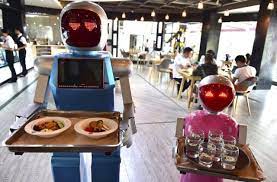
In the picturesque town of Rapallo, Italy, patrons are greeted by a fleet of waiter robots gracefully transporting dishes to their tables. These AI-powered robotic assistants are programmed with advanced computer vision and motion control algorithms, enabling them to navigate the restaurant environment with precision and efficiency. By taking over the repetitive task of food delivery, these robots free up human employees to focus on more complex and creative culinary endeavors, enhancing the overall dining experience.
But the integration of robots in the food service industry extends far beyond the dining room. In the kitchen, robotic arms are increasingly taking on tasks such as making chips, emptying fry baskets, and even plating dishes. These automated systems not only improve consistency and speed but also reduce the risk of human error, ensuring that every dish that leaves the kitchen meets the highest standards of quality.
One particularly impressive example comes from the renowned Michelin-starred restaurant, Osteria Francescana, in Modena, Italy. Chef Massimo Bottura has seamlessly integrated AI-powered robotic assistants into his kitchen, allowing his culinary team to focus on the creative and conceptual aspects of their craft. These robotic sous chefs meticulously prepare ingredients, maintain consistent cooking temperatures, and even plate dishes with the precision of a seasoned human chef.
The benefits of robotic automation in the food service industry are manifold. By offloading repetitive and labor-intensive tasks, restaurants can optimize their operations, reduce labor costs, and improve overall efficiency. This, in turn, allows them to allocate more resources towards enhancing the customer experience, developing innovative menu items, and staying ahead of the competition.
Revolutionizing the Customer Experience
The COVID-19 pandemic has undoubtedly accelerated the adoption of AI-powered technologies in the food service industry, as restaurants sought to adapt to the changing landscape and meet the growing demand for contactless experiences. From automated drive-thru and phone ordering to personalized menu recommendations, AI-driven systems are transforming the way customers engage with their favorite dining establishments.
One prime example of this transformation is the iconic global fast-food chain, McDonald‘s. In 2019, the company made a strategic investment in AI and machine learning, revolutionizing the ordering process for its customers. Touch-screen kiosks within their restaurants allow patrons to conveniently place their orders, while dynamic digital menu boards in the drive-thru adjust recommendations based on factors such as time of day, weather, and restaurant traffic.
These AI-powered systems not only improve order accuracy but also automate the upselling process, suggesting complementary items that align with the customer‘s preferences and previous orders. By leveraging AI, McDonald‘s has been able to create a more personalized and efficient dining experience, enhancing customer satisfaction and driving increased sales.
But the integration of AI in the food service industry extends beyond the ordering process. Virtual assistants are also making their mark, taking on the task of handling phone orders and replicating human-like conversations. Wingstop, a renowned restaurant chain, has piloted the use of these AI-powered chatbots to reduce hold times and enable employees to focus on the core tasks of cooking and serving customers.
These virtual assistants are programmed with advanced natural language processing algorithms, allowing them to understand customer requests, make personalized recommendations, and seamlessly guide the ordering process. While human assistance is still available for those who prefer the traditional phone-based experience, the integration of virtual assistants has proven to be a game-changer in streamlining customer interactions and improving overall operational efficiency.
Optimizing the Supply Chain: AI-Driven Logistics and Inventory Management
The food service industry is inherently complex, with a multitude of moving parts that must be carefully orchestrated to ensure a smooth and efficient operation. From sourcing ingredients to managing inventory and logistics, the supply chain is a critical component that can make or break a restaurant‘s success.
This is where AI-powered technologies are making a significant impact, revolutionizing the way food service establishments approach supply chain optimization and inventory management.
One of the key areas where AI is making its mark is in predictive analytics. By analyzing vast amounts of data, including historical sales patterns, weather forecasts, and market trends, AI algorithms can accurately forecast demand and anticipate fluctuations in customer preferences. This invaluable insight allows restaurants to optimize their inventory, minimize waste, and ensure that the right products are available at the right time, ultimately leading to significant cost savings and improved operational efficiency.
Take, for example, the case of Panera Bread, a popular fast-casual restaurant chain. By leveraging AI-powered predictive analytics, Panera has been able to streamline its supply chain and inventory management processes. The company‘s AI system analyzes a multitude of data points, from weather patterns to local events, to forecast demand for specific menu items. This information is then used to adjust ingredient orders and production schedules, ensuring that Panera‘s kitchens are always stocked with the necessary supplies to meet customer demand.
The impact of this AI-driven approach has been remarkable. Panera has reported a significant reduction in food waste, with a decrease of up to 30% in certain food categories. Additionally, the company‘s ability to anticipate and respond to fluctuations in demand has led to improved customer satisfaction, as menu items are consistently available and freshly prepared.
But the benefits of AI-powered supply chain optimization extend beyond inventory management. These advanced technologies are also transforming the logistics of food delivery and distribution. By analyzing real-time data on traffic patterns, weather conditions, and delivery routes, AI algorithms can optimize delivery schedules, reduce fuel consumption, and ensure that orders reach customers in a timely and efficient manner.
One innovative example comes from Starship Technologies, a company that has developed autonomous delivery robots. These AI-powered bots are being deployed in various cities and college campuses, undertaking short-distance deliveries and easing the pressure on human labor. By leveraging predictive analytics and real-time route optimization, Starship‘s delivery robots are able to navigate the urban landscape, avoid obstacles, and ensure that orders reach their destination quickly and reliably.
As the food service industry continues to grapple with labor shortages and supply chain disruptions, the integration of AI-driven supply chain optimization and inventory management solutions is becoming increasingly crucial. By harnessing the power of predictive analytics and autonomous technologies, restaurants can streamline their operations, reduce costs, and enhance the overall customer experience.
Enhancing Food Safety and Quality Control
In the food service industry, ensuring the safety and quality of the products served to customers is of paramount importance. The consequences of a foodborne illness outbreak or the distribution of subpar ingredients can be devastating, both for the restaurant‘s reputation and the well-being of its patrons.
This is where AI-powered technologies are making a significant impact, revolutionizing the way food service establishments approach quality control and food safety.
One of the primary applications of AI in this domain is automated inspection and defect detection. By leveraging computer vision and deep learning algorithms, AI-powered systems can analyze food products with a level of precision and speed that far surpasses human capabilities. These systems can detect even the most subtle imperfections, such as discoloration, bruising, or foreign objects, ensuring that only the highest-quality ingredients make it to the kitchen.
Take, for example, the case of Tyson Foods, one of the world‘s largest food producers. The company has implemented AI-powered vision systems in its processing plants, enabling real-time inspection of meat products. These AI-driven systems can identify defects, detect contaminants, and ensure that each cut of meat meets the company‘s strict quality standards. By automating this critical process, Tyson Foods has been able to improve the consistency and safety of its products, while also reducing the risk of human error.
But the integration of AI in food safety extends beyond quality control. These advanced technologies are also being used to enhance traceability and improve the overall transparency of the food supply chain.
By leveraging blockchain technology and AI-driven data analytics, food service establishments can now track the origin, processing, and distribution of their ingredients with unprecedented accuracy. This level of traceability not only helps to mitigate the risk of foodborne illnesses but also enables restaurants to provide their customers with detailed information about the provenance and sustainability of the food they are consuming.
One innovative example comes from the IBM Food Trust platform, which utilizes blockchain and AI to create a transparent and secure food supply chain. By integrating this system, restaurants can quickly identify the source of any potential contamination, initiate targeted recalls, and provide customers with real-time updates on the safety and quality of their food.
As consumer demand for transparency and accountability in the food service industry continues to grow, the integration of AI-powered quality control and traceability systems will become increasingly crucial. By leveraging these advanced technologies, restaurants can not only safeguard the health and well-being of their customers but also build trust, enhance their brand reputation, and stay ahead of the competition.
Personalization and Upselling: AI-Driven Menu Optimization
In the highly competitive food service industry, where customer loyalty is fiercely contested, the ability to provide a personalized and engaging dining experience has become a critical differentiator. This is where AI-powered technologies are truly shining, revolutionizing the way restaurants approach menu optimization, personalization, and upselling.
One of the most prominent examples of this transformation can be found at the iconic global fast-food chain, McDonald‘s. In 2019, the company made a strategic investment in AI and machine learning, with the goal of enhancing the ordering process for its customers.
By integrating AI-driven algorithms into their touch-screen kiosks and digital menu boards, McDonald‘s has been able to create a highly personalized and adaptive ordering experience. The system analyzes a wealth of data, including customer preferences, purchase history, and real-time factors such as weather and local events, to dynamically adjust menu recommendations and upsell suggestions.
For instance, if a customer has previously ordered a Big Mac and fries, the AI system might suggest adding a McCafé beverage to their order, knowing that this combination is a popular choice. Alternatively, if the weather is particularly hot, the system might prioritize highlighting refreshing menu items like iced coffee or milkshakes.
This AI-powered personalization not only improves the customer experience but also drives increased sales and revenue for the restaurant. By tailoring the menu to individual preferences and providing intelligent upsell recommendations, McDonald‘s has been able to boost average order values and enhance customer loyalty.
But the integration of AI in menu optimization extends beyond the fast-food industry. Fine-dining establishments are also embracing the power of these advanced technologies to create truly personalized dining experiences for their patrons.
Take, for example, the case of Osteria Francescana, the renowned Michelin-starred restaurant in Modena, Italy. Chef Massimo Bottura has leveraged AI-powered systems to analyze customer data, including dietary preferences, allergies, and past dining experiences, to curate a highly personalized menu for each guest.
By integrating these AI-driven insights, Osteria Francescana is able to not only anticipate and cater to the unique needs and preferences of each customer but also suggest complementary wine pairings, desserts, and other menu items that enhance the overall dining experience. This level of personalization has become a hallmark of the restaurant, contributing to its reputation as one of the world‘s finest dining destinations.
As the food service industry continues to evolve, the integration of AI-powered personalization and upselling technologies will become increasingly crucial for restaurants seeking to stand out in a crowded marketplace. By leveraging these advanced systems, establishments can create a more engaging and memorable dining experience for their customers, fostering loyalty, driving repeat business, and ultimately, enhancing their overall profitability.
The Future of AI in Food Service: Endless Possibilities
As the food service industry continues to navigate the challenges of the modern landscape, the adoption of AI-powered technologies will be crucial in maintaining a competitive edge, delivering exceptional customer experiences, and ensuring long-term sustainability. The future of dining is here, and it is undoubtedly powered by the remarkable capabilities of Artificial Intelligence.
Looking ahead, the potential of AI-driven systems in the food service industry is truly limitless. From optimizing supply chain logistics and improving food safety to enabling more sustainable and environmentally-friendly practices, the integration of these advanced technologies will continue to transform every aspect of the industry.
One area that holds immense promise is the use of AI in predictive maintenance and equipment monitoring. By analyzing sensor data and historical performance patterns, AI-powered systems can identify potential equipment failures before they occur, allowing restaurants to proactively schedule maintenance and minimize costly downtime.
Similarly, the integration of AI in food waste management can have a significant impact on the industry‘s environmental footprint. By leveraging computer vision and deep learning algorithms, restaurants can accurately monitor inventory levels, predict demand, and optimize food preparation to minimize waste. This not only reduces the environmental impact but also leads to substantial cost savings and improved operational efficiency.
Moreover, the future of AI in food service may also involve the integration of advanced robotics and autonomous systems in areas beyond the kitchen and dining room. Imagine a world where self-driving delivery vehicles, equipped with AI-powered navigation and object detection, seamlessly transport orders to customers‘ doorsteps, further enhancing the convenience and speed of the dining experience.
As the industry continues to evolve, the role of AI will become increasingly crucial in enabling restaurants to adapt to changing consumer preferences, navigate supply chain disruptions, and maintain a competitive edge. By embracing these transformative technologies, food service establishments can not only streamline their operations but also create a more engaging, personalized, and sustainable dining experience for their customers.
The future of the food service industry is undoubtedly bright, and it is AI that will be the driving force behind this transformation. As an AI and Machine Learning expert, I am truly excited to witness the continued advancements and the profound impact that these technologies will have on the way we dine and experience the culinary world.