Room Occupancy Detection: A Machine Learning Revolution in Smart Spaces
The Silent Transformation of Space Intelligence
Imagine walking into a room that understands your presence before you even realize it. This isn‘t science fiction—it‘s the remarkable world of room occupancy detection powered by machine learning algorithms. As an artificial intelligence expert who has spent years exploring the intricate dance between technology and human environments, I‘m excited to unravel this fascinating technological landscape.
A Journey Through Technological Evolution
The story of room occupancy detection isn‘t just about sensors and algorithms—it‘s a narrative of human ingenuity. Decades ago, detecting room occupancy meant physically counting people or relying on rudimentary motion sensors. Today, we‘re witnessing a profound transformation where intelligent systems can predict, understand, and respond to human presence with unprecedented sophistication.
The Mathematical Symphony of Occupancy Detection
At its core, room occupancy detection represents a complex mathematical optimization problem. Machine learning algorithms transform raw environmental data into meaningful insights through intricate computational processes. Let‘s explore the mathematical foundations that make this technological marvel possible.
Probabilistic Modeling: Beyond Binary Detection
Traditional occupancy detection operated on a simple binary premise—occupied or unoccupied. Machine learning introduces probabilistic modeling, where occupancy becomes a nuanced spectrum. Consider the mathematical representation:
[P(Occupancy) = f(Temperature, Humidity, Light, CO2, Time)]This equation illustrates how multiple environmental variables contribute to predicting room occupancy, creating a dynamic, adaptive detection mechanism.
Algorithmic Architectures: Decoding Environmental Signals
Decision Trees: Nature-Inspired Intelligence
Decision trees mirror natural decision-making processes. Imagine a tree where each branch represents a decision point based on environmental conditions. Temperature above 22°C? Move right. Light intensity below 500 lux? Move left. This recursive partitioning allows machines to navigate complex occupancy scenarios with remarkable precision.
Random Forests: Collective Intelligence
Random forests elevate decision tree capabilities by creating an ensemble of trees. Think of it as a democratic system where multiple "expert" trees vote on occupancy status. This approach dramatically reduces individual tree biases and enhances overall prediction accuracy.
Sensor Fusion: The Technological Convergence
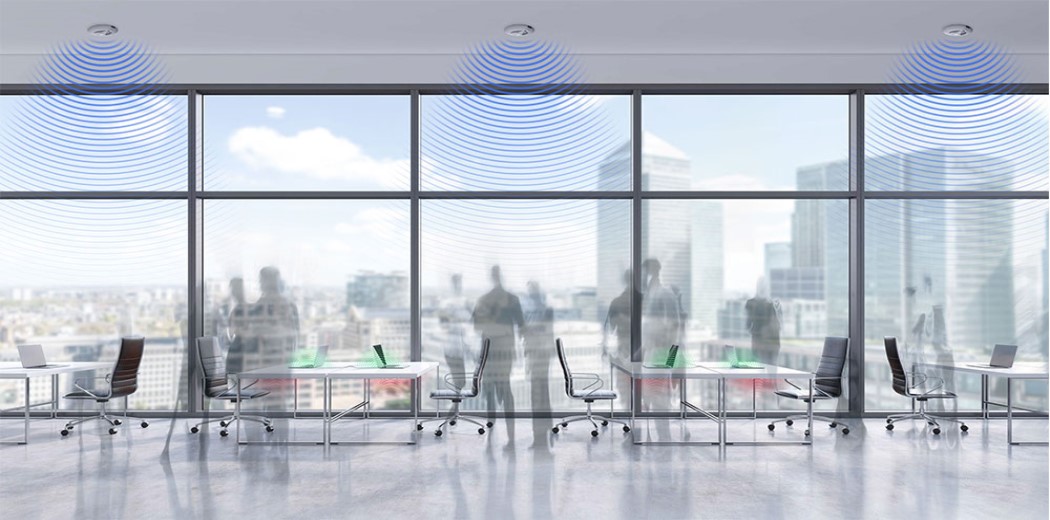
Modern occupancy detection transcends single-sensor limitations. By integrating multiple sensor streams—thermal, acoustic, electromagnetic—machine learning algorithms create a holistic environmental understanding.
Computational Challenges and Innovations
Sensor fusion introduces significant computational complexity. Advanced techniques like Kalman filtering and particle swarm optimization help manage this complexity, enabling real-time occupancy predictions with minimal computational overhead.
Privacy-Preserving Techniques: Ethical Considerations
As occupancy detection becomes more sophisticated, privacy emerges as a critical concern. Machine learning researchers are developing innovative techniques like:
- Differential privacy algorithms
- Federated learning approaches
- Anonymized data processing frameworks
These methods ensure that while systems become smarter, individual privacy remains sacrosanct.
Real-World Impact: Beyond Academic Curiosity
Energy Efficiency Revolution
Imagine buildings that dynamically adjust heating, cooling, and lighting based on precise occupancy predictions. Machine learning transforms theoretical energy conservation into tangible sustainability strategies.
A commercial building implementing advanced occupancy detection can potentially reduce energy consumption by 20-30%, translating to significant economic and environmental benefits.
Healthcare and Pandemic Resilience
The COVID-19 pandemic highlighted the critical importance of understanding human spatial interactions. Machine learning-powered occupancy detection systems became instrumental in:
- Social distancing monitoring
- Contact tracing
- Infection risk mitigation
Emerging Frontiers: The Next Technological Wave
Edge Computing and Occupancy Detection
The future lies in decentralized, edge-based machine learning models. By processing occupancy data directly on local devices, we reduce latency, enhance privacy, and create more responsive intelligent environments.
Neuromorphic Computing: Brain-Inspired Algorithms
Researchers are exploring neuromorphic computing architectures that mimic human brain processing. These systems could revolutionize occupancy detection by introducing adaptive, context-aware learning capabilities.
Practical Implementation: From Theory to Reality
Implementing machine learning-based occupancy detection requires:
- High-quality sensor infrastructure
- Robust data collection mechanisms
- Sophisticated machine learning models
- Continuous model retraining and validation
Conclusion: A Technological Renaissance
Room occupancy detection represents more than a technological advancement—it‘s a testament to human creativity. By bridging mathematics, computer science, and environmental understanding, we‘re creating spaces that are increasingly intelligent, responsive, and harmonious.
As an artificial intelligence expert, I‘m continually amazed by how machine learning transforms abstract mathematical concepts into tangible, real-world solutions that enhance human experiences.
The journey of room occupancy detection is just beginning, and the possibilities are as boundless as human imagination itself.