The Ultimate Guide to Rowing Machines for Beginners
Are you a fitness beginner looking for an effective, low-impact workout that targets your whole body? Look no further than the rowing machine! Rowing is an excellent form of cardio exercise that engages 86% of your muscles while being easy on the joints. It‘s the perfect workout for those just starting their fitness journey.
In this comprehensive guide, we‘ll dive into everything you need to know about rowing machines as a beginner. From the benefits of rowing to the different types of machines available to proper rowing form, you‘ll learn how to make the most of this versatile piece of exercise equipment. Plus, we‘ll share our top picks for the best rowing machines for beginners.
Let‘s jump in and discover why rowing is the ultimate beginner-friendly workout!
The Amazing Benefits of Rowing Machines for Beginners
You may have seen rowing machines at your local gym, but did you know just how beneficial they can be, especially for fitness beginners? Here are some of the top reasons to add rowing to your workout routine:
-
Low-impact exercise: Rowing is very easy on the joints compared to high-impact activities like running, making it ideal if you‘re new to working out or have joint issues. The smooth, gliding motion puts minimal stress on your knees, ankles, and hips.
-
Full-body workout: Rowing activates an impressive 86% of your muscles! It provides both a cardiovascular and strength training workout, engaging your legs, core, back, shoulders, and arms all at once. Talk about efficiency!
-
Boosts cardiovascular health: Rowing gets your heart pumping and lungs working, improving your overall cardiovascular fitness. This leads to a healthier heart, better circulation, lower blood pressure, and increased endurance over time.
-
Burns calories: Due to the large number of muscles used, rowing torches serious calories. Depending on your weight and intensity level, you can burn 400-800 calories per hour! Coupled with a balanced diet, rowing can definitely support weight loss goals.
-
Builds lean muscle: The resistance involved in rowing helps build long, lean muscles, especially in your legs, back, and core. Having more muscle mass boosts your metabolism so you burn more calories even while resting.
-
Relieves stress: The rhythmic, meditative nature of rowing makes it an effective stress-buster. Focusing on your breath and the fluid rowing motion can calm your mind and melt tension away. Plus, exercising releases feel-good endorphins that elevate your mood.
-
Highly versatile: Rowing machines offer a wide range of workout options suitable for all fitness levels. You can go low and slow or amp up the intensity with sprints and intervals. Many rowers also have built-in workouts and games to keep things fun and challenging.
As you can see, rowing packs in a ton of physical and mental health benefits ideal for beginners. It‘s truly a one-stop shop for an invigorating, complete workout. With regular rowing sessions, you‘ll notice your fitness and strength rapidly increase.
Choosing the Right Type of Rowing Machine
Now that you‘re convinced of the benefits, let‘s review the different types of rowing machines available. Rowing machines are categorized by their method of resistance:
-
Air rowers: These utilize a flywheel and damper to create resistance. As you pull the handle, the flywheel spins and generates wind resistance. The faster you row, the more resistance there is. Air rowers most closely mimic the feel of rowing on water. They tend to be quite noisy, however.
-
Magnetic rowers: These employ a magnetic brake system to create resistance. Magnets move closer or farther from the flywheel to increase or decrease the resistance level, which you can adjust with a dial or button. Magnetic rowers operate very quietly and smoothly with a constant level of resistance throughout the row.
-
Water rowers: As the name suggests, these rowers use water resistance. When you pull the handle, paddles spin in an enclosed water tank, creating drag. The sloshing water mimics the sound and feel of rowing on a lake or river. You increase resistance by adding more water. These provide a realistic rowing experience but can be expensive.
-
Hydraulic rowers: The most basic and affordable type, hydraulic rowers use pistons attached to the handlebars to generate resistance. While compact and budget-friendly, the rowing motion on these doesn‘t feel as smooth or natural as other types.
For beginners, we recommend starting with a magnetic or air rower. Magnetic rowers are ideal for apartments or shared living spaces since they are very quiet. Many magnetic rowers also have an extremely smooth and comfortable rowing stroke. Air rowers provide a more realistic rowing experience and tend to be very durable.
In addition to choosing a resistance type, here are other key factors to consider when picking your rowing machine:
- Price: Rowing machines range from around $200 to over $2000. Decide on your budget beforehand. In general, expect to spend at least $500 on a quality rower that will last.
- Size: Consider the machine‘s footprint and portability. Some rowers fold up or can be stored vertically to save space. If you have limited workout space, look for a compact model.
- Display: Most rowers come with an LCD display that tracks your data like time, distance, strokes per minute, and calories burned. More advanced models may include virtual classes or scenic rowing routes.
- Comfort: For longer rowing sessions, you‘ll want a rower with an ergonomic, padded seat, adjustable footboards, and a non-slip handlebar. Comfort is key to maintaining proper form and enjoying your workout.
- Maximum user weight: Check the machine‘s weight capacity to ensure it can support you. Most rowers accommodate 220-265 pounds, but some heavy-duty models allow up to 500 pounds.
Take the time to read product specs and reviews to find the best rowing machine for your needs and budget. Feel free to test a few models at a sporting goods store or gym to get a feel for them before you buy.
Mastering Your Rowing Technique
Using proper rowing form not only maximizes your results but also greatly reduces your risk of injury. While rowing may look like it‘s all arms, your legs and core actually do the bulk of the work. Here‘s how to execute a rowing stroke with perfect technique:
-
Catch: Start with your knees bent, shins vertical, and body tilted slightly forward. Your arms should be straight as you grip the handlebar. This is the beginning/end of each stroke.
-
Drive: Drive through your feet and straighten your legs, keeping your arms straight and core tight. Once your legs are extended, lean back slightly and pull the handlebar towards your lower ribs.
-
Finish: Complete the stroke by straightening your arms back out in front of you. Your legs are long, handle is drawn to your body, and shoulders are relaxed.
-
Recovery: Extend your arms back out while hinging forward at the hips. Once the handlebar passes over your knees, allow your knees to bend and gradually slide the seat forward to return to the catch position.
Remember to keep your movements smooth and fluid, as if you‘re gliding on water. Avoid yanking on the handlebar or slamming your seat forward. Engage your core and maintain a tall, neutral spine throughout. Breathe steadily, exhaling on the drive and inhaling on the recovery.
Practice rowing slowly, focusing on your form and rhythm. It can help to break the stroke down into distinct parts at first – legs, core, arms on the way out and arms, core, legs on the way in. As you become more comfortable, aim for a ratio of about 60% leg work and 40% upper body work.
Sample Rowing Workouts for Beginners
Ready to hop on your rower and get sweating? Here are 3 beginner-friendly workouts to try:
-
Steady State Rows: Great for building your aerobic base and perfecting your technique. Row at a moderate pace where you can still carry on a conversation, aiming for 20-30 strokes per minute (spm). Start with 10-15 minutes and gradually increase to 30 minutes as your endurance improves.
-
Sprint Intervals: After a 5-minute warm up, alternate between 30 seconds of fast rowing (about 70% max effort) and 1 minute of slow, easy rowing. Complete 5-10 intervals, then cool down for 5 minutes. These intervals boost your metabolism and make your workout more time-efficient.
-
Pyramid Workout: Begin with a 5-minute warm up. Then, complete this pyramid: 1 minute fast, 1 minute slow, 2 minutes fast, 2 minutes slow, 3 minutes fast, 3 minutes slow, 2 minutes fast, 2 minutes slow, 1 minute fast, 1 minute slow. Cool down for 5 minutes. This varied structure fends off boredom and fatigue.
Of course, always listen to your body and modify as needed. It‘s okay to start with shorter workouts or take extra rest days as you build up your rowing stamina. Consistency is key. Aim to row 3-5 times per week, with rest days in between for recovery.
Our Top Rowing Machine Picks for Beginners
With so many rowers on the market, choosing one can feel overwhelming. Here are our 5 top picks for beginners, based on quality, features, and value:
-
Concept2 RowErg: This air rower is the gold standard, used by Olympic athletes and CrossFit enthusiasts alike. It‘s built like a tank, provides a super smooth row, and comes with a PM5 performance monitor to track your stats. At $900, it‘s an investment, but one that will last a lifetime.
-
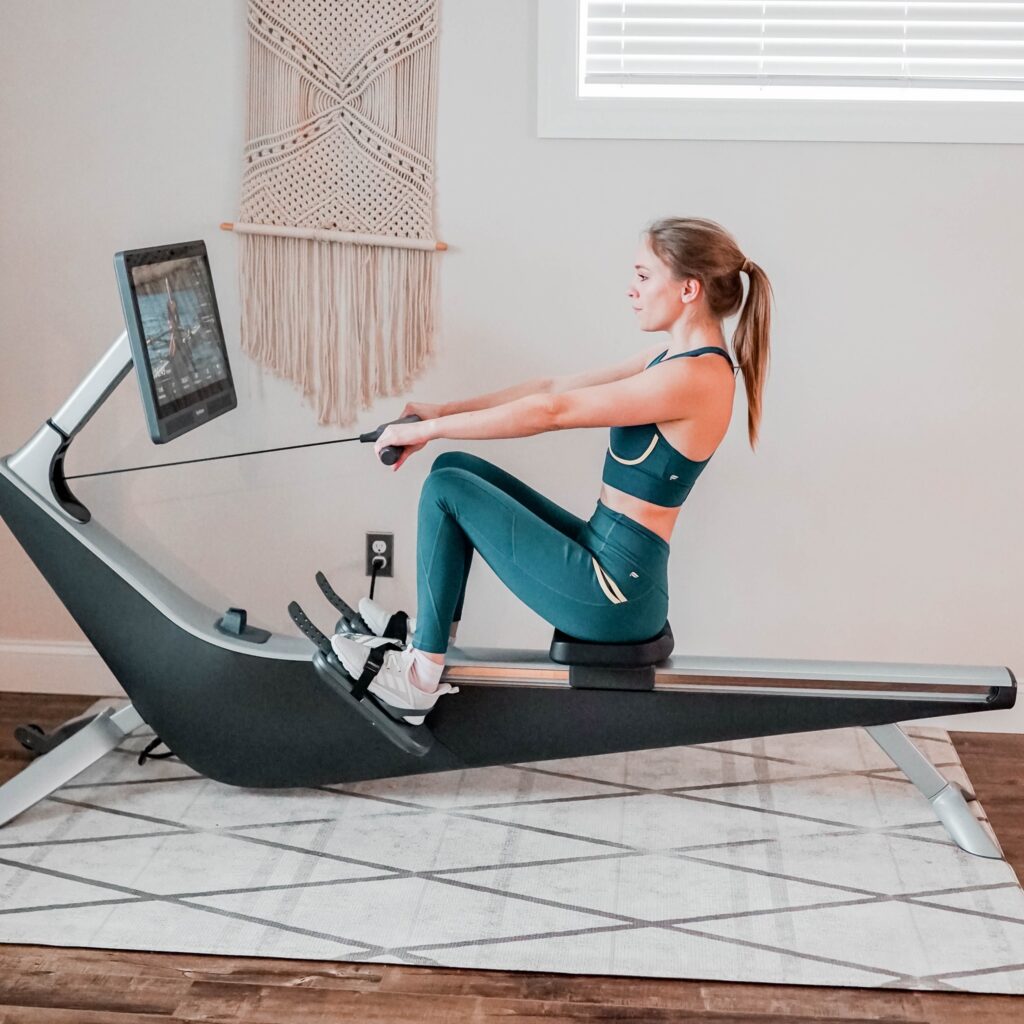
Hydrow Connected Rower: Hydrow brings the "Peloton of rowing" experience, with a 22" HD touchscreen, live and on-demand classes led by world-class athletes, and an electromagnetic resistance system for a nearly silent row. It‘s pricey at $2199, but you‘re paying for cutting-edge technology and engaging content.
-
NordicTrack RW900: NordicTrack‘s premier rower offers an immersive experience with its 22" touchscreen, iFit integration for coach-led workouts, and 26 digital resistance levels. The RW900‘s molded seat and ergonomic handle deliver a comfortable ride. At $1599, it‘s a high-quality, interactive option.
-
ProForm 750R: A solid mid-range choice, the 750R uses magnetic and air resistance for a smooth, quiet row. It includes a large, pivoting display, 20 resistance levels, and iFit compatibility. Currently on sale for $747 (regularly $999), it offers great bang for your buck.
-
Sunny Health & Fitness SF-RW5515: Proof that you don‘t need to spend a fortune for a quality rower, this magnetic model provides 8 levels of resistance, an LCD monitor, non-slip foot pedals, and a space-saving design. At under $300, it‘s the perfect budget-friendly option for apartment dwellers.
Remember, the "best" rowing machine is the one that fits your goals, space, and budget. All of these models provide an excellent low-impact workout for beginners. Take advantage of any trial periods, return policies, or warranties to find the rower that works for you.
Get Rowing!
We hope this ultimate guide to rowing machines for beginners has inspired you to give this incredible workout a try. Rowing truly has something to offer everyone, no matter your age, weight, or fitness level. It‘s a fun, effective way to get your cardio in while building total-body strength and endurance.
Take the first step by selecting a rowing machine and familiarizing yourself with proper form. Start with short sessions and focus on consistency. With regular practice, you‘ll be amazed at how quickly your technique and fitness improve.
Get ready to feel the rowing burn and reap the head-to-toe benefits of this ultimate beginner-friendly exercise. Your stronger, healthier body will thank you. Happy rowing!