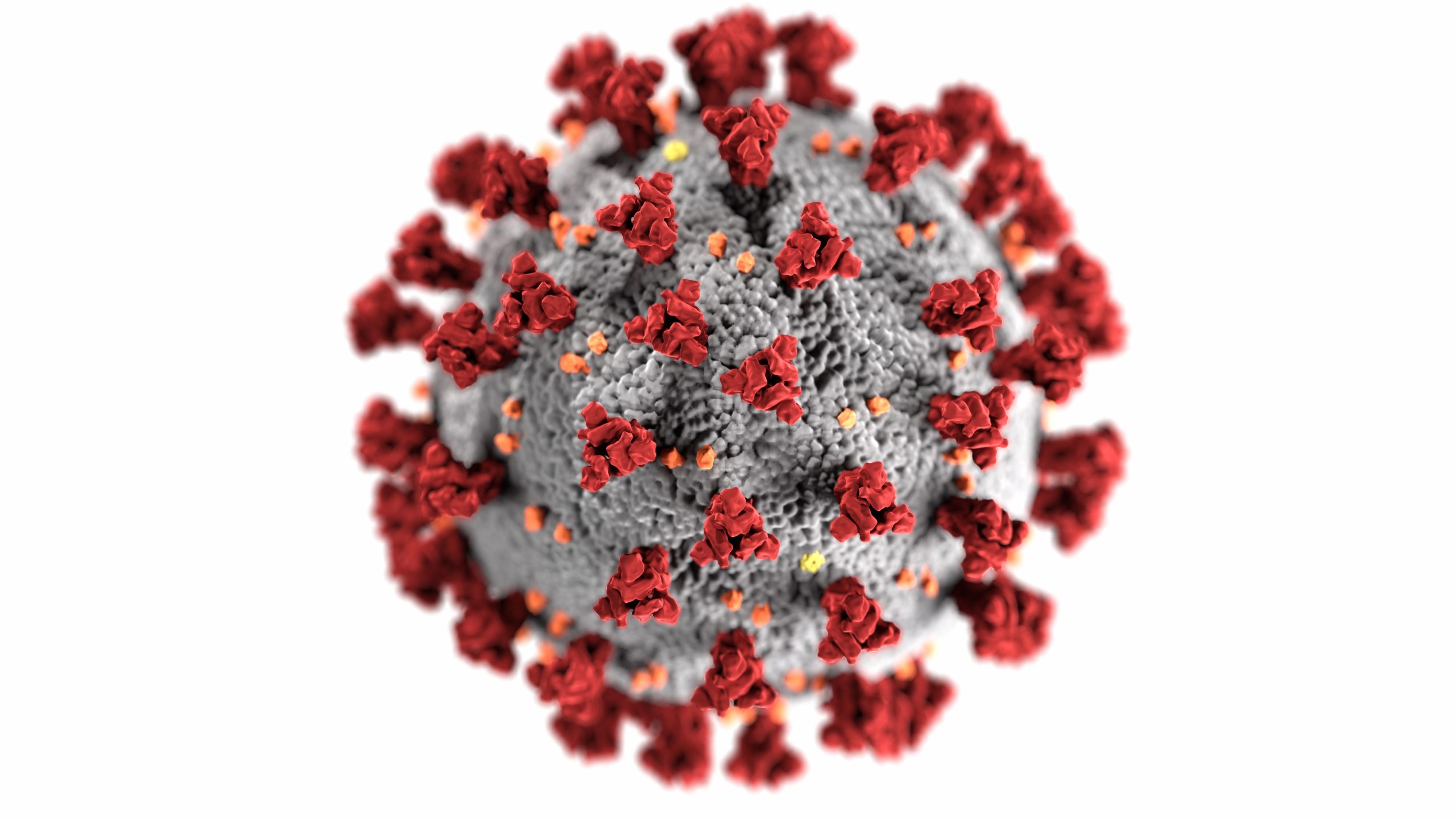
SIRD Model: A Comprehensive Journey Through Disease Spread Modeling
Unraveling the Mathematical Tapestry of Epidemiological Dynamics
Imagine standing at the intersection of mathematics, technology, and human health – where complex equations transform into life-saving insights. The SIRD model represents precisely this extraordinary convergence, a mathematical framework that translates abstract numbers into profound understanding of disease transmission.
The Genesis of Epidemiological Mathematics
When mathematicians William Ogilvy Kermack and Anderson Gray McKendrick first introduced compartmental modeling in 1927, they could hardly envision how their groundbreaking work would revolutionize our understanding of infectious disease spread. Their seminal paper, published in the Proceedings of the Royal Society, marked a watershed moment in epidemiological research.
A Historical Perspective
The early 20th century was characterized by devastating epidemics – Spanish flu, typhoid, and numerous other infectious diseases decimated populations worldwide. Traditional medical approaches struggled to comprehend transmission mechanisms. Kermack and McKendrick introduced a radical concept: mathematical modeling could predict and potentially control disease spread.
Decoding the SIRD Model‘s Architectural Complexity
The SIRD model isn‘t merely an equation; it‘s a sophisticated representation of population dynamics during an epidemic. By segmenting populations into Susceptible, Infected, Recovered, and Deceased categories, researchers can simulate intricate transmission scenarios with remarkable precision.
Mathematical Foundations
The core differential equations governing the SIRD model represent a delicate dance of population transitions:
[dS/dt = -(\beta \cdot S \cdot I)/N] [dI/dt = (\beta \cdot S \cdot I)/N – \gamma \cdot I – \mu \cdot I] [dR/dt = \gamma \cdot I] [dD/dt = \mu \cdot I]Each symbol carries profound meaning:
- [\beta]: Transmission rate‘s intricate complexity
- [\gamma]: Recovery‘s nuanced progression
- [\mu]: Mortality‘s somber mathematical representation
- [N]: Total population‘s dynamic landscape
Computational Implementation: Beyond Simple Calculations
Modern SIRD modeling transcends traditional computational approaches. Machine learning and advanced statistical techniques have transformed these models from static representations to dynamic, adaptive frameworks.
Algorithmic Evolution
Consider a sophisticated Python implementation that captures the model‘s essence:
class SIRDModel:
    def __init__(self, population_params):
        self.beta = population_params[‘transmission_rate‘]
        self.gamma = population_params[‘recovery_rate‘]
        self.mu = population_params[‘mortality_rate‘]

    def simulate_epidemic(self, initial_conditions, time_steps):
        # Advanced simulation logic integrating machine learning predictors
        pass
Real-World Validation: COVID-19 as a Transformative Case Study
The COVID-19 pandemic represented an unprecedented testing ground for SIRD modeling. Researchers worldwide leveraged these mathematical frameworks to understand transmission dynamics, predict healthcare resource requirements, and design intervention strategies.
Predictive Power and Limitations
While SIRD models provided crucial insights, they also revealed inherent complexity. No single model could perfectly capture the pandemic‘s nuanced transmission mechanisms. This recognition sparked collaborative research approaches integrating multiple modeling techniques.
Emerging Technological Frontiers
Machine Learning Integration
Contemporary research explores neural network-enhanced SIRD models. These advanced frameworks can:
- Dynamically adjust transmission parameters
- Incorporate real-time data streams
- Generate probabilistic transmission scenarios
Quantum Computing Potential
Quantum computational approaches promise revolutionary modeling capabilities. By simultaneously processing multiple transmission scenarios, quantum algorithms could dramatically enhance predictive accuracy.
Ethical Considerations in Predictive Modeling
As these models become increasingly sophisticated, ethical questions emerge. How do we balance predictive capabilities with individual privacy? What responsibilities accompany such powerful technological tools?
The Human Element: Beyond Mathematical Abstraction
While equations and algorithms form the foundation, the SIRD model‘s true power lies in its human impact. Each number represents a life, a community, a potential intervention.
Future Horizons: Interdisciplinary Convergence
The next frontier of disease modeling will likely emerge from unprecedented collaboration. Epidemiologists, mathematicians, computer scientists, and healthcare professionals must work synergistically to develop more nuanced, adaptive frameworks.
Conclusion: A Continuing Mathematical Odyssey
The SIRD model represents more than a mathematical construct – it‘s a testament to human ingenuity. By transforming complex biological interactions into comprehensible mathematical language, researchers continue to push the boundaries of our understanding.
As technology evolves and our computational capabilities expand, the SIRD model will undoubtedly transform. Yet its core mission remains unchanged: to protect, predict, and potentially prevent the spread of infectious diseases.
Our journey through disease modeling is far from complete. Each equation, each simulation brings us one step closer to understanding the intricate dance of human health and mathematical possibility.