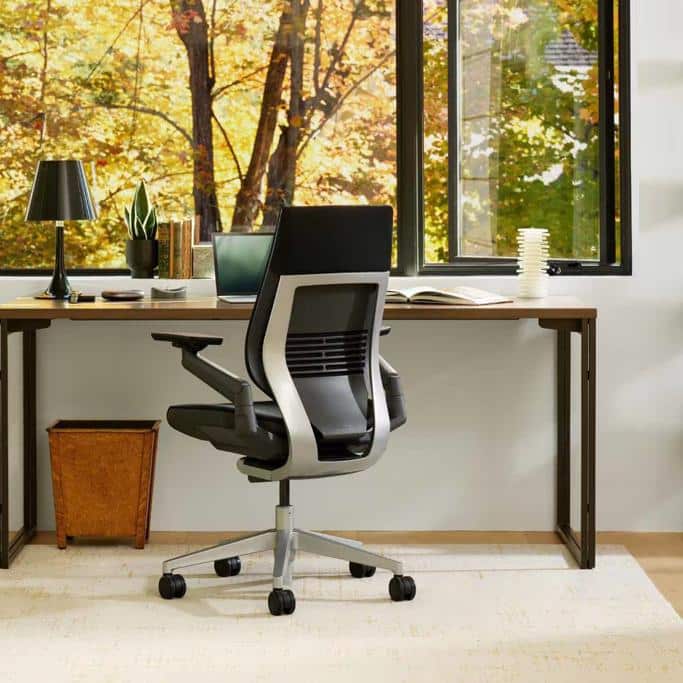
Steelcase Gesture Chair Review: The Ultimate Seat to Support Your Every Move
Hey there, hard worker! Let me guess – you‘re here because you‘ve been hearing a lot of buzz about the Steelcase Gesture chair and are wondering if it actually lives up to the hype. As someone who spends way too much time sitting in front of a computer every day (and has the back pain to prove it), I‘m always on the lookout for an office chair that can keep me comfortable and supported for the long haul.
So when I got the chance to try out the Gesture for myself, I jumped at it. And let me tell you, this chair has been an absolute game changer for my workday comfort and productivity. But enough about me – let‘s dive into what makes this chair so special and whether it‘s the right fit for you!
What Is the Steelcase Gesture Chair?
In case you‘re not familiar, the Steelcase Gesture is a high-end ergonomic office chair that was designed to support the way our bodies move when we work. With the rise of mobile devices and more casual work postures, we‘re no longer just sitting still in front of a desktop all day. We shift around, recline, cross our legs, and generally move in a wider range of positions.
The Gesture aims to accommodate all those postures with an unparalleled level of adjustability and flexibility. Its 360 degree armrests, seat depth adjustment, and synchronous back and seat movement all work together to keep you supported no matter how you like to sit. Plus, with its sleek and modern design, it looks pretty darn stylish too.
But all that innovation comes at a cost – the Gesture starts around $1,000 and can go up to over $2,000 with add-ons. So it‘s definitely an investment piece. The question is, is it worth it? As someone who‘s tried a LOT of office chairs over the years, I‘m here to give you my honest take.
Why Investing in a Quality Office Chair Matters
Before we get into the nitty gritty of the Gesture‘s features, let‘s talk about why you should even care about your office chair in the first place. I know, it‘s just a place to park your butt while you work, right? WRONG.
When you really think about it, most of us spend more time sitting in our office chairs than we do on our mattresses. A whopping 10.5 hours per day on average, according to a survey by Ergotron. And just like a bad mattress can wreak havoc on your sleep and leave you waking up sore, a poorly designed office chair can lead to all sorts of problems like:
- Lower back pain
- Neck and shoulder strain
- Hip pressure and sciatica
- Poor circulation
- Slouching and poor posture
- Fatigue and reduced productivity
In fact, the American Chiropractic Association estimates that 80% of the population will experience back pain at some point in their lives, and office chairs are a major contributor. Yikes.
That‘s why investing in an ergonomic, high-quality chair that supports your spine and encourages good posture is so important for your health and well-being in the long run. It can help:
- Reduce muscle strain and discomfort
- Improve blood flow and concentration
- Increase energy and productivity
- Maintain a healthy posture
- Prevent costly chronic pain issues down the road
When you consider that the average office chair lasts 7-10 years, spending a little more upfront for a chair that will keep you comfortable and pain-free is 100% worth it in my book. Your body is your most important asset – treat it right!
Steelcase Gesture‘s Key Features
Okay, now that we‘re on the same page about the importance of a good chair, let‘s talk details. What exactly makes the Steelcase Gesture stand out from the sea of other office chairs out there? Let‘s break it down:
Adjustability: This is really where the Gesture shines. With its unique 360 degree "4D" armrests, you can adjust them in virtually any direction – up, down, side to side, front to back, and pivot in and out. As someone who switches between typing on my laptop and sketching on a tablet throughout the day, being able to fine-tune the arm position on the fly is a huge plus.
The seat pan also slides forward and back to accommodate different leg lengths, and the seat edge flexes to relieve pressure on your thighs. No more pins and needles! You can also adjust the overall chair height, seat depth, back tension, and recline level. Basically, if you can dream it, the Gesture can probably adjust to it.
Synchronous back and seat movement: Another key feature is how the backrest and seat pan move together in a 2.8:1 ratio as you recline. This mimics your spine‘s natural motion and keeps your head, neck and hips aligned as you shift positions. It feels incredibly natural and supportive, unlike chairs where the back and seat tilt independently and can leave you feeling like you‘re folding in half.
Flexible seat edge: The Gesture‘s seat has a unique soft edge that flexes down and prevents hard pressure against the back of your legs, even in a reclined position. As someone with sciatica issues, this is a small but mighty detail that makes a huge difference in my ability to sit comfortably for longer stretches.
Wrapped upholstery and lumbar support: The backrest features a soft, cushioned upholstery "wrap" over the frame that looks sleek and minimizes hard edges. There‘s built-in lumbar support, with the option to add an additional height-adjustable lumbar piece for even more targeted support. The seat cushion also has adaptive bolstering and is designed to distribute weight evenly and minimize pressure points.
Customization options: With the Gesture, you have a ton of flexibility to make the chair your own. You can choose from a wide range of upholstery colors and fabrics, decide if you want a polished or painted base, pick between carpet or hard floor casters, add a headrest, and opt for adjustable lumbar support.
All these customizations do add to the price (which we‘ll dig into more later), but it‘s nice to have the option to splurge for the exact look and feel you want. After all, if you‘re going to be spending this much time in the chair, you might as well love how it looks too!
Real-World Comfort Test
Of course, all the fancy features in the world don‘t matter if the chair isn‘t actually comfortable to sit in. So, after using the Gesture as my full-time work chair for the past 3 months, here are my honest thoughts:
The Gesture‘s back support and recline feel absolutely heavenly. I suffer from chronic lower back tension, but this chair almost immediately eased that tightness and pain. The way the backrest curves and flexes to support my lumbar area is unlike anything I‘ve experienced in other chairs.
It‘s supportive and promotes good posture without feeling stiff or constraining. I can comfortably sit up straight or recline back to think/read, and my spine stays aligned and happy.
The seat cushion is also a winner in my book. It‘s plush and cushiony without being so soft that you sink into it. I like feeling firmly supported, and the Gesture nails that balance. The adaptive bolstering and flexible front edge also keep me comfortable and pressure-free, even when I‘m typing for hours on end.
But I think my favorite thing about the Gesture is how effortlessly adjustable it is. I‘m a fairly petite 5‘2" on a good day, so finding a chair that fits my proportions can be a challenge. With the Gesture, I was able to adjust the seat depth to support my legs, lower the armrests to the ideal height, and tweak the back tension to my preference.
It took a bit of fiddling to get it just right on the first few days, but now everything stays perfectly positioned. And on days when I‘m feeling more restless, I love that I can adjust the armrests on the fly to support me in different positions.
Speaking of different positions – that‘s another area where this chair has made a huge difference for me. I‘m a multi-device worker and tend to shift between my laptop, desktop monitor, tablet and phone pretty frequently. The Gesture‘s armrests and recline make it effortless to switch from upright typing mode to reclined reading/scrolling mode while still feeling fully supported. No more awkward slouching or neck craning!
Now, no chair is perfect and the Gesture isn‘t an exception. If I had to nitpick a few things, I‘d say the seat foam isn‘t quite as breathable as a mesh material. On really hot days, my back can get a little bit sweaty. The seat pan is also a touch short for my long-legged 6‘2" partner.
He can sit in it comfortably, but only when it‘s adjusted all the way back. So if you‘re especially tall, it‘s worth trying in person to make sure you have enough leg support.
But overall, the Gesture has made a night and day difference in my all-day sitting comfort. I feel more energized, focused and truly supported in a way I never did with my old generic chair. Considering how much time I spend in this thing, I‘d say that‘s a pretty great return on investment!
How the Gesture Stacks Up To Other Top Chairs
Of course, the Gesture isn‘t the only high-end ergonomic chair out there. How does it compare to some of the other popular options? Here‘s a quick breakdown:
vs. Herman Miller Embody ($1,800+): The Embody is often seen as the Gesture‘s biggest competition, and for good reason. It has a lot of similar features like a flexible backrest, seat depth adjustment, and fully adjustable arms. It also has a unique "Pixelated Support" system that‘s supposed to adapt to your micro-movements.
I‘ve tried the Embody and can attest that it‘s an incredibly comfortable, well-made chair. However, I found the backrest to be a bit too firm and the armrests less adjustable than the Gesture‘s. The Gesture also has a slight edge in terms of looks (in my opinion) and max weight capacity (400 lbs vs 300 lbs for the Embody).
vs. Herman Miller Aeron ($1,200+): The Aeron is a classic for a reason – it pioneered a lot of the ergonomic features you see in chairs today, and its mesh back and seat are great for breathability. However, it‘s a bit more limited in terms of adjustments compared to the Gesture, especially in the arm and seat depth departments.
The Aeron also forces you to pick between three different size options, whereas the Gesture can adapt to a wider range of heights and weights. I personally prefer the Gesture‘s back support, but if you tend to run hot or just love that iconic Aeron look, it‘s still a solid pick.
vs. IKEA MARKUS ($250): Okay, this one is a bit of a wild card – but I wanted to include a "budget" option for comparison. The MARKUS is a popular, highly-rated chair from IKEA that offers some basic ergonomic features like a mesh back, seat height adjustment, and recline lock. It obviously doesn‘t hold a candle to the Gesture in terms of adjustability, cushioning, or build quality – but then again, it‘s literally a fraction of the price.
If you‘re on a tight budget or only spend a few hours a day sitting, the MARKUS could be a decent entry-level option. But if you log long hours or struggle with back pain, I‘d say splurging for a Gesture (or at least a refurbished one) is 100% worth saving up for.
The Bottom Line: Is the Steelcase Gesture Worth It?
So, after all this, what‘s my verdict – is the Steelcase Gesture worth the admittedly high price tag? In short, yes. If you can swing it, this chair is absolutely worth investing in for the long-term health of your spine, posture, and productivity.
Think of it this way: Over a 10-year lifespan, a $1,000 chair comes out to just $0.28 per day if you use it 5 days a week. That‘s a pretty small price to pay for a healthier, happier back and workday! Compare that to the cost of chiropractor visits, massage therapy, painkillers, and missed work days due to preventable pain issues – suddenly, it seems like a bargain.
Of course, a new Gesture isn‘t an impulse purchase by any means. But if you log long days at a desk, have pre-existing pain issues, or plan to work from home for the foreseeable future, I truly believe it‘s one of the best investments you can make in your physical comfort and well-being.
If a brand new Gesture isn‘t in the budget, I‘d recommend stalking your local office furniture liquidators or online marketplaces for a gently used or refurbished one. You can often snag lightly used Gestures for around $500-800, which I‘d still consider a great deal for the quality.
At the end of the (work)day, the Steelcase Gesture is a top-of-the-line ergonomic chair that legitimately works to keep your body supported and aligned, no matter how you like to sit. The unparalleled adjustability, thoughtful design, and build quality truly justify the price tag for me – and my back has never been happier.
One final tip: If you do decide to splurge on a Gesture, be sure to actually USE all those incredible adjustments! Take the time to fine-tune the chair to your body, and don‘t be afraid to readjust throughout the day as your posture changes. Your spine will thank you, I promise.
Happy sitting!