Text Classification in Python: A Profound Journey Through Machine Intelligence
The Unfolding Narrative of Intelligent Text Understanding
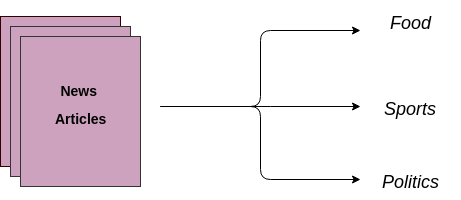
Imagine standing at the crossroads of human communication and computational intelligence. Text classification isn‘t merely a technological process; it‘s a sophisticated dance between language, context, and algorithmic understanding. As an artificial intelligence expert who has witnessed the remarkable evolution of machine learning, I‘m excited to unfold this intricate narrative with you.
Origins: Where Mathematical Elegance Meets Linguistic Complexity
The story of text classification begins long before modern computing – rooted in statistical linguistics and information theory. Early pioneers like Claude Shannon and Norbert Wiener laid foundational frameworks that would eventually transform how machines comprehend textual information.
Mathematical Foundations: Beyond Simple Categorization
At its core, text classification represents a profound mathematical challenge. Consider the fundamental equation representing probabilistic text categorization:
[P(Category|Document) = \frac{P(Document|Category) \times P(Category)}{P(Document)}]This Bayesian formula encapsulates the elegant complexity of mapping textual content to meaningful categories. It‘s not just about sorting text; it‘s about understanding probabilistic relationships embedded within linguistic structures.
Technological Evolution: From Statistical Models to Neural Networks
The journey of text classification mirrors the broader progression of machine learning technologies. Early approaches relied on simplistic statistical techniques like Naive Bayes and Support Vector Machines. These models treated text as discrete, independent features – a perspective that fundamentally limited computational understanding.
Modern transformer architectures represent a quantum leap. Models like BERT and RoBERTa don‘t just categorize; they comprehend contextual nuances, capturing intricate semantic relationships that traditional algorithms missed.
Deep Learning: A Paradigm Shift
Consider a neural network‘s text classification process. Unlike traditional methods, deep learning models create multi-dimensional representations:
class AdvancedTextClassifier(nn.Module):
    def __init__(self, vocab_size, embedding_dim, hidden_dim):
        super().__init__()
        self.embedding = nn.Embedding(vocab_size, embedding_dim)
        self.transformer = nn.TransformerEncoder(
            nn.TransformerEncoderLayer(embedding_dim, nhead=8),
            num_layers=6
        )
        self.classifier = nn.Linear(embedding_dim, num_categories)
This architecture represents more than code – it‘s a testament to computational linguistics‘ sophistication.
Practical Implementation: Navigating Real-World Complexities
Text classification isn‘t an academic exercise; it‘s a critical technology solving complex real-world challenges. From sentiment analysis in customer feedback to detecting misinformation, these algorithms have profound societal implications.
Ethical Considerations: The Human Element
As we develop increasingly powerful classification technologies, we must remain cognizant of potential biases. Machine learning models can inadvertently perpetuate societal prejudices present in training data. Responsible AI demands continuous monitoring and ethical framework development.
Advanced Techniques: Beyond Traditional Boundaries
Transfer Learning: Knowledge Transmission
Modern text classification leverages transfer learning – allowing models to apply knowledge gained from one domain to another. Imagine a model trained on scientific literature seamlessly adapting to medical research documentation.
[TransferKnowledge = f(SourceDomain, TargetDomain, LearningRate)]This approach represents a fundamental shift from rigid, domain-specific models to adaptable, intelligent systems.
Performance Optimization: The Continuous Challenge
Improving text classification performance requires multifaceted strategies:
-
Sophisticated Feature Engineering
Developing nuanced feature extraction techniques that capture semantic subtleties -
Ensemble Methods
Combining multiple models to create robust, resilient classification systems -
Continuous Learning Frameworks
Implementing adaptive models that improve through interaction
Future Trajectories: Emerging Research Frontiers
The next decade of text classification will likely explore:
- Cross-lingual understanding
- Few-shot learning capabilities
- Explainable AI architectures
- Quantum machine learning approaches
Practical Recommendations for Practitioners
For those embarking on text classification journeys, remember: technology is a tool, not a solution. Success requires:
- Deep domain understanding
- Continuous experimentation
- Ethical consciousness
- Interdisciplinary perspective
Conclusion: An Ongoing Intellectual Adventure
Text classification represents more than algorithmic complexity – it‘s a profound exploration of how machines can understand human communication. Each model, each breakthrough, brings us closer to bridging computational and linguistic intelligence.
As an AI expert, I‘m continuously humbled by the intricate dance between mathematics, linguistics, and computational thinking. The journey of text classification is far from complete – and that‘s what makes this field perpetually exciting.
Invitation to Exploration
Are you ready to dive deeper into this fascinating world? The boundaries of text classification are limited only by our imagination and intellectual curiosity.
Keep learning, keep questioning, keep exploring.