Text Summarization: Transforming Information Complexity Through Deep Learning
The Journey of Understanding Computational Language Compression
Imagine standing in a vast library, surrounded by thousands of books, each containing intricate stories, research, and knowledge. The sheer volume of information can be overwhelming. This is precisely the challenge that text summarization addresses – transforming complex, lengthy documents into concise, meaningful narratives.
My journey into text summarization began years ago when I encountered a seemingly insurmountable challenge: distilling months of research into a comprehensible summary. Traditional methods felt inadequate, often losing critical nuances or context. Deep learning emerged as a revolutionary approach, offering unprecedented capabilities in understanding and compressing human language.
The Evolutionary Landscape of Text Summarization
Text summarization isn‘t a recent phenomenon. Its roots trace back to early computational linguistics experiments in the 1950s. Initially, researchers approached summarization through rudimentary statistical techniques, extracting sentences based on word frequency and positional significance.
However, these early approaches were fundamentally limited. They treated text as a mathematical construct, devoid of semantic understanding. Imagine trying to summarize a Shakespeare play by simply counting word occurrences – the profound emotional and narrative complexity would be entirely lost.
Deep Learning: A Paradigm Shift in Computational Language Understanding
Deep learning represents a quantum leap in our ability to comprehend and compress textual information. Unlike traditional rule-based systems, neural networks can learn intricate linguistic patterns, capturing contextual relationships that escape conventional algorithms.
The Neural Network Revolution
Modern text summarization leverages sophisticated neural architectures like sequence-to-sequence (Seq2Seq) models. These remarkable systems don‘t merely extract text; they generate entirely new summaries that preserve the original document‘s essence.
Consider the remarkable transformation: where traditional methods would mechanically extract sentences, deep learning models can now understand context, tone, and underlying meaning. It‘s akin to having an intelligent assistant who doesn‘t just copy and paste but genuinely comprehends and synthesizes information.
Architectural Foundations of Advanced Summarization
Encoder-Decoder Mechanisms
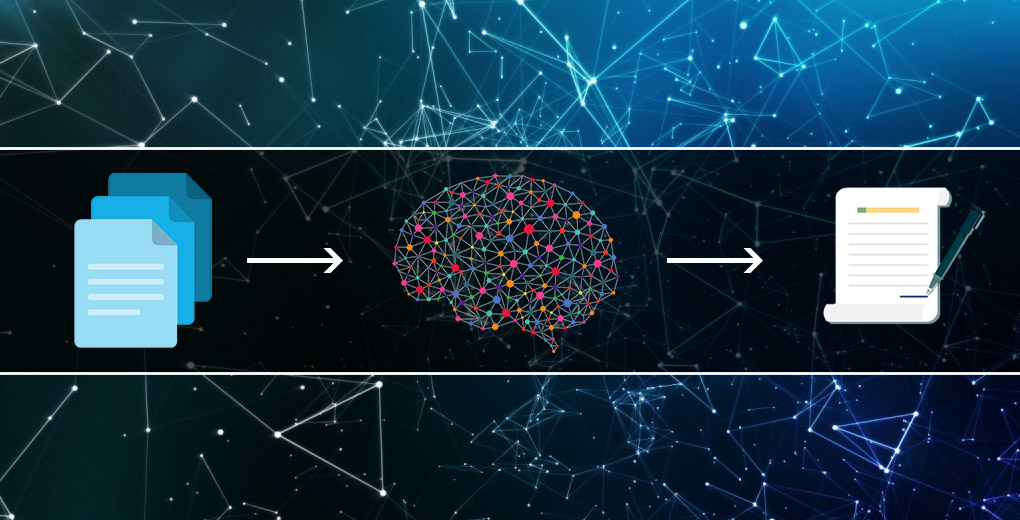
The encoder-decoder architecture represents the cornerstone of modern text summarization. Think of it as a sophisticated translation system, where one neural network (encoder) comprehends the input text‘s intricate details, and another (decoder) reconstructs a condensed version.
The encoder processes the entire input sequence, capturing semantic nuances through layers of neural connections. Each word isn‘t just a token but a complex vector representing its contextual significance. The decoder then uses these learned representations to generate a summary that maintains the original text‘s core meaning.
Attention Mechanisms: The Cognitive Breakthrough
Attention mechanisms revolutionized how neural networks process sequential data. Imagine a researcher meticulously scanning a document, highlighting critical passages. Attention layers perform a similar function, dynamically focusing on the most relevant text segments during summarization.
This approach mirrors human cognitive processes. When we summarize a text, we don‘t treat every word equally. Some phrases carry more weight, conveying essential information. Attention mechanisms mathematically model this intuitive selection process.
Practical Implementation: Navigating the Technical Landscape
Implementing text summarization requires a nuanced understanding of multiple technological domains. Python, with its rich ecosystem of machine learning libraries, emerges as the preferred development environment.
Code Architecture Considerations
class TextSummarizationModel:
    def __init__(self, input_vocab_size, output_vocab_size):
        self.encoder = self.build_encoder(input_vocab_size)
        self.decoder = self.build_decoder(output_vocab_size)
        self.attention_layer = AttentionMechanism()

    def build_encoder(self, vocab_size):
        # Complex encoder architecture
        pass

    def build_decoder(self, vocab_size):
        # Sophisticated decoding mechanism
        pass
This abstracted code snippet illustrates the modular approach required for building advanced summarization systems.
Challenges and Computational Complexities
Despite remarkable advancements, text summarization remains a complex challenge. Current models struggle with:
- Maintaining semantic coherence
- Handling domain-specific terminology
- Generating truly abstractive summaries
These limitations aren‘t failures but opportunities for continued research and innovation.
Ethical and Societal Implications
As text summarization technologies advance, we must consider their broader implications. The ability to compress and synthesize information rapidly could transform education, research, and communication paradigms.
However, ethical considerations are paramount. How do we ensure these systems maintain the original text‘s integrity? How can we prevent potential misrepresentations or context distortion?
Future Horizons: Where Technology Meets Language
The future of text summarization is breathtakingly promising. Emerging research explores:
- Multilingual summarization capabilities
- Zero-shot learning approaches
- Transformer-based models with unprecedented contextual understanding
We stand at the cusp of a technological revolution where machines don‘t just process language but genuinely understand it.
Conclusion: A Personal Reflection
My journey through text summarization has been more than a technological exploration – it‘s been a profound understanding of how we communicate, compress, and transmit knowledge.
Each summary generated is not just a technical achievement but a testament to human ingenuity – our ability to distill complexity into clarity.
For aspiring researchers and technology enthusiasts, text summarization represents an exciting frontier. It‘s a domain where mathematics, linguistics, and artificial intelligence converge, creating something truly magical.
Keep exploring, keep learning, and remember – every line of code is a step towards understanding human communication in its most elegant form.