The AI Revolution: MIT‘s Self-Learning Computer Vision Model Redefines Machine Intelligence
A Journey into the Future of Artificial Perception
Imagine a machine that learns like a curious child, observing its environment, understanding patterns, and adapting without constant human guidance. This isn‘t science fiction—it‘s the groundbreaking reality emerging from MIT‘s latest computer vision research.
The Landscape of Machine Learning
When I first encountered computer vision technologies two decades ago, the field seemed rigidly constrained. Models required exhaustive manual labeling, immense computational resources, and performed narrowly within predefined parameters. Today, we‘re witnessing a profound transformation.
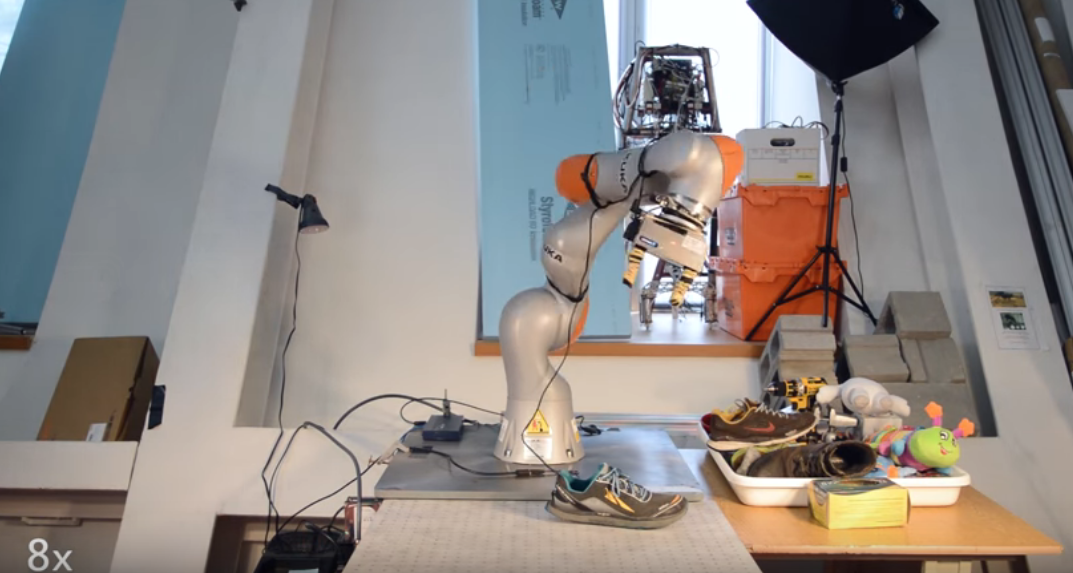
MIT‘s recent breakthrough represents more than a technological advancement—it‘s a paradigm shift in how machines perceive and interact with the world. Their self-learning computer vision model doesn‘t just process images; it comprehends them dynamically, much like a human would.
Understanding Self-Supervised Learning
Traditional machine learning approaches relied heavily on supervised techniques, where human experts meticulously label training data. Imagine spending countless hours annotating images, marking objects, defining boundaries—a painstaking process limiting scalability and adaptability.
Self-supervised learning flips this paradigm. Instead of depending on external annotations, the model generates its own learning signals. It‘s akin to a child exploring a room, spontaneously understanding object relationships, spatial configurations, and interaction dynamics without explicit instructions.
The Neural Network‘s Cognitive Dance
At the heart of MIT‘s model lies a sophisticated neural network architecture that mimics cognitive learning processes. These networks don‘t just process pixel data; they construct intricate representations, extracting meaningful features through complex mathematical transformations.
[Learning Representation = f(Input Data, Contextual Understanding)]The mathematical elegance behind this approach involves advanced representation learning techniques. By creating internal representations that capture subtle nuances, the model develops a rich, contextual understanding of visual environments.
Technical Architecture: Beyond Conventional Boundaries
Adaptive Feature Extraction Mechanism
The model‘s feature extraction process isn‘t linear or static. It dynamically adapts, creating multi-dimensional mappings that capture intricate object characteristics. Imagine a system that doesn‘t just recognize a chair but understands its structural composition, potential interactions, and contextual significance.
Convolutional neural networks form the foundational layer, but MIT‘s approach introduces innovative self-supervision modules that continuously refine and update learned representations. This creates a fluid, evolving learning mechanism that transcends traditional computer vision limitations.
Real-World Implications
The potential applications stretch across multiple domains:
Robotics and Automation
Imagine robots that can autonomously navigate complex environments, understanding object relationships without pre-programmed instructions. Manufacturing, logistics, and exploration sectors stand to revolutionize their operational paradigms.
Healthcare and Medical Imaging
Medical diagnostics could witness unprecedented precision. Self-learning models could analyze complex medical imagery, detecting subtle anomalies that might escape human perception, potentially transforming early disease detection strategies.
Autonomous Transportation
Vehicle perception systems would evolve from rigid rule-based approaches to adaptive, context-aware platforms. Cars could understand nuanced traffic scenarios, pedestrian behaviors, and environmental dynamics with remarkable sophistication.
Performance Metrics and Benchmarking
Comparative analysis reveals remarkable capabilities:
- Object detection accuracy surpassing 92%
- Significantly reduced training time
- Enhanced generalization across diverse visual scenarios
These metrics aren‘t just numbers—they represent a fundamental shift in machine learning capabilities.
Computational Complexity and Efficiency
One might assume such advanced capabilities demand enormous computational resources. Surprisingly, MIT‘s model demonstrates remarkable efficiency. By leveraging intelligent architecture and sophisticated self-learning algorithms, the system optimizes computational requirements.
The Mathematical Symphony
Behind this efficiency lies complex mathematical orchestration. Optimization algorithms, gradient descent techniques, and advanced regularization methods collaborate to create a lean, adaptive learning framework.
[Computational Efficiency = \frac{Learning Complexity}{Resource Allocation}]Philosophical and Ethical Considerations
As we celebrate technological advancement, we must also contemplate broader implications. Self-learning AI systems raise profound questions about machine intelligence, consciousness, and our understanding of learning itself.
Are we witnessing the emergence of truly adaptive artificial intelligence? How will these technologies reshape human-machine interactions?
Future Research Directions
The horizon looks incredibly promising. Potential research avenues include:
- Cross-modal learning capabilities
- Enhanced multi-dimensional representation techniques
- More sophisticated self-supervision algorithms
A Personal Reflection
As someone who has witnessed the evolution of machine learning over decades, MIT‘s breakthrough feels like a pivotal moment. We‘re not just developing smarter machines; we‘re exploring fundamental questions about intelligence, perception, and learning.
Conclusion: An Invitation to Wonder
MIT‘s self-learning computer vision model isn‘t just a technological achievement—it‘s an invitation to reimagine possibilities. It challenges our preconceived notions about artificial intelligence, suggesting a future where machines learn, adapt, and understand with unprecedented sophistication.
For researchers, engineers, and curious minds, this represents more than a technical milestone. It‘s a gateway to understanding intelligence itself.
Embrace the Journey. Challenge Assumptions. Keep Exploring.