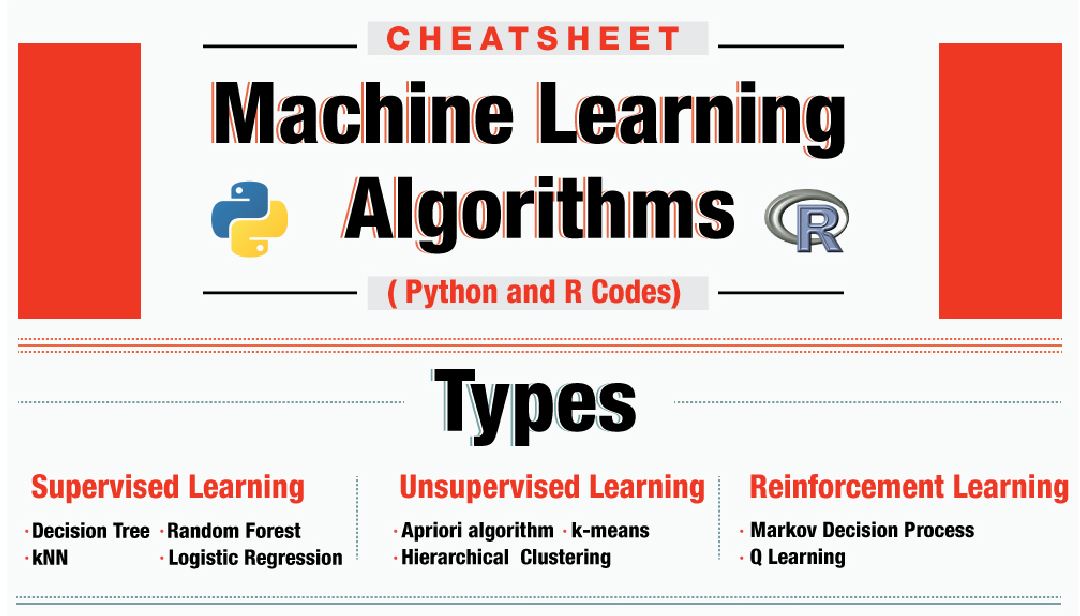
The Data Scientist‘s Roadmap: Mastering Python and R in Machine Learning
A Journey Through Technological Landscapes
Imagine standing at the crossroads of technological innovation, where two powerful programming languages converge – Python and R. As a seasoned data scientist, I‘ve traversed this intricate landscape, witnessing the remarkable evolution of machine learning tools that have transformed how we understand and interact with data.
The Genesis of Computational Intelligence
When I first encountered machine learning, the world seemed like an enigmatic puzzle waiting to be decoded. Python and R weren‘t just programming languages; they were keys unlocking complex computational mysteries. Each language carried its unique DNA, reflecting different philosophical approaches to solving computational challenges.
Python: The Versatile Innovator
Python emerged as a general-purpose programming language that seamlessly integrated scientific computing with elegant syntax. Created by Guido van Rossum in 1991, it quickly became the Swiss Army knife of programming – adaptable, readable, and incredibly powerful.
The language‘s philosophy of "batteries included" meant that data scientists could rapidly prototype machine learning models without getting entangled in complex implementation details. Libraries like scikit-learn, TensorFlow, and PyTorch transformed Python into a formidable machine learning platform.
R: The Statistical Maestro
In contrast, R originated from the statistical computing world. Developed by Ross Ihaka and Robert Gentleman in 1993, R was purpose-built for statistical analysis and graphical visualization. Its strength lies in its deep statistical foundations and comprehensive package ecosystem.
Researchers and statisticians found R to be an indispensable tool for complex statistical modeling, data visualization, and exploratory data analysis. The Comprehensive R Archive Network (CRAN) became a treasure trove of specialized packages catering to diverse research needs.
Computational Performance: A Comparative Lens
Memory Management
Python utilizes dynamic memory allocation with reference counting and garbage collection. This approach provides flexibility but can introduce slight performance overhead. R, on the other hand, employs copy-on-modify semantics, which can be more memory-intensive for large datasets.
Consider a scenario where you‘re processing a million-row dataset:
# Python Approach
import numpy as np
large_array = np.random.rand(1000000)
processed_data = large_array * 2  # Efficient memory handling
# R Equivalent
large_vector <- runif(1000000)
processed_data <- large_vector * 2 # Potential memory duplicationComputational Complexity
While both languages offer robust machine learning capabilities, their underlying computational models differ significantly. Python‘s just-in-time compilation and NumPy‘s optimized numerical computations provide superior performance for large-scale numerical operations.
R excels in statistical modeling and provides highly specialized statistical functions that can perform complex calculations with remarkable precision.
Machine Learning Algorithm Implementation
Neural Network Example
Python (TensorFlow):
import tensorflow as tf
from tensorflow.keras.models import Sequential
from tensorflow.keras.layers import Dense

model = Sequential([
    Dense(64, activation=‘relu‘, input_shape=(10,)),
    Dense(32, activation=‘relu‘),
    Dense(1, activation=‘sigmoid‘)
])
model.compile(optimizer=‘adam‘, loss=‘binary_crossentropy‘)
R (Keras via R):
library(keras)

model <- keras_model_sequential() %>%
  layer_dense(units = 64, activation = ‘relu‘, input_shape = c(10)) %>%
  layer_dense(units = 32, activation = ‘relu‘) %>%
  layer_dense(units = 1, activation = ‘sigmoid‘)

model %>% compile(
  optimizer = ‘adam‘,
  loss = ‘binary_crossentropy‘
)
Ecosystem and Community Dynamics
Both Python and R boast vibrant, passionate communities driving continuous innovation. Python‘s community tends to be broader, spanning web development, scientific computing, and machine learning. R‘s community is more concentrated in academic and research domains.
Package Ecosystem Comparison
Python‘s pip and conda package managers offer streamlined library management. R‘s CRAN repository provides meticulously reviewed packages with rigorous quality standards.
Emerging Trends and Future Trajectories
As machine learning becomes increasingly sophisticated, both languages are evolving. Python is gaining ground in deep learning and artificial intelligence, while R continues to strengthen its statistical modeling capabilities.
The convergence of these languages suggests a future where boundaries blur, and interoperability becomes paramount. Tools like reticulate enable seamless Python-R interactions, signaling a more integrated computational landscape.
Psychological Dimensions of Language Selection
Choosing between Python and R isn‘t merely a technical decision—it‘s a cognitive and emotional journey. Each language resonates differently with individual problem-solving approaches and mental models.
Some data scientists feel more comfortable with Python‘s readability, while others appreciate R‘s statistical depth. The key is recognizing that proficiency comes from understanding underlying computational principles rather than rigid language allegiance.
Learning Strategies and Skill Development
- Start with foundational concepts
- Practice cross-language implementations
- Understand computational thinking
- Embrace continuous learning
Conclusion: Beyond Language Boundaries
As you embark on your machine learning journey, remember that Python and R are not competitors but complementary tools in your computational toolkit. The most successful data scientists view these languages as dialects of a universal computational language.
Embrace curiosity, remain adaptable, and let your passion for solving complex problems guide your technological exploration.
Your Next Steps
- Experiment with both languages
- Build diverse project portfolios
- Attend community conferences
- Engage in collaborative learning platforms
The world of machine learning awaits your unique perspective. Your journey has just begun.