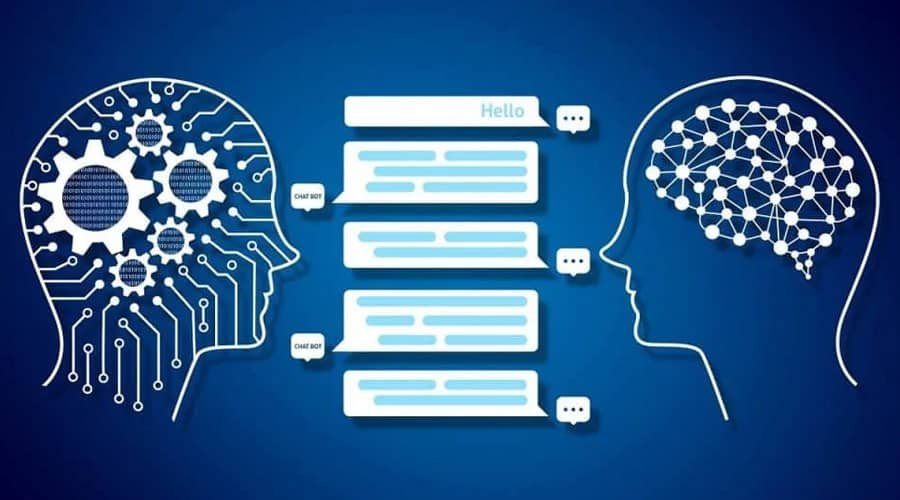
The Fascinating World of Autocorrect: A Deep Dive into NLP and Language Technology
Unraveling the Magic Behind Autocorrect
Imagine typing a message on your smartphone, and before you realize it, your potentially embarrassing typo transforms into a perfectly spelled word. This seemingly magical moment is the result of sophisticated Natural Language Processing (NLP) technologies that have revolutionized how we communicate in the digital age.
The Linguistic Journey of Error Correction
Language is inherently complex, with nuanced rules, exceptions, and contextual variations. Autocorrect emerged as a technological solution to bridge human imperfection and precise communication. But its story begins long before smartphones and digital keyboards.
Historical Roots of Spell-Checking
The concept of automatic error correction traces back to the early days of computing. In the 1960s, researchers at Bell Labs developed some of the first computational approaches to identifying and correcting spelling mistakes. These pioneering efforts laid the groundwork for modern autocorrect systems.
Early spell-checkers were rudimentary, essentially comparing words against a predefined dictionary. If a word didn‘t match, it would be flagged as incorrect. However, these systems lacked the sophistication to understand context or suggest meaningful corrections.
The Evolution of Computational Linguistics
As computing power increased and machine learning algorithms became more advanced, spell-checking technologies underwent a dramatic transformation. The integration of probabilistic models and statistical approaches marked a significant leap forward.
Probabilistic Language Modeling
Modern autocorrect systems don‘t just match words; they predict the most likely intended word based on complex probability calculations. This involves analyzing:
- Word frequency in language corpora
- Contextual usage patterns
- Statistical likelihood of specific letter combinations
Technical Architecture of Advanced Autocorrect Systems
Let‘s explore the intricate mechanisms that power contemporary autocorrect technologies:
Edit Distance Algorithms
The Levenshtein distance algorithm plays a crucial role in determining word similarity. This mathematical approach calculates the minimum number of single-character edits required to transform one word into another.
def levenshtein_distance(str1, str2):
    matrix = [[0 for _ in range(len(str2) + 1)] for _ in range(len(str1) + 1)]

    for i in range(len(str1) + 1):
        matrix[i][0] = i

    for j in range(len(str2) + 1):
        matrix[0][j] = j

    for i in range(1, len(str1) + 1):
        for j in range(1, len(str2) + 1):
            if str1[i-1] == str2[j-1]:
                matrix[i][j] = matrix[i-1][j-1]
            else:
                matrix[i][j] = min(
                    matrix[i-1][j] + 1,      # Deletion
                    matrix[i][j-1] + 1,      # Insertion
                    matrix[i-1][j-1] + 1     # Substitution
                )

    return matrix[len(str1)][len(str2)]
Contextual Understanding
Beyond simple character-level corrections, advanced systems incorporate contextual analysis. This means understanding the semantic meaning of words within a sentence, not just their orthographic similarity.
Machine Learning and Neural Networks
Contemporary autocorrect technologies leverage deep learning models, particularly transformer architectures, to achieve unprecedented accuracy. These models can:
- Learn from massive language corpora
- Understand complex linguistic patterns
- Generate contextually appropriate corrections
Psychological Dimensions of Error Correction
Autocorrect isn‘t just a technological marvel; it‘s a fascinating intersection of human cognition and computational linguistics. Our brains naturally autocorrect while reading, seamlessly understanding intended meanings despite minor errors.
Cognitive Load Reduction
By automatically correcting spelling mistakes, these systems reduce cognitive load, allowing users to focus on communication rather than orthographic precision.
Challenges and Limitations
Despite remarkable advancements, autocorrect systems face significant challenges:
- Handling domain-specific terminology
- Managing multilingual contexts
- Preserving user intent
- Avoiding inappropriate or unintended corrections
The Future of Language Technology
Emerging trends suggest autocorrect will become increasingly sophisticated:
- Personalized language models
- Real-time learning capabilities
- Enhanced contextual understanding
- Seamless multilingual support
Practical Implementation Strategies
For developers and language enthusiasts, implementing robust autocorrect requires:
- Comprehensive training datasets
- Advanced probabilistic models
- Continuous learning mechanisms
- Flexible correction algorithms
class AdvancedAutocorrect:
    def __init__(self, language_model):
        self.language_model = language_model

    def intelligent_correction(self, text):
        # Implement context-aware, probabilistic correction
        corrected_tokens = [
            self.correct_with_context(token)
            for token in text.split()
        ]
        return ‘ ‘.join(corrected_tokens)
Ethical Considerations
As autocorrect technologies become more powerful, ethical considerations become paramount. Developers must balance technological capability with user privacy, cultural sensitivity, and linguistic diversity.
Conclusion: A Continuous Journey of Innovation
Autocorrect represents more than a technological convenience—it‘s a testament to human ingenuity, bridging computational precision with the beautiful complexity of human communication.
The future of language technology is not about replacing human creativity but enhancing our ability to connect, communicate, and understand each other more effectively.