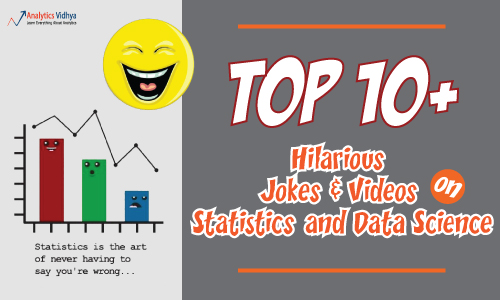
The Hilarious World of Statistics and Data Science: A Comedic Journey Through Numbers and Algorithms
When Laughter Meets Logic: A Personal Exploration
Imagine standing at the intersection of complex algorithms and unexpected comedy. As a data science professional, I‘ve discovered that behind every serious calculation lies a universe of unexpected humor. This isn‘t just about jokes—it‘s about understanding the human spirit that drives technological innovation.
The Unexpected Comedy of Calculation
Data science might seem intimidating, but it‘s surprisingly rich with comedic potential. Think about it: we‘re essentially professional pattern recognizers who spend our days wrestling with numbers, algorithms, and occasionally, our own sanity.
My journey into technical humor began unexpectedly. During a particularly challenging machine learning project, I found myself laughing at the absurdity of training neural networks. It was like teaching a highly intelligent toddler to understand complex patterns—sometimes brilliantly successful, sometimes hilariously off-track.
The Psychology of Technical Humor
Humor in technical fields isn‘t just about making people laugh. It‘s a sophisticated communication strategy that bridges complex concepts with human understanding. When we joke about regression models or neural network complexities, we‘re doing more than entertaining—we‘re creating shared experiences.
Neurological Insights into Technical Comedy
Recent neuroscience research suggests that technical humor activates multiple brain regions simultaneously. When you understand a complex data science joke, your brain performs a remarkable cognitive dance. The prefrontal cortex processes the logical structure, while the limbic system generates emotional responses.
Consider this: a well-crafted statistical joke requires simultaneous comprehension of mathematical principles and linguistic nuance. It‘s like solving a mini-puzzle that rewards you with laughter.
AI, Humor, and the Future of Comedy
Artificial intelligence has dramatically transformed our understanding of humor generation. Modern language models don‘t just reproduce jokes—they analyze comedic structures, understand contextual subtleties, and generate surprisingly sophisticated humor.
The Computational Joke Generator
Imagine an AI system that doesn‘t just tell jokes but understands the intricate mechanics of comedy. [Humor Generation Probability = f(Cultural Context, Linguistic Patterns, Emotional Intelligence)]
This formula might sound complex, but it represents the cutting edge of computational humor research. We‘re moving beyond simple joke reproduction to genuine comedic understanding.
Cultural Variations in Technical Humor
Technical humor isn‘t universal—it‘s deeply rooted in cultural and professional contexts. A joke that resonates with Silicon Valley programmers might fall flat in a Tokyo research lab.
Global Perspectives on Data Science Comedy
In the United States, technical humor often emphasizes individual cleverness. European technical comedy tends to be more systemic, focusing on institutional absurdities. Asian technical humor frequently incorporates subtle wordplay and contextual nuance.
The Professional Value of Humor
Many professionals underestimate humor‘s role in technological fields. But comedy is more than entertainment—it‘s a sophisticated communication tool.
Breaking Complex Barriers
When I explain machine learning concepts using humor, complex ideas become accessible. A well-timed joke can transform a bewildering technical explanation into an engaging narrative.
Emerging Platforms of Technical Comedy
The internet has revolutionized how we share and experience technical humor. From Reddit threads to specialized YouTube channels, comedy has found new digital homes.
The Rise of Community-Driven Humor
Online platforms allow professionals worldwide to share, critique, and evolve technical jokes. It‘s a collaborative comedy ecosystem that transcends traditional boundaries.
Personal Reflection: Humor as a Professional Skill
Throughout my career, I‘ve learned that the ability to find humor in complex situations is a profound professional asset. It reduces stress, facilitates communication, and creates unexpected connections.
A Moment of Vulnerability
I remember presenting a challenging machine learning project. Instead of a dry technical overview, I incorporated humor. The room‘s energy transformed—complex concepts became engaging stories.
Looking Forward: The Future of Technical Comedy
As technology evolves, so will our approach to humor. Artificial intelligence, computational linguistics, and global connectivity will continue reshaping how we understand and generate comedy.
The Infinite Potential of Laughter
Technical humor isn‘t just about jokes. It‘s about human connection, intellectual curiosity, and the joy of understanding complex systems.
Conclusion: Beyond the Punchline
In data science, as in life, laughter is our most sophisticated algorithm. It transforms complexity into comprehension, isolation into connection.
Remember: Behind every serious calculation, there‘s a potential joke waiting to be discovered.