The Language Revolution: How Artificial Intelligence is Transforming Global Communication
A Personal Journey Through Translation‘s Technological Frontier
Imagine standing at the crossroads of human communication, where languages once divided us, and now, artificial intelligence bridges those gaps with unprecedented precision. As someone who has witnessed the remarkable transformation of translation technologies, I‘m excited to share a comprehensive exploration of how machine learning is rewriting the rules of global interaction.
The Linguistic Landscape: More Than Just Words
Translation is far more than a mechanical process of converting words from one language to another. It‘s a complex dance of cultural nuance, contextual understanding, and human connection. For decades, linguists and technologists have dreamed of creating a universal communication tool that transcends linguistic boundaries.
The Historical Context of Translation Technologies
The journey of translation technology is a fascinating narrative of human ingenuity. From early mechanical dictionaries to sophisticated neural networks, each technological leap has brought us closer to seamless cross-cultural communication.
Early Translation Attempts
In the mid-20th century, translation was a painstaking manual process. Linguists would spend countless hours meticulously translating documents, capturing not just words but the subtle cultural contexts embedded within language. These early efforts were noble but incredibly time-consuming and prone to human error.
The Digital Revolution
The advent of computers in the 1960s marked a significant turning point. Early machine translation systems were rudimentary, often producing comically inaccurate translations that became the subject of linguistic humor. However, these initial attempts laid the groundwork for more sophisticated technologies.
Machine Learning: The Game-Changing Approach
Modern translation isn‘t just about replacing words; it‘s about understanding context, emotion, and cultural nuance. Machine learning has transformed this landscape by introducing neural networks that can learn and adapt continuously.
Neural Machine Translation (NMT)
Neural Machine Translation represents a quantum leap in translation technology. Unlike previous rule-based systems, NMT uses deep learning algorithms that process entire sentences, understanding contextual relationships between words.
Consider how a human translator interprets language – not just through literal meaning, but through understanding tone, cultural references, and implied meanings. NMT mimics this complex cognitive process, creating translations that feel more natural and contextually accurate.
The Science Behind Intelligent Translation
At its core, intelligent translation relies on sophisticated machine learning models trained on massive multilingual datasets. These models don‘t just translate; they comprehend and reconstruct meaning across linguistic boundaries.
How Neural Networks Learn Language
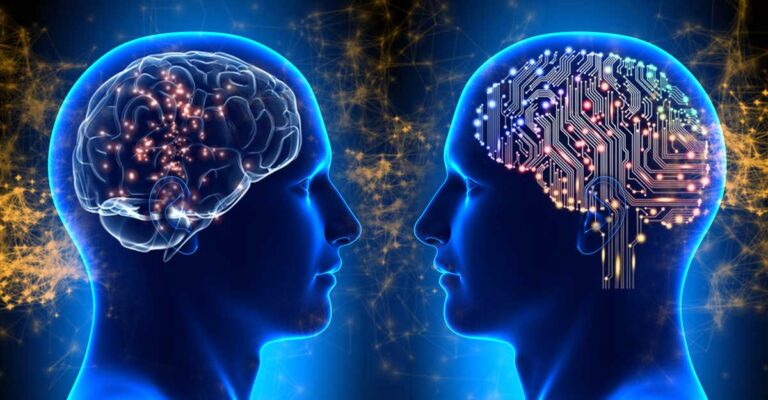
Imagine a neural network as an intricate web of interconnected nodes, similar to neurons in the human brain. Each translation attempt becomes a learning opportunity, with the system continuously refining its understanding of linguistic structures, idioms, and contextual nuances.
Real-World Impact and Applications
Translation technologies are no longer confined to academic research or niche applications. They‘re transforming entire industries, from global business communication to international diplomacy.
Breaking Corporate Communication Barriers
Multinational corporations now rely on advanced translation services to facilitate seamless communication across diverse teams. A sales presentation in New York can be instantly understood by teams in Tokyo, Shanghai, or Berlin, eliminating traditional language barriers.
Technological Challenges and Ethical Considerations
Despite remarkable progress, translation technologies face significant challenges. Cultural sensitivity, maintaining linguistic diversity, and addressing potential biases in machine learning models are ongoing concerns.
Preserving Linguistic Diversity
While technology offers incredible translation capabilities, there‘s a critical need to preserve the rich diversity of human languages. Each language represents a unique worldview, a complex system of cultural expression that goes beyond mere words.
The Future of Translation Technology
Looking ahead, the future of translation is incredibly promising. Emerging technologies like context-aware translation, real-time speech translation, and emotion-sensitive interpretation are no longer science fiction but emerging realities.
Emerging Trends
- Contextual AI that understands cultural nuances
- Emotion-aware translation systems
- Seamless multilingual communication platforms
Personal Reflection: A Technological Odyssey
As someone who has dedicated years to understanding the intricate world of language technology, I‘m continuously amazed by how far we‘ve come. What once seemed like an impossible dream – instant, accurate cross-cultural communication – is now becoming our everyday reality.
Practical Implications for Businesses and Individuals
Translation technologies aren‘t just academic curiosities; they‘re practical tools that can transform how we communicate, collaborate, and understand each other.
Economic and Social Impact
The economic potential of advanced translation technologies is staggering. By eliminating language barriers, businesses can expand global reach, researchers can collaborate internationally, and individuals can connect across cultural boundaries.
Conclusion: A World Without Language Barriers
We stand at an exciting technological frontier. Machine learning and artificial intelligence are not replacing human translators but empowering them, creating tools that enhance our ability to communicate and understand one another.
The future of translation is not about perfect algorithmic conversion but about building bridges of understanding, one intelligent translation at a time.
Key Insights
- Translation technology is evolving rapidly
- Machine learning enables contextual understanding
- Global communication is being transformed
- Ethical considerations remain crucial
As we continue this remarkable journey, one thing becomes clear: language is no longer a barrier but a beautiful, complex system waiting to be understood and celebrated.