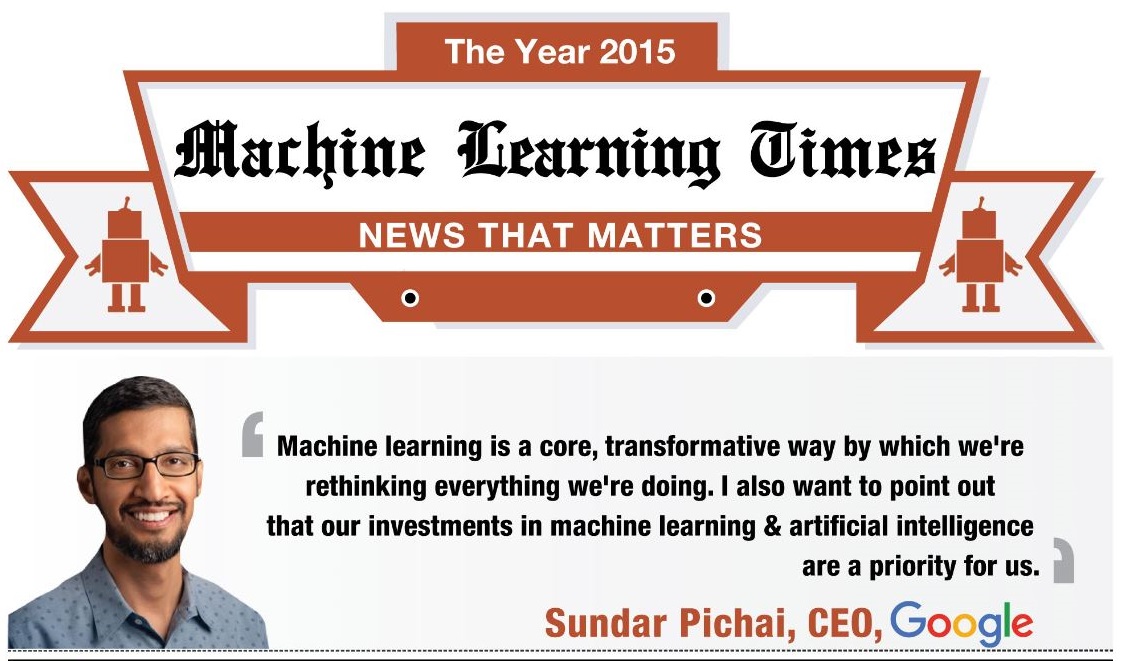
The Machine Learning Times of Year 2015: A Powerful Growth Story
Prologue: A Technological Awakening
Imagine standing at the precipice of a technological revolution. The year 2015 wasn‘t just another chapter in technological history—it was a watershed moment when machine learning transformed from an obscure academic discipline into a powerful force reshaping our understanding of intelligence, computation, and human potential.
As someone who has witnessed countless technological transitions, I can confidently say that 2015 represented something extraordinary. It was the year when machines began to truly learn, adapt, and understand complex patterns in ways we had only dreamed of previously.
The Technological Landscape: Understanding Machine Learning‘s Emergence
Machine learning in 2015 wasn‘t just about algorithms and computational power—it was about creating systems capable of understanding, interpreting, and responding to complex environmental signals. Think of it like teaching a child to recognize patterns, but at an exponentially accelerated pace and with computational precision beyond human capability.
The Deep Learning Revolution
Deep learning emerged as the cornerstone of machine learning‘s transformative potential. Neural networks, inspired by the human brain‘s interconnected structure, began solving problems that seemed insurmountable just years earlier. These weren‘t just incremental improvements; they represented fundamental shifts in computational thinking.
Companies like Google, Microsoft, and IBM weren‘t just investing in machine learning—they were reimagining entire technological ecosystems around these capabilities. TensorFlow‘s open-source release wasn‘t merely a software launch; it was an invitation to a global community of researchers and developers to participate in a collective intelligence experiment.
Personal Stories of Innovation
Behind every technological breakthrough are human stories of curiosity, persistence, and vision. Take the story of Demis Hassabis, the founder of DeepMind, who wasn‘t just creating algorithms but reimagining how machines could learn and adapt.
In 2015, DeepMind‘s AlphaGo was quietly preparing for its historic match against world Go champion Lee Sedol—a moment that would later demonstrate machine learning‘s potential to master complex strategic thinking. This wasn‘t just about winning a game; it was about showing that machines could develop intuitive, strategic reasoning capabilities.
Technical Depth: Beyond Surface-Level Understanding
Let‘s dive deeper into the technical nuances that made 2015 so remarkable. Convolutional Neural Networks (CNNs) were revolutionizing image recognition, achieving accuracy rates that challenged human perception. Imagine a system that could not just recognize objects but understand contextual relationships within images.
Recurrent Neural Networks (RNNs) were making similar strides in natural language processing. These weren‘t just translation tools; they were beginning to understand linguistic subtleties, context, and even emotional undertones in communication.
The Computational Infrastructure
The true magic of 2015‘s machine learning wasn‘t just in algorithms but in the computational infrastructure supporting these innovations. Cloud computing platforms like Amazon Web Services and Google Cloud provided unprecedented computational resources, allowing researchers to train increasingly complex models.
Industry Transformation
Machine learning wasn‘t confined to research labs. Industries from healthcare to finance were fundamentally reimagining their operational models. Predictive diagnostic systems in medicine could now analyze medical images with accuracy rivaling experienced radiologists. Financial institutions developed fraud detection systems that could identify complex, nuanced patterns of suspicious activity.
Startup Ecosystem Explosion
The machine learning startup ecosystem in 2015 was nothing short of explosive. Venture capital firms recognized the transformative potential, investing over \$2 billion in ML and AI-focused startups. These weren‘t just technology companies; they were harbingers of a new computational paradigm.
Ethical Considerations and Challenges
With great technological power comes significant responsibility. The machine learning community in 2015 was acutely aware of potential ethical challenges. How do we ensure algorithmic fairness? How can we prevent inherent biases in training data from perpetuating societal inequalities?
These weren‘t just academic questions but critical considerations that would shape the future of technological development.
Global Research Landscape
Academic institutions worldwide were contributing to this technological renaissance. Research papers from Stanford, MIT, Carnegie Mellon, and international universities were pushing the boundaries of what was computationally possible.
The collaborative nature of machine learning research meant that innovations weren‘t siloed but part of a global, interconnected knowledge ecosystem.
Looking Forward: The Horizon of Possibility
As 2015 drew to a close, it was clear that machine learning was more than a technological trend. It represented a fundamental shift in how we understand intelligence, problem-solving, and human-machine collaboration.
The innovations of 2015 weren‘t just about creating smarter machines but about expanding human potential, solving complex global challenges, and reimagining what‘s possible when human creativity meets computational power.
Epilogue: A Personal Reflection
Standing at the intersection of technology and human potential, 2015 felt like a moment of profound possibility. Machine learning wasn‘t just advancing technology—it was offering a glimpse into a future where computational intelligence could complement and enhance human creativity.
For those of us who had been watching this technological landscape evolve, 2015 wasn‘t just a year of innovation. It was a promise of what humanity could achieve when we dare to imagine beyond current limitations.
The machine learning revolution had begun, and the world would never be the same.