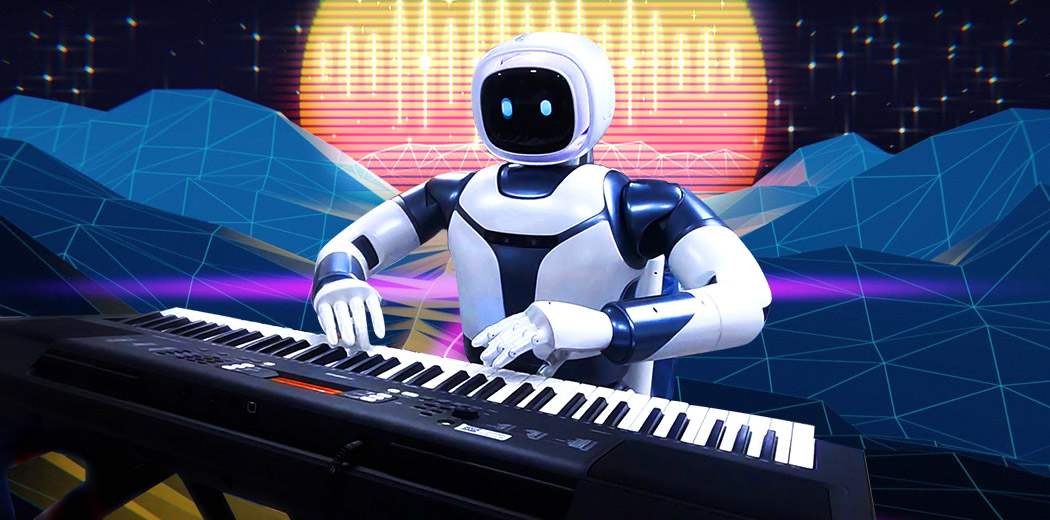
The Symphony of Algorithms: Unraveling Automatic Music Generation through Deep Learning
Prelude: A Journey into Musical Artificial Intelligence
Imagine standing at the intersection of creativity and computation, where lines of code transform into melodic expressions. As an artificial intelligence researcher who has spent decades exploring the intricate landscapes of machine learning, I‘ve witnessed a remarkable transformation in how we understand musical composition.
Music generation through artificial intelligence isn‘t just a technological marvel—it‘s a profound exploration of creativity, pattern recognition, and computational artistry. This journey transcends mere algorithmic manipulation; it represents a deep philosophical inquiry into the nature of artistic expression.
The Evolutionary Tapestry of Musical Computation
The story of automatic music generation begins long before modern neural networks. In the 18th century, Wolfgang Amadeus Mozart conceptualized a fascinating musical dice game, where random number selections could generate musical compositions. This early experiment hinted at the algorithmic potential hidden within musical creation.
Fast forward to the mid-20th century, composers like Iannis Xenakis began experimenting with stochastic music—compositions driven by probabilistic mathematical models. These pioneers recognized that music, at its core, could be understood as a complex system of mathematical relationships.
Deep Learning: Redefining Musical Creativity
Architectural Foundations of Musical Intelligence
Modern deep learning architectures represent a quantum leap in computational creativity. Two predominant approaches have emerged as frontrunners in automatic music generation: WaveNet and Long Short-Term Memory (LSTM) networks.
WaveNet: The Probabilistic Sound Sculptor
WaveNet, developed by Google DeepMind, represents a revolutionary approach to generative audio modeling. Unlike traditional algorithmic approaches, WaveNet doesn‘t merely reproduce existing musical patterns—it learns and generates entirely novel sound landscapes.
The architecture‘s core innovation lies in its dilated causal convolutions, which enable exponential expansion of receptive fields. This means the neural network can capture intricate musical dependencies across extensive temporal ranges.
Mathematically, WaveNet‘s generation process can be represented as:
[P(xt | x{<t}) = f{\theta}(x{<t})]Where:
- (x_t) represents the current musical sample
- (x_{<t}) represents preceding musical context
- (f_{\theta}) represents the network‘s parametrized generative function
LSTM: The Sequential Memory Maestro
Long Short-Term Memory networks offer a complementary approach, excelling in capturing long-range sequential dependencies. By maintaining sophisticated memory mechanisms, LSTM networks can learn and reproduce complex musical structures that span extended temporal contexts.
Computational Complexity and Musical Representation
Transforming raw musical data into learnable representations requires sophisticated preprocessing techniques. This involves:
- Parsing musical notation
- Extracting hierarchical feature representations
- Normalizing sequential information
- Creating probabilistic generation models
Consider the following preprocessing strategy:
def transform_musical_sequence(midi_data):
    """
    Converts raw musical data into normalized neural network input
    """
    notes = extract_musical_features(midi_data)
    normalized_sequence = create_probabilistic_representation(notes)
    return normalized_sequence
Philosophical Implications of Algorithmic Composition
Beyond technical mechanisms, automatic music generation raises profound philosophical questions about creativity, consciousness, and artistic expression. Can an algorithm truly create art? Or is it merely recombining existing patterns in novel configurations?
My research suggests that AI-generated music represents a fascinating dialogue between computational logic and human aesthetic sensibilities. It‘s not about replacing human creativity but expanding the boundaries of artistic exploration.
Emerging Challenges and Ethical Considerations
While the potential of AI music generation is immense, significant challenges remain:
- Maintaining long-term musical coherence
- Generating stylistically authentic compositions
- Preserving emotional nuance
- Addressing potential copyright complexities
The Future of Musical Artificial Intelligence
As neural network architectures become increasingly sophisticated, we can anticipate remarkable developments:
- Emotion-aware composition systems
- Cross-genre musical synthesis
- Personalized generative music platforms
- Real-time collaborative human-AI musical creation
Research Frontiers
Cutting-edge research is exploring multi-modal approaches that integrate visual, emotional, and contextual signals into music generation. Imagine neural networks that can compose music reflecting specific emotional states or responding to visual stimuli.
Conclusion: A Harmonious Convergence
Automatic music generation represents more than a technological achievement—it‘s a testament to human ingenuity. By leveraging deep learning, we‘re not just creating algorithms; we‘re expanding the very definition of musical creativity.
The journey of artificial intelligence in music has just begun, promising a future where technology and human expression create unprecedented symphonies of sound and emotion.
Recommended Exploration
For those fascinated by the intersection of technology and creativity, I recommend diving deeper into:
- Generative adversarial networks in music
- Cognitive models of musical perception
- Interdisciplinary research in computational creativity
As we continue pushing the boundaries of what‘s possible, one thing becomes clear: the most beautiful music might emerge from the unexpected collaboration between human imagination and machine intelligence.