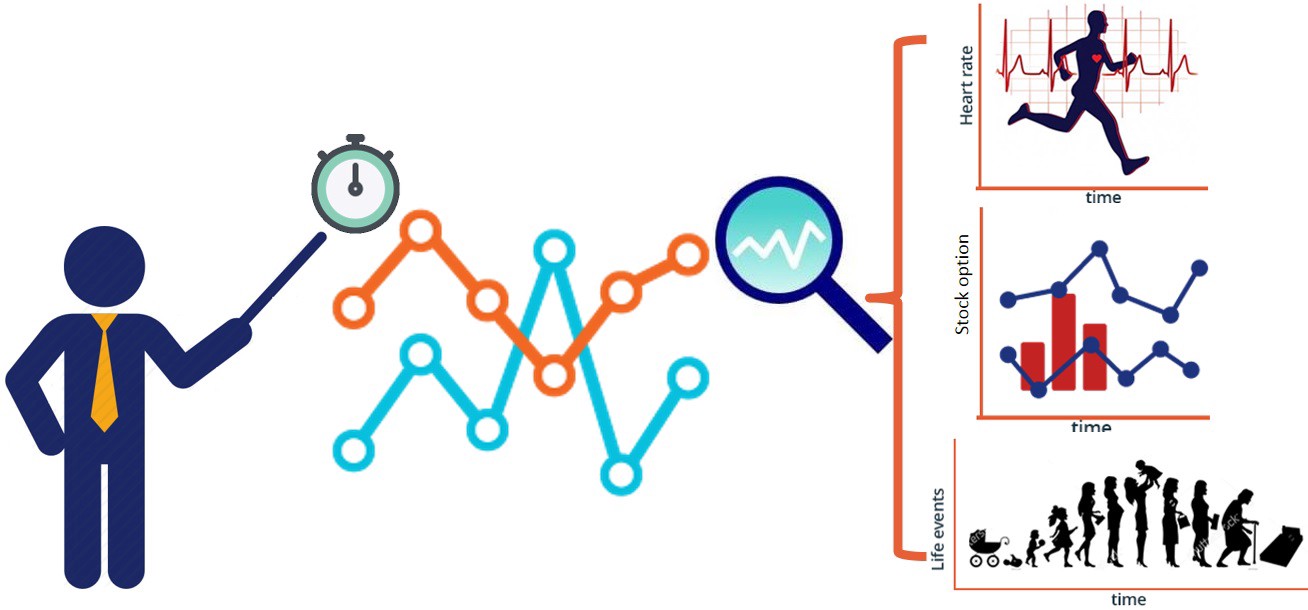
Time Series Analysis with Recurrent Neural Networks: A Comprehensive Journey into Sequential Modeling
The Fascinating World of Temporal Intelligence
Imagine standing at the crossroads of mathematics, computer science, and predictive intelligence. This is where Recurrent Neural Networks (RNNs) transform raw sequential data into profound insights. As someone who has spent years exploring the intricate landscapes of machine learning, I‘m excited to share a comprehensive exploration of RNNs and their remarkable potential in time series analysis.
A Personal Voyage into Sequential Modeling
My journey with RNNs began not in a sterile laboratory, but in the messy, unpredictable world of real-world data challenges. Picture a young researcher grappling with financial market predictions, struggling to make sense of complex temporal patterns. This is where RNNs emerged as a beacon of hope, offering a revolutionary approach to understanding sequential information.
The Mathematical Symphony of Temporal Reasoning
At the heart of RNNs lies a profound mathematical elegance. Unlike traditional neural networks that treat data as independent snapshots, RNNs introduce a dynamic memory mechanism. Consider the fundamental state update equation:
[ht = \sigma(W{hh} h{t-1} + W{xh} x_t + b_h)]This seemingly simple formula encapsulates an extraordinary ability to capture temporal dependencies. Each variable represents a crucial aspect of sequential learning:
- [h_t]: The hidden state, a dynamic representation of historical context
- [W_{hh}]: Recurrent weight matrix, enabling information transfer
- [W_{xh}]: Input-to-hidden transformation
- [b_h]: Bias term introducing non-linear complexity
- [\sigma]: Activation function creating non-linear representations
Architectural Evolution: From Simple Neurons to Complex Networks
The development of RNN architectures mirrors the progression of human understanding. Early neural networks were rigid, treating each data point as an isolated entity. RNNs introduced a paradigm shift by recognizing that information flows continuously, much like human memory and reasoning.
Long Short-Term Memory: A Breakthrough in Sequential Learning
Long Short-Term Memory (LSTM) networks represent a quantum leap in RNN design. By introducing sophisticated gating mechanisms, LSTMs solve critical limitations of traditional RNNs:
[f_t = \sigma(Wf \cdot [h{t-1}, x_t] + b_f)]This equation represents the forget gate, a revolutionary concept allowing neural networks to selectively remember or discard information – mimicking human cognitive processes.
Practical Implementation: Transforming Theory into Action
Let me share a practical implementation that bridges theoretical concepts with real-world applications:
class AdvancedTimeSeriesRNN:
    def __init__(self, sequence_length, feature_dimensions):
        self.model = self._construct_intelligent_network(
            sequence_length,
            feature_dimensions
        )

    def _construct_intelligent_network(self, seq_len, features):
        model = tf.keras.Sequential([
            tf.keras.layers.LSTM(
                128,
                input_shape=(seq_len, features),
                return_sequences=True,
                dropout=0.3
            ),
            tf.keras.layers.BatchNormalization(),
            tf.keras.layers.LSTM(64, dropout=0.2),
            tf.keras.layers.Dense(32, activation=‘relu‘),
            tf.keras.layers.Dense(1, activation=‘linear‘)
        ])
        model.compile(
            optimizer=tf.keras.optimizers.Adam(learning_rate=0.001),
            loss=‘mean_squared_error‘
        )
        return model
This implementation demonstrates how modern RNNs integrate advanced techniques like dropout, batch normalization, and adaptive learning rates.
Real-World Impact and Transformative Potential
RNNs are not merely academic curiosities but powerful tools reshaping multiple industries:
Financial Forecasting
Predicting stock market trends with unprecedented accuracy by analyzing complex historical patterns.
Climate Modeling
Understanding long-term environmental changes by processing decades of meteorological data.
Healthcare Predictions
Anticipating disease progression and patient outcomes through intricate sequential analysis.
Challenges and Philosophical Considerations
Despite their power, RNNs are not magical solutions. They represent sophisticated probabilistic models with inherent limitations:
- Computational Complexity
- Potential Overfitting
- Interpretability Challenges
These limitations remind us that machine learning is a nuanced field requiring continuous refinement and critical thinking.
The Road Ahead: Emerging Frontiers
As we look toward the future, RNNs are converging with groundbreaking technologies:
- Quantum computing architectures
- Neuromorphic engineering
- Advanced probabilistic frameworks
Conclusion: An Invitation to Explore
Time series analysis with RNNs represents more than a technical discipline – it‘s a journey of understanding complex temporal dynamics. Each model we build is a testament to human curiosity and our relentless pursuit of knowledge.
Whether you‘re a seasoned data scientist or an enthusiastic learner, the world of RNNs offers endless opportunities for discovery and innovation.
Recommended Learning Path
- Master foundational mathematics
- Experiment with diverse architectures
- Focus on domain-specific feature engineering
- Embrace continuous learning
Scholarly References
- Hochreiter & Schmidhuber (1997)
- Cho et al. (2014)
- Vaswani et al. (2017)