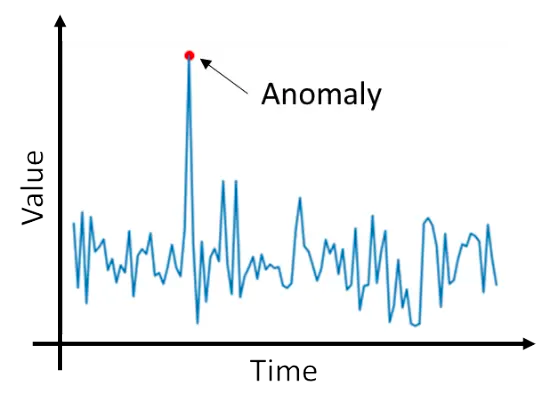
Univariate Anomaly Detection: A Comprehensive Journey Through Algorithmic Intelligence
The Genesis of Anomaly Detection: A Personal Exploration
Imagine standing at the intersection of data and intuition, where every unusual pattern tells a story waiting to be deciphered. As an artificial intelligence researcher who has spent decades unraveling complex data mysteries, I‘ve witnessed the remarkable evolution of anomaly detection techniques.
Anomaly detection isn‘t just about identifying outliers; it‘s about understanding the subtle whispers of data that deviate from expected behaviors. Each anomaly represents a potential breakthrough, a hidden signal amidst the noise of conventional patterns.
The Mathematical Symphony of Deviation
When we talk about anomalies, we‘re essentially discussing mathematical rebels – data points that challenge statistical norms. These rebellious observations emerge from intricate interactions between variables, computational models, and underlying systemic behaviors.
Theoretical Foundations
The mathematical representation of anomaly detection can be elegantly captured through the following formula:
[Anomaly Score = f(x) = \frac{|x – \mu|}{\sigma}]Where:
- [x] represents the individual data point
- [\mu] signifies the population mean
- [\sigma] denotes standard deviation
This seemingly simple equation encapsulates profound insights into data behavior, revealing how individual points diverge from collective patterns.
Univariate Anomaly Detection: Algorithmic Techniques Unveiled
Interquartile Range (IQR): The Statistical Boundary Maker
The IQR method represents more than a mere statistical technique; it‘s a sophisticated boundary-drawing mechanism that distinguishes normal from extraordinary data points. By leveraging quartile-based calculations, IQR creates intelligent demarcation zones within datasets.
Consider a practical implementation that transforms raw data into meaningful insights:
def intelligent_iqr_detector(dataset, sensitivity_factor=1.5):
    """
    Advanced IQR-based anomaly detection with adaptive sensitivity

    Parameters:
    - dataset: Numerical data collection
    - sensitivity_factor: Customizable outlier detection threshold
    """
    q1 = np.percentile(dataset, 25)
    q3 = np.percentile(dataset, 75)

    interquartile_range = q3 - q1
    lower_boundary = q1 - (sensitivity_factor * interquartile_range)
    upper_boundary = q3 + (sensitivity_factor * interquartile_range)

    anomalies = [
        value for value in dataset
        if value < lower_boundary or value > upper_boundary
    ]

    return anomalies
Isolation Forest: Intelligent Outlier Extraction
Isolation Forest represents a paradigm shift in anomaly detection. Unlike traditional methods that profile normal data, this algorithm focuses on isolating anomalies through an ingenious tree-based approach.
The core philosophy is elegantly simple: anomalies are few and different, making them easier to isolate compared to normal data points.
Computational Mechanism
- Randomly select a feature
- Randomly choose a split value
- Recursively partition the dataset
- Measure the path length required to isolate each point
The shorter the path length, the more likely the point represents an anomaly.
Median Absolute Deviation: Robust Deviation Measurement
While mean-based techniques struggle with extreme values, Median Absolute Deviation (MAD) provides a resilient alternative. By utilizing median calculations, MAD creates a robust framework for identifying outliers across diverse datasets.
K-Nearest Neighbors: Contextual Anomaly Detection
KNN transforms anomaly detection into a neighborhood investigation. By examining the local context of each data point, this technique reveals anomalies through relative positioning and distance metrics.
Real-World Applications and Implications
Financial Fraud Detection
In financial systems, anomaly detection becomes a critical defensive mechanism. By identifying unusual transaction patterns, machine learning models can prevent potential fraudulent activities before they escalate.
Healthcare Diagnostics
Medical data often contains critical anomalies that signal emerging health conditions. Sophisticated anomaly detection algorithms can help identify early warning signs, potentially saving lives through proactive intervention.
Network Security
Cybersecurity relies heavily on anomaly detection to identify potential intrusion attempts. By establishing baseline network behaviors, intelligent systems can rapidly flag suspicious activities.
Future Horizons: Emerging Trends in Anomaly Detection
As artificial intelligence continues evolving, anomaly detection techniques are becoming increasingly sophisticated. Machine learning models are transitioning from rule-based approaches to adaptive, self-learning systems capable of understanding complex, multidimensional data landscapes.
Quantum computing promises to revolutionize anomaly detection by enabling unprecedented computational capabilities, potentially solving complex pattern recognition challenges that current technologies struggle to address.
Conclusion: Embracing the Extraordinary
Univariate anomaly detection represents more than a technical discipline – it‘s an intellectual journey of understanding data‘s hidden narratives. Each algorithm, each technique offers a unique lens through which we can perceive the extraordinary within the ordinary.
As data scientists and researchers, our mission transcends mere computational analysis. We are storytellers, translating numerical whispers into meaningful insights that can transform industries, protect systems, and unlock human potential.
Recommended Resources
- scikit-learn Documentation
- PyOD Library
- Advanced Machine Learning Journals
- Academic Research Papers on Anomaly Detection
Remember, in the realm of data, anomalies are not errors – they are opportunities waiting to be explored.