Unraveling the KNN Algorithm: A Machine Learning Journey Through Proximity and Intelligence
The Genesis of Intelligent Proximity: Understanding K-Nearest Neighbors
Imagine walking into a vast library of data, where every piece of information whispers its story, waiting to be understood. This is precisely where the K-Nearest Neighbors (KNN) algorithm becomes our trusted guide, helping us navigate through complex information landscapes with remarkable simplicity and elegance.
A Personal Encounter with Algorithmic Wisdom
My journey with KNN began years ago, not in a sterile computer lab, but during a passionate conversation about pattern recognition. Like an experienced detective solving intricate puzzles, KNN reveals hidden connections by examining the closest companions of any given data point.
The Philosophical Underpinnings of Proximity-Based Learning
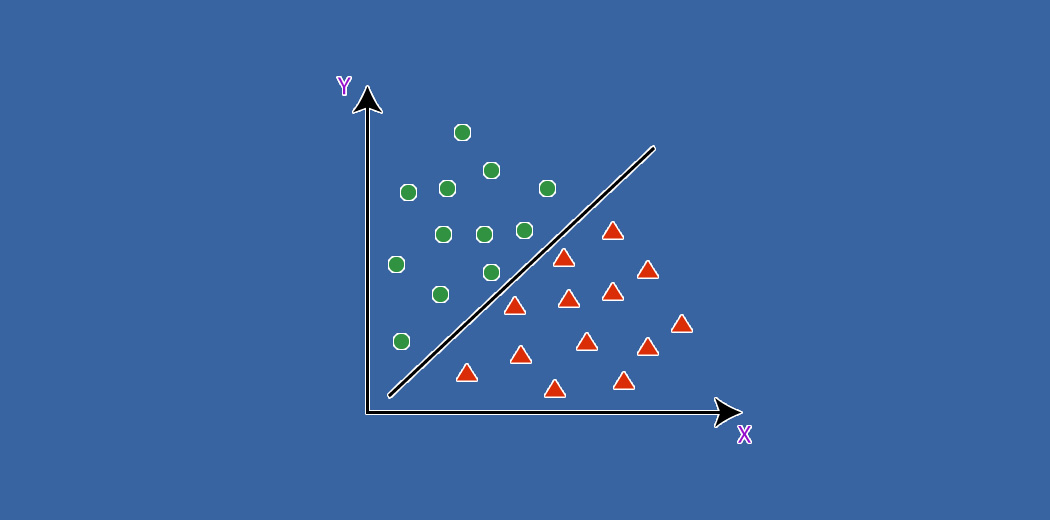
KNN represents more than a mere computational technique—it‘s a profound approach to understanding relationships within data. At its core, this algorithm embodies a fundamental truth: similarity breeds familiarity. Just as humans instinctively categorize experiences based on past encounters, KNN classifies unknown entities by examining their nearest neighbors.
Mathematical Elegance: Beyond Simple Calculations
The beauty of KNN lies in its mathematical simplicity. Unlike complex neural networks that require extensive training, KNN operates on an intuitive principle: data points close to each other are likely to share fundamental characteristics.
Distance Metrics: The Language of Proximity
Consider distance metrics as the dialect through which data points communicate. Euclidean distance, perhaps the most renowned, calculates straight-line distances between points. However, our algorithmic journey reveals multiple fascinating distance languages:
-
Euclidean Distance:
[D(x,y) = \sqrt{\sum_{i=1}^{n} (x_i – y_i)^2}] A direct measurement representing the shortest path between two points in multi-dimensional space. -
Manhattan Distance:
[D(x,y) = \sum_{i=1}^{n} |x_i – y_i|] Imagine navigating city blocks—this metric calculates distances by summing absolute differences. -
Hamming Distance:
Particularly powerful in categorical data analysis, measuring differences between non-numeric attributes.
Algorithmic Symphony: How KNN Orchestrates Learning
Picture KNN as a wise mentor observing a classroom. When a new student arrives, the mentor doesn‘t rely on rigid rules but examines the closest existing students to understand the newcomer‘s potential characteristics.
The Learning Process Unveiled
When confronted with an unknown data point, KNN follows a meticulously choreographed process:
- Calculate distances to all known data points
- Identify K nearest neighbors
- Determine the predominant characteristic among these neighbors
- Assign the most probable classification or value
Pseudocode: The Algorithmic Blueprint
def knn_classifier(training_data, test_point, K):
    distances = []

    # Compute proximity to all training instances
    for training_instance in training_data:
        distance = calculate_proximity(test_point, training_instance)
        distances.append((distance, training_instance_label))

    # Sort and select nearest neighbors
    sorted_neighbors = sort_by_distance(distances)
    k_nearest = sorted_neighbors[:K]

    # Majority voting mechanism
    predicted_label = determine_majority_label(k_nearest)

    return predicted_label
Navigating Computational Landscapes: Performance and Complexity
KNN‘s computational characteristics reveal fascinating trade-offs between simplicity and efficiency. While incredibly intuitive, the algorithm faces challenges in high-dimensional spaces.
Computational Complexity Insights
- Training Complexity: O(1) – Essentially storing training data
- Prediction Complexity: O(nK) – Proportional to training samples and neighbor count
Real-World Metamorphosis: KNN in Action
From medical diagnostics to recommendation systems, KNN transcends theoretical boundaries. Imagine predicting customer preferences, diagnosing diseases, or understanding financial market behaviors—KNN serves as a versatile companion.
Practical Implementation Wisdom
Successful KNN deployment demands nuanced understanding:
- Rigorous feature scaling
- Intelligent distance metric selection
- Careful hyperparameter tuning
The Evolving Frontier: Future Perspectives
As machine learning continues its relentless evolution, KNN remains a testament to the power of simplicity. Emerging research explores hybrid approaches, combining KNN‘s intuitive proximity principles with advanced ensemble techniques.
Emerging Research Directions
- Probabilistic proximity modeling
- Advanced dimensionality reduction techniques
- Integration with deep learning architectures
Conclusion: Embracing Algorithmic Wisdom
KNN represents more than a computational technique—it‘s a philosophical approach to understanding complexity through proximity. Its elegance lies not in overwhelming sophistication but in capturing fundamental patterns that define our understanding of data.
As we continue exploring the vast landscapes of machine learning, let KNN remind us that sometimes, the closest companions hold the most profound insights.
Reflective Insights
- Proximity breeds understanding
- Simplicity often unveils deeper truths
- Data tells stories when we listen carefully