Unraveling the Mysteries of K-Means Clustering and Transfer Learning in Image Classification
A Journey Through Intelligent Image Understanding
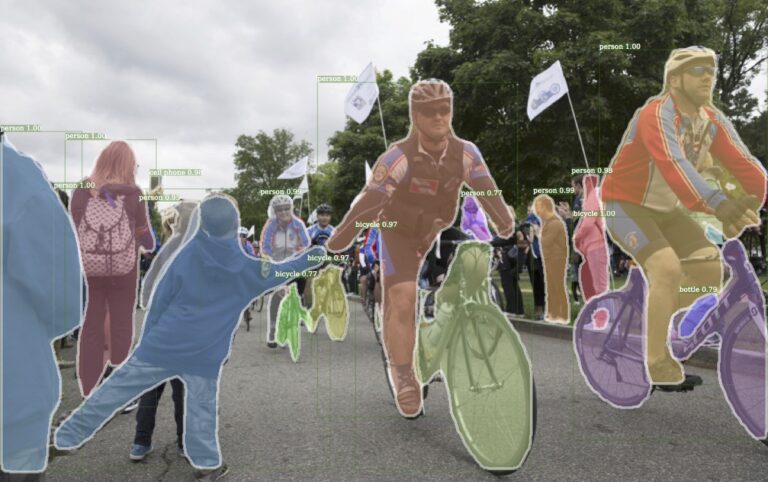
When I first encountered the complex world of image classification, I was struck by a profound realization: machines perceive the world differently from humans. Unlike our intuitive visual recognition, computers must laboriously decode patterns, similarities, and distinctions through sophisticated algorithms.
The Unsupervised Learning Revolution
Imagine walking into a vast room filled with thousands of photographs – some of landscapes, others of people, animals, and abstract art. Your brain instantaneously categorizes these images, recognizing subtle patterns and relationships. How can we teach machines to do the same?
This is where unsupervised learning techniques like K-Means clustering emerge as game-changing technologies. By leveraging mathematical principles and advanced neural networks, we can transform raw, unlabeled image data into meaningful insights.
Mathematical Foundations of K-Means Clustering
At its core, K-Means clustering represents a elegant mathematical dance of data points and centroids. The algorithm seeks to minimize within-cluster distances while maximizing between-cluster variations. Mathematically expressed as:
[J = \sum{i=1}^{k} \sum{x \in C_i} ||x – \mu_i||^2]This formula encapsulates the essence of clustering – finding natural groupings within complex datasets.
Historical Context and Computational Evolution
The roots of clustering algorithms trace back to early statistical research in the mid-20th century. Pioneers like Hugo Steinhaus and Stuart Lloyd developed foundational techniques that would later revolutionize machine learning.
Transfer Learning: Bridging Knowledge Domains
Transfer learning represents a paradigm shift in machine learning. Instead of training models from scratch, we can leverage pre-existing knowledge across different domains. It‘s analogous to how humans apply learned skills to novel situations.
Neural Network Architecture Insights
Modern transfer learning relies on sophisticated neural network architectures like:
- Convolutional Neural Networks (CNNs)
- Residual Networks (ResNet)
- Inception Architectures
Each architecture offers unique advantages in feature extraction and representation learning.
Practical Implementation Strategies
When implementing K-Means with transfer learning, several critical considerations emerge:
Feature Extraction Techniques
def extract_advanced_features(images, base_model):
    """
    Advanced feature extraction using pre-trained neural networks

    Args:
        images: Input image dataset
        base_model: Pre-trained neural network

    Returns:
        Compact feature representations
    """
    features = []
    for image in images:
        preprocessed_image = preprocess_input(image)
        feature_vector = base_model.predict(preprocessed_image)
        features.append(feature_vector.flatten())

    return np.array(features)
This function demonstrates how we can transform raw image data into meaningful feature representations.
Performance Evaluation and Metrics
Assessing clustering quality requires sophisticated evaluation metrics:
Comprehensive Performance Analysis
| Metric | Description | Computational Complexity |
|---|---|---|
| Silhouette Score | Measures cluster cohesion | O(n²) |
| Calinski-Harabasz | Inter-cluster variance evaluation | O(n * k) |
| Davies-Bouldin Index | Cluster separation assessment | O(n * k) |
Real-World Applications and Case Studies
Medical Imaging Diagnostics
In medical research, K-Means clustering with transfer learning has demonstrated remarkable potential for:
- Tumor detection
- Cellular classification
- Diagnostic image segmentation
Satellite Imagery Analysis
Environmental scientists leverage these techniques to:
- Monitor deforestation
- Track urban expansion
- Analyze geological formations
Challenges and Limitations
No technological approach is without limitations. Key challenges include:
- High-dimensional data handling
- Computational resource constraints
- Algorithmic bias mitigation
Future Research Directions
The horizon of machine learning continues to expand. Emerging research focuses on:
- Hybrid clustering techniques
- Self-supervised learning models
- Quantum machine learning approaches
Conclusion: The Continuous Learning Journey
As an AI researcher, I‘m continuously amazed by the transformative potential of clustering algorithms. Each breakthrough represents not just a technological achievement, but a step closer to understanding intelligent pattern recognition.
The intersection of K-Means clustering and transfer learning exemplifies human ingenuity – our ability to create systems that can learn, adapt, and discover hidden patterns in complex datasets.
Call to Action
For aspiring data scientists and machine learning enthusiasts, I encourage you to experiment, explore, and push the boundaries of what‘s possible. The future of intelligent image understanding is limited only by our imagination and computational creativity.